Nvidia DGX B200
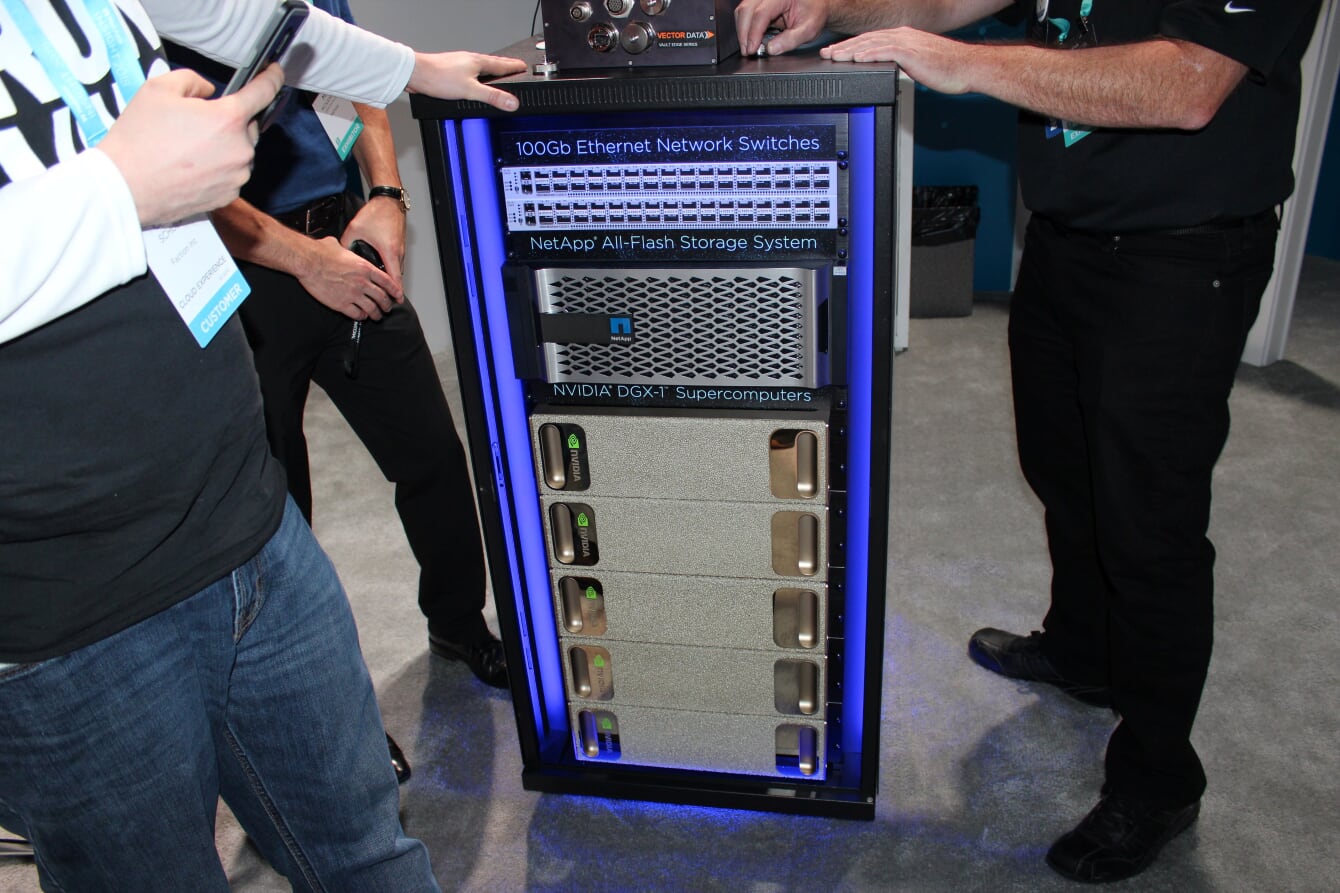
Summary: Unveiled on March 18, 2025, in Pasadena, California, the NVIDIA DGX B200 serves as a foundational engine for the next generation of artificial intelligence, leveraging the Blackwell architecture to dramatically accelerate the throughput of massive, complex neural networks.
The NVIDIA DGX B200 is a high-performance supercomputer system designed to handle the immense computational requirements of modern artificial intelligence. Announced on March 18, 2025, in Pasadena, California, this machine represents a critical advancement in how computers process information, allowing for faster learning and more efficient reasoning for large-scale digital models. By organizing specialized processors to work in perfect synchronization, the B200 allows engineers to build "thinking" machines that can process vast libraries of information in a fraction of the time previously required.
| Historical Attribute | Milestone Registry Value |
|---|---|
| Classification Type | machine |
| Chronological Date | 2025-03-18 |
| Coordinates / Location | Pasadena, California |
| Curation Authority | Nick Hodder + MIA |
| Milestone Importance | standard Milestone |
How does Nvidia DGX B200 fit into the history of artificial intelligence?
The lineage of computing hardware stretches back to the Analytical Engine conceived by Charles Babbage and Ada Lovelace. Over the decades, the field moved from the mechanical logic of early machines to the electronic breakthroughs of the eniac" class="text-accent hover:underline font-semibold">ENIAC and the Colossus Computer. The DGX B200 acts as a modern successor to these early foundations, specifically evolved to meet the demands created by the shift toward neural networks, which trace their roots back to the McCulloch-Pitts Neural Model and The Perceptron.
Following the success of AlexNet, which demonstrated the necessity of GPU acceleration, systems like the DGX-1 Supercomputer and the NVIDIA H100 GPU established the standard for AI infrastructure. The B200 arrives as a synthesis of these advancements, optimized to handle the extreme scale of models inspired by The Transformer Paper, continuing the trajectory established by earlier breakthroughs like the TPU v4 Supercluster.
What are the core technical achievements of Nvidia DGX B200?
The B200 architecture is defined by its massive parallel processing capabilities, specifically refined for the Blackwell processing unit. Unlike general-purpose computers, which handle sequential instructions, the B200 is architected for matrix multiplication—the fundamental mathematical operation required for neural network training and inference.
Key technical performance metrics include a significant increase in floating-point operations per second (FLOPS) compared to predecessor architectures like the NVIDIA H100 GPU. By integrating high-bandwidth memory (HBM) with improved interconnect technology, the B200 reduces data bottlenecks that historically hampered the speed of large-scale machine learning training. This allows systems to train complex models—similar in structure to GPT-4 Multimodal Model or Gemini 1.0 Multimodal—with significantly higher energy efficiency, effectively lowering the cost per compute cycle for training deep learning systems.
Why is the legacy of Nvidia DGX B200 significant to modern computing?
The legacy of the B200 is defined by the shift toward industrialized AI development. As the industry moved from experimental research—exemplified by early Machine Learning Termed or the Samuel Checkers Program—to modern foundation models, the physical requirement for processing power became the primary constraint.
By consolidating this power into a standard rack-scale unit, the B200 enables academic institutions and corporate enterprises to scale their infrastructure without the prohibitive costs of custom-built, bespoke supercomputers like the historical Connection Machine or Cray-1 Supercomputer. The B200 ensures that the trajectory toward more capable models, such as those that might eventually approach the goals set by the Dartmouth Workshop, remains computationally viable. Its existence marks a transition where the constraint on intelligence is no longer just the algorithm, but the efficiency and scalability of the silicon supporting it.