Connection Machine
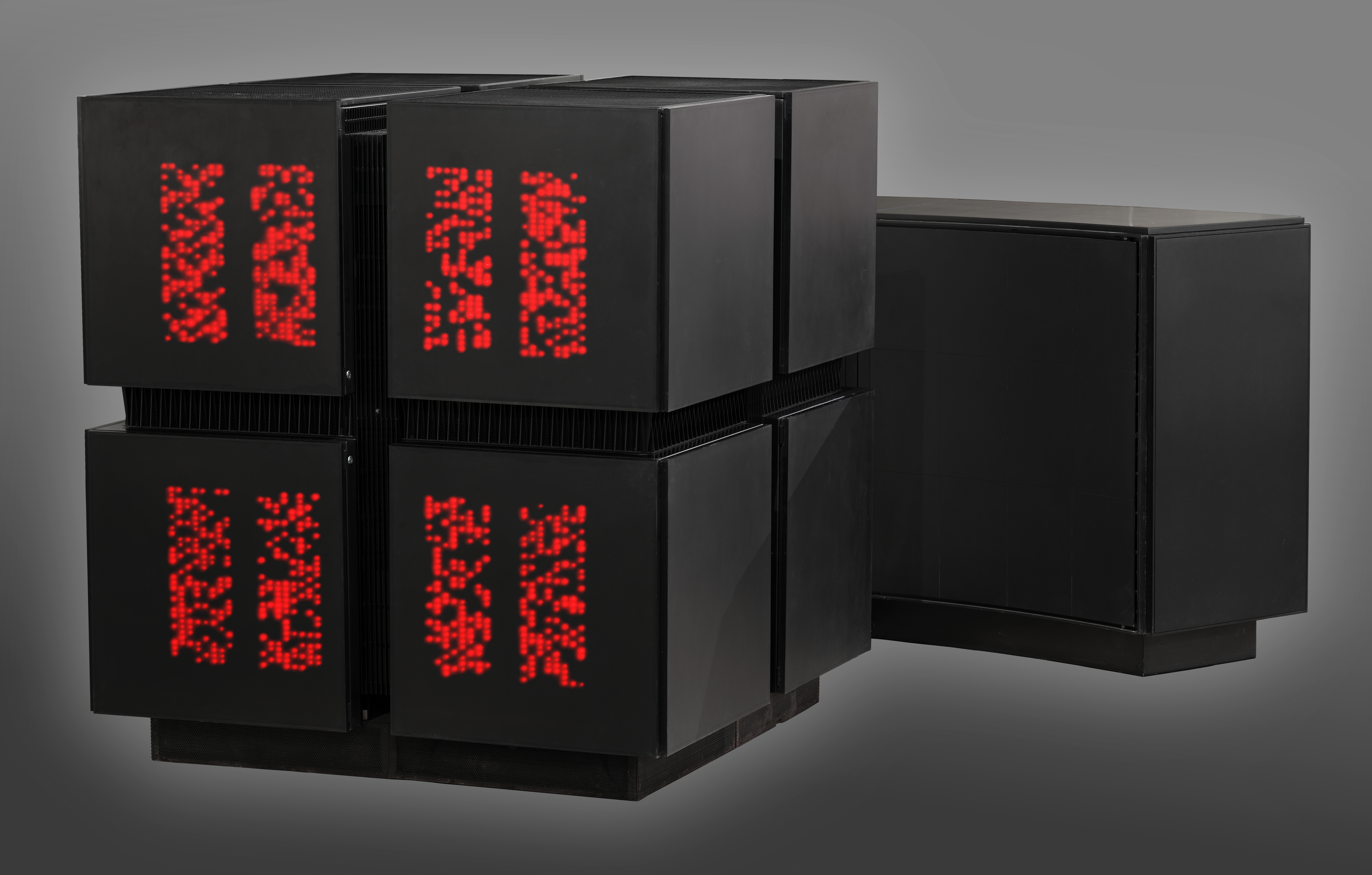
Summary: On May 15, 1985, Danny Hillis and his team at Thinking Machines Corporation unveiled the Connection Machine, a pioneering supercomputer that bypassed traditional computing bottlenecks by utilizing a massive array of 65,536 simple, interconnected processors to simulate the parallel nature of neural networks.
In the mid-1980s, the computing world was dominated by serial processors—machines that solved problems one step at a time, like a reader scanning words on a page. The Connection Machine, debuted on May 15, 1985, in Cambridge, Massachusetts, fundamentally challenged this model. By linking 65,536 small, simple processing units together, it allowed the machine to work on thousands of pieces of a problem at the exact same time. This was a direct attempt to mimic the structure of the human brain, which processes sensory information through vast networks of biological connections rather than a single, centralized controller.
| Historical Attribute | Milestone Registry Value |
|---|---|
| Classification Type | machine |
| Chronological Date | 1985-05-15 |
| Coordinates / Location | Cambridge, Massachusetts |
| Curation Authority | Nick Hodder + MIA |
| Milestone Importance | standard Milestone |
How does Connection Machine fit into the history of artificial intelligence?
The development of the Connection Machine emerged during a period of transition for artificial intelligence, following the initial excitement of the Dartmouth Workshop and the eventual skepticism that led to the first AI Winter 1. While early research focused on symbolic logic and expert systems like DENDRAL Expert System, Danny Hillis argued that intelligence required hardware capable of handling massive amounts of data simultaneously, much like the McCulloch-Pitts Neural Model proposed decades earlier. By providing the physical architecture to run experiments on neural networks, the Connection Machine helped revitalize connectionist research, effectively bridging the gap between theoretical models like the The Perceptron and the practical, high-speed computational requirements needed to scale learning algorithms.
What are the core technical achievements of Connection Machine?
The Connection Machine (specifically the CM-1 model) was a feat of high-performance engineering. Its defining achievement was "data-level parallelism." While standard supercomputers of the era, such as the Cray-1 Supercomputer, focused on increasing the clock speed of a single processor, the Connection Machine opted for breadth over speed. It featured a hypercube network topology that allowed the 65,536 individual 1-bit processors to communicate with one another with high efficiency. Each processor was assigned a small portion of the data, allowing the machine to perform operations across the entire dataset at once. This structure allowed it to achieve performance peaks that were previously impossible for specific problems like pattern recognition and fluid dynamics. By the time researchers began popularizing Backpropagation Popularized in 1986, the Connection Machine provided the necessary infrastructure to actually train these networks at scale.
Why is the legacy of Connection Machine significant to modern computing?
The legacy of the Connection Machine is visible in the architecture of every modern high-performance computing system used for machine learning today. The realization that artificial intelligence is inherently a parallel processing task shifted the industry's focus away from increasingly complex serial chips toward architectures that could handle thousands of concurrent operations. This philosophy directly influenced the development of modern systems like the TPU v4 Supercluster and the NVIDIA H100 GPU, both of which rely on massive parallel arrays to perform matrix mathematics. Even the conceptual framework used in The Transformer Paper relies on the ability to process entire sequences of data simultaneously rather than one token at a time. The Connection Machine proved that by designing hardware to mimic the interconnectedness of a network, researchers could build systems capable of learning, a realization that remains the cornerstone of modern computational intelligence.