Charles Babbage
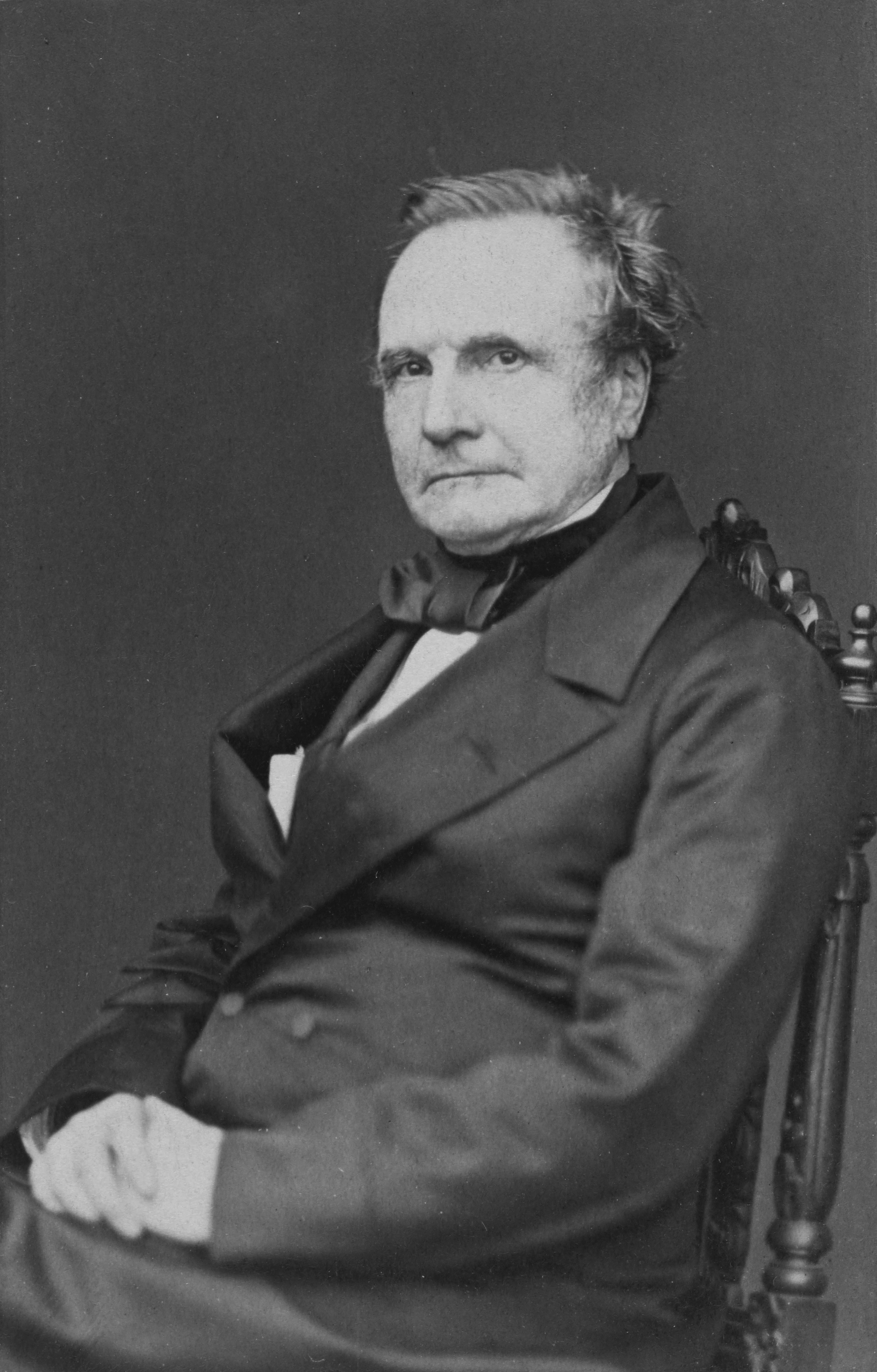
Summary: Charles Babbage, a visionary English polymath, fundamentally altered the trajectory of human history by designing the Analytical Engine in 1837, effectively providing the first complete blueprint for a general-purpose, programmable mechanical computer.
In the bustling intellectual climate of Victorian London, Charles Babbage envisioned a device that could transcend simple calculation. On January 1, 1837, his work on the Analytical Engine reached a conceptual turning point, proposing a machine that could process information based on variable instructions. While his earlier work, the Difference Engine, was designed for a single mathematical purpose, the Analytical Engine was the first to separate the "mill" (processor) from the "store" (memory), mirroring the fundamental structure of every computer built since.
| Historical Attribute | Milestone Registry Value |
|---|---|
| Classification Type | person |
| Chronological Date | 1837-01-01 |
| Coordinates / Location | London, UK |
| Curation Authority | Nick Hodder + MIA |
| Milestone Importance | standard Milestone |
How does Charles Babbage fit into the history of artificial intelligence?
Charles Babbage is the progenitor of the physical substrate upon which artificial intelligence was eventually constructed. By conceptualizing a machine that used punched cards—a method borrowed from the Jacquard loom—to direct its operations, Babbage established the concept of "software" as a distinct entity from the physical hardware. This separation is the bedrock of modern computing. Without the ability to change a program without rebuilding the machine, the iterative development required for fields like Machine Learning Termed or Neural Language Modeling would be impossible. His collaboration with Ada Lovelace, who realized that the engine could manipulate symbols according to rules, expanded the vision from mere arithmetic to the potential for machines to process information of any kind.
What are the core technical achievements of Charles Babbage?
The Analytical Engine introduced three critical innovations that define a general-purpose computer. First, the Arithmetic Logic Unit (ALU), which Babbage called the "mill," performed basic arithmetic operations automatically. Second, an integrated memory system, the "store," held data that could be retrieved or modified during the calculation process. Finally, and perhaps most importantly for the future of AI, the design supported conditional branching. This allowed the machine to skip ahead or repeat sequences based on the results of previous calculations—the mechanical equivalent of "if-then" logic. This level of autonomy allowed for complex decision-making processes, which, in a later era, enabled programs like the Logic Theorist to demonstrate early automated reasoning.
Why is the legacy of Charles Babbage significant to modern computing?
The legacy of Charles Babbage is not found in the physical brass and steel of his incomplete prototypes, but in the logical architecture that persisted into the electronic age. When researchers like Alan Turing began defining the limits of computation in the 1930s, they were building upon the groundwork Babbage laid a century prior. His work proved that a machine could handle any task that could be reduced to a sequence of logical operations. This universality is what eventually allowed for the development of modern neural networks, such as those that underpin the The Transformer Paper. From the 1837 conceptualization of a programmable engine to the modern training of large models on thousands of NVIDIA H100 GPU units, the core principle remains identical: the machine is a tool that operates on encoded information, enabling it to solve problems that were once thought to be exclusively in the domain of human thought.