Difference Engine
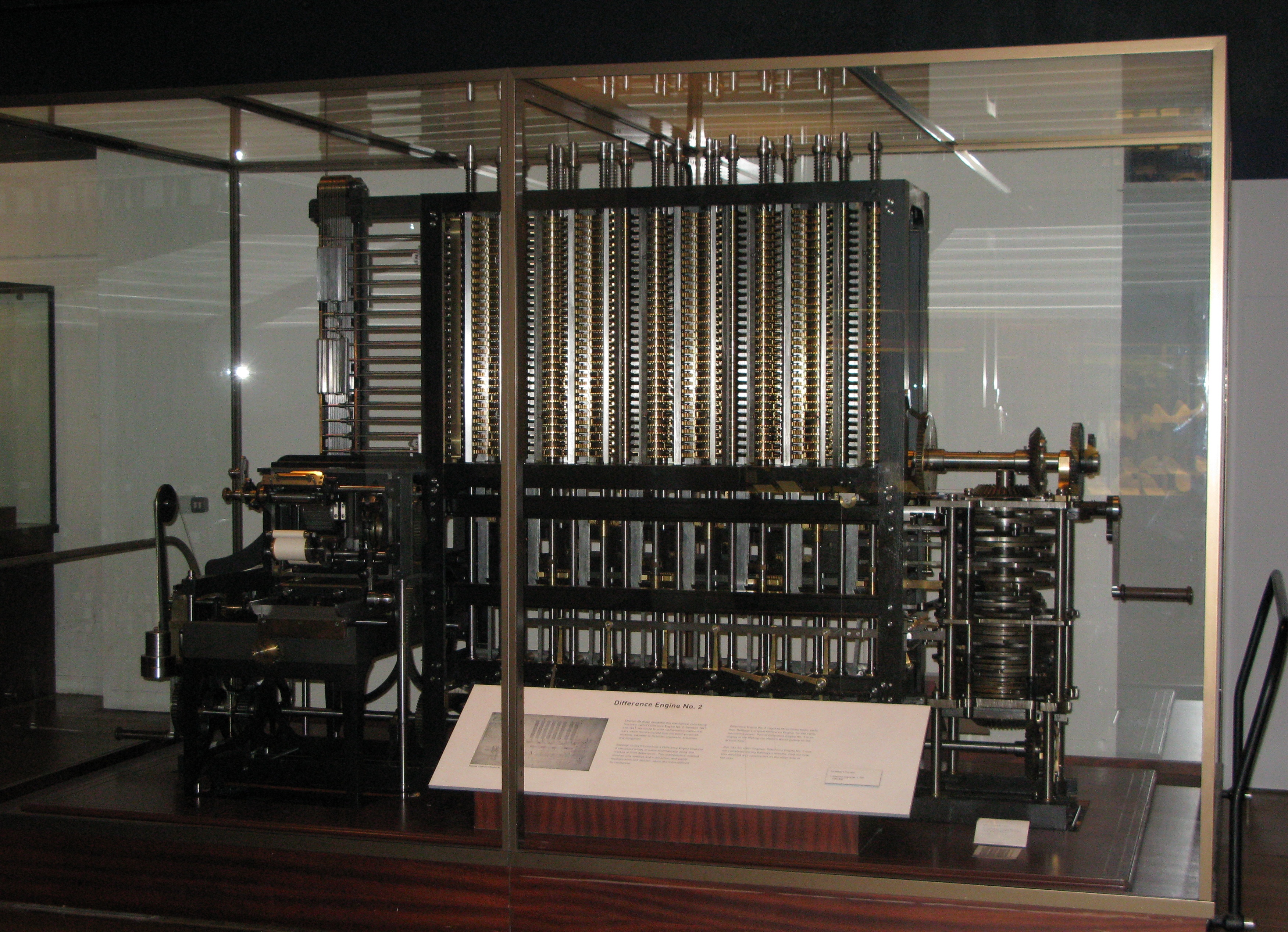
Summary: On June 14, 1822, Charles Babbage presented a revolutionary blueprint for the Difference Engine, a sophisticated mechanical device designed to automate the error-prone process of calculating polynomial mathematical tables through the rhythmic interaction of gears and levers.
The Difference Engine stands as a foundational moment in mechanical computation, proposed by Charles Babbage in London on June 14, 1822. At a time when complex mathematical tables for navigation and astronomy were calculated by hand—a process riddled with human error—Babbage envisioned a machine that could perform these tasks with unerring mechanical precision. By leveraging the mathematical principle of finite differences, this device replaced the fallible human mathematician with a series of rotating gears, proving that logical operations could be physically embodied in hardware.
| Historical Attribute | Milestone Registry Value |
|---|---|
| Classification Type | machine |
| Chronological Date | 1822-06-14 |
| Coordinates / Location | London, UK |
| Curation Authority | Nick Hodder + MIA |
| Milestone Importance | standard Milestone |
How does Difference Engine fit into the history of artificial intelligence?
The Difference Engine acts as the distant, mechanical ancestor of modern computational intelligence. While the device itself did not possess "intelligence" in the contemporary sense, it established the crucial concept that complex, abstract mathematical logic could be executed by a machine. This realization directly paved the way for more sophisticated architectures. By establishing that a set of physical rules could process information to produce a result, Babbage provided the conceptual scaffolding for later pioneers. His work on this machine and the later Analytical Engine directly inspired Ada Lovelace, whose early insights into the potential for machines to process more than just numbers represent the intellectual bridge between simple calculation and the future field of AI Term Coined at the Dartmouth Workshop.
What are the core technical achievements of Difference Engine?
The primary technical achievement of the Difference Engine was its application of the "method of finite differences." In the 19th century, complex functions were evaluated using polynomial approximation. Manually calculating these values involved repetitive addition and subtraction, which resulted in a failure rate estimated at roughly 10% to 20% in large-scale human-generated tables. Babbage’s design utilized a series of vertical columns of interconnected gears, where each column represented a digit in a decimal number. By turning a hand crank, the machine could perform an addition operation across all columns simultaneously, effectively automating the entire polynomial calculation. This shift from manual human cognitive effort to automated physical movement—a 100% reduction in the need for human mental labor during the calculation phase—demonstrated that physical hardware could mirror logical processes.
Why is the legacy of Difference Engine significant to modern computing?
The legacy of the Difference Engine is profound, as it transitioned humanity from the era of pure mental calculation into the era of machine-aided computation. Although Babbage never completed a full-scale version of the engine in his lifetime due to funding constraints and engineering limitations of the 1820s, the design was later validated by the successful construction of a full-scale working model in 1991. The intellectual lineage connecting the engine to later breakthroughs, such as the eniac" class="text-accent hover:underline font-semibold">ENIAC and the theoretical foundations laid by Alan Turing, remains a fundamental narrative in the history of technology. The engine proved that by encoding logic into physical form, humanity could extend its cognitive reach, setting the stage for everything from the simple logic of the McCulloch-Pitts Neural Model to the vast, distributed power of a modern TPU v6 Supercluster. It is the original point of divergence, proving that thinking machines were not only possible but inevitable.