DENDRAL Expert System
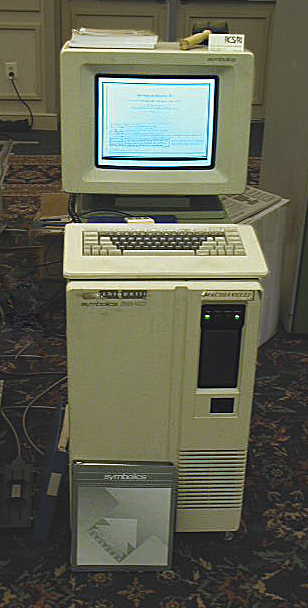
Summary: Launched on September 1, 1963, at Stanford University by Edward Feigenbaum, Joshua Lederberg, and Carl Djerassi, the DENDRAL project pioneered the first expert system, introducing domain-specific heuristic rules to automate the identification of unknown molecular structures and shifting the artificial intelligence paradigm from general-purpose problem-solving to knowledge-based computation.
On September 1, 1963, researchers at Stanford University began developing DENDRAL, a computer program designed to act like a world-class organic chemist. Imagine trying to guess the shape of a massive LEGO castle hidden inside a closed cardboard box: you cannot open the box, but you can weigh it, shake it, and measure the sizes of the individual pieces that occasionally fall out of a small hole. For a human, guessing the exact structure of that castle by checking every single possible way to connect those LEGO blocks would take billions of years. DENDRAL solved this exact puzzle for physical molecules, using specialized "rules of thumb"—known as heuristics—to eliminate impossible molecular configurations and pinpoint the correct structure. This project marked a monumental milestone in computer science, proving that computers could solve highly complex, real-world scientific mysteries when programmed with deep, specialized human expertise.
| Historical Attribute | Milestone Registry Value |
|---|---|
| Classification Type | software |
| Chronological Date | 1963-09-01 |
| Coordinates / Location | Stanford, California |
| Curation Authority | Nick Hodder + MIA |
| Milestone Importance | standard Milestone |
How does DENDRAL Expert System fit into the history of artificial intelligence?
During the late 1950s and early 1960s, the nascent field of artificial intelligence was dominated by search-centric, general-purpose paradigms. Early pioneers believed that intelligence could be replicated through universal, domain-independent logical mechanisms. This "weak method" philosophy was epitomized by programs like the Logic Theorist and the General Problem Solver, developed by Herbert Simon and Allen Newell. While these programs excelled at solving well-defined puzzles, mathematical proofs, and toy-world scenarios, they suffered from combinatorial explosion when confronted with the messy, high-dimensional data of the real physical sciences.
The DENDRAL project completely inverted this paradigm. Initiated by Edward Feigenbaum—a former student of Simon and Newell—alongside Nobel laureate geneticist Joshua Lederberg and chemist Carl Djerassi (famed for his work on the contraceptive pill), DENDRAL was built on the premise that solving complex real-world problems required specialized, domain-specific knowledge. Written in the LISP Programming Language, which had been formulated by John McCarthy following the historic Dartmouth Workshop, DENDRAL bypassed the hunt for a general "thinking machine." Instead, it focused on replicating the exact decision-making processes of human chemists analyzing molecular structures.
By demonstrating that a machine could equal or outperform human PhDs in a highly narrow, complex academic field, DENDRAL established the subfield of "Knowledge Engineering." This conceptual breakthrough proved that "knowledge is power" in computational intelligence, shifting the research community's focus toward representation, ontology, and domain-bound rules. This paved the way for subsequent rule-based systems that defined the classical era of symbolic AI.
What are the core technical achievements of DENDRAL Expert System?
At its core, DENDRAL was designed to solve the "inverse problem" of mass spectrometry. In mass spectrometry, an organic chemical compound is vaporized and bombarded with high-energy electrons, causing the molecules to fragment into smaller charged pieces. These fragments are sorted by mass-to-charge ratio, resulting in a spectrum of peaks. Because a single chemical formula (such as C6H13NO2) can exist in thousands of different geometric and topological arrangements (isomers), determining the exact structural formula from a mass spectrum requires immense inductive reasoning.
To automate this, DENDRAL utilized a revolutionary three-stage algorithmic pipeline known as Plan-Generate-Test:
- Plan: This stage analyzed the raw mass spectrometry data to identify structural constraints. It utilized heuristic rules of mass spectrometry—painstakingly translated from Carl Djerassi's chemistry laboratory into computer logic—to deduce which functional groups (such as ketones, ethers, or amines) must be present (or must be absent) within the unknown molecule.
- Generate: Lederberg formulated a rigorous mathematical algorithm (the Dendral Algorithm) capable of systematically generating every possible topological structure matching a chemical formula. Crucially, the "Plan" stage acted as an aggressive pruning mechanism, preventing the generator from traversing billions of chemically impossible molecular configurations.
- Test: The candidate structures generated in the second phase were passed to a simulator that predicted what their mass spectra would look like under empirical conditions. These simulated spectra were compared directly against the actual experimental data to rank the most likely candidate molecular structures.
By integrating mathematical graph theory with empirical scientific heuristics, DENDRAL successfully reduced search spaces that contained millions of potential molecular structures down to a handful of highly likely candidates, often identifying the exact molecular target on its first attempt.
Why is the legacy of DENDRAL Expert System significant to modern computing?
The commercial and academic success of DENDRAL triggered an explosion of industrial interest in rule-based software, directly inspiring the development of the MYCIN Expert System at Stanford in the 1972, which applied similar rule-based heuristics to identify blood infections. The paradigm established by DENDRAL dominated computational development throughout the 1970s and 1980s. Its foundational methodology influenced Marvin Minsky's Frames Theory Proposed, the design of the declarative Prolog Programming Language, and ambitious projects like the Cyc Commonsense DB led by Douglas Lenat.
While early success brought immense funding, the rule-based approach eventually encountered severe scaling bottlenecks. Hand-crafting millions of hard-coded rules proved brittle and expensive, a limitation that contributed to the Dreyfus Critique Published, the Lighthill Report Published, and the subsequent AI Winter 2. Despite these structural shifts toward probabilistic models and connectionist neural architectures, the core objective of DENDRAL—automating complex scientific inquiry—remains a major focal point of modern computing.
Indeed, there is a direct conceptual lineage from DENDRAL to modern deep-learning-driven structural biology systems. Where DENDRAL relied on manually coded rules of organic chemistry to infer molecular geometries, modern computational architectures like the AlphaFold 1 Protein Predictor, AlphaFold 2 Biological Model, and AlphaFold 3 Predictor solve the far more daunting challenge of protein folding and biomolecular interactions. Although modern models extract their rules from millions of parameters in neural networks rather than human-coded heuristic tables, they fulfill the exact vision laid out by Feigenbaum, Lederberg, and Djerassi in 1963: using computer systems to decode the chemical secrets of the physical world.