Herbert Simon
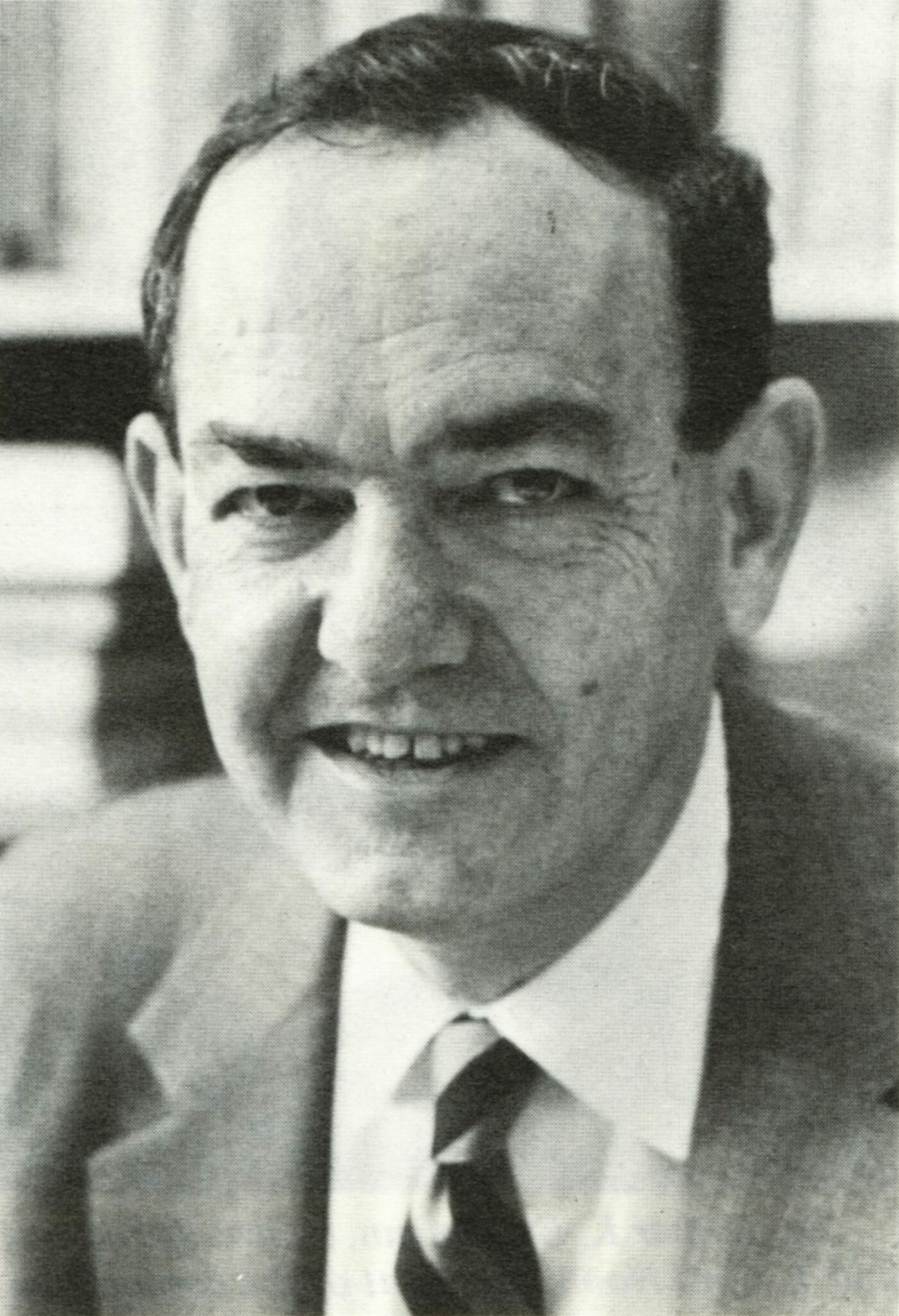
Summary: Herbert Simon was a polymathic visionary whose work at Carnegie Mellon University helped transform computer science from a branch of mathematics into a study of human-like intelligence, culminating in the 1956 development of programs that could reason and solve problems like a person.
On September 10, 1956, in Pittsburgh, Pennsylvania, Herbert Simon, working alongside Allen Newell, fundamentally shifted the trajectory of modern technology. By demonstrating that a machine could process symbols to perform logical proofs, they moved beyond mere calculation. This milestone effectively established the groundwork for cognitive science, suggesting that the same rules that govern human problem-solving could be encoded into the cold logic of an electronic computer.
| Historical Attribute | Milestone Registry Value |
|---|---|
| Classification Type | person |
| Chronological Date | 1956-09-10 |
| Coordinates / Location | Pittsburgh, Pennsylvania |
| Curation Authority | Nick Hodder + MIA |
| Milestone Importance | godfather Milestone |
How does Herbert Simon fit into the history of artificial intelligence?
Herbert Simon occupies a foundational position in the lineage of computation. While predecessors like Alan Turing envisioned the theoretical capacity of machines to think, Simon was among the first to build software that explicitly mimicked the heuristic, trial-and-error nature of human cognition. Following the intellectual momentum generated by the Dartmouth Workshop earlier that same year, Simon sought to prove that computers were not just "number crunchers" but "symbol manipulators." His efforts bridged the gap between the McCulloch-Pitts Neural Model and the practical, symbolic programming approaches that dominated the field for decades. By 1956, he had already established the necessity of interdisciplinary collaboration, setting a standard for academic research that persists today.
What are the core technical achievements of Herbert Simon?
The primary achievement of Simon’s early career was the creation of the Logic Theorist. This program was capable of discovering proofs for theorems within the *Principia Mathematica*, a landmark of symbolic logic. Unlike traditional algorithms that brute-forced every possibility, the Logic Theorist used heuristics—rules of thumb or "shortcuts"—to prune the decision tree, mirroring the way a human mathematician avoids irrelevant steps. This was followed by the General Problem Solver, developed in 1959. The General Problem Solver was explicitly designed to separate task-specific knowledge from the general strategy of problem-solving. This separation of "means-ends analysis" allowed the program to address diverse challenges, from chess puzzles to complex symbolic logic, by breaking a large problem into smaller, manageable differences that the machine could bridge.
Why is the legacy of Herbert Simon significant to modern computing?
Herbert Simon’s legacy lies in the concept of "bounded rationality." He recognized that human beings—and by extension, machines—must make decisions with limited information and limited processing power. This shift away from the demand for "perfect" optimality toward "satisficing" (choosing a solution that is good enough) remains a cornerstone of modern decision theory and economics. His work provided the intellectual architecture for the DENDRAL Expert System and influenced the development of symbolic AI throughout the 1970s and 80s. Even as modern research pivoted toward the probabilistic, connectionist architectures of the 21st century—such as the The Transformer Paper or BERT Language Model—the core questions Simon asked about how to structure intelligence remain unresolved. His insistence that psychology and computer science are two sides of the same coin ensured that the study of artificial intelligence would never be solely about the machine, but always about the nature of the mind itself.