Douglas Lenat
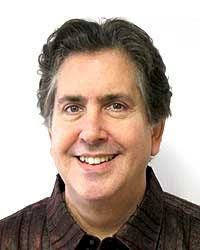
Summary: On July 1, 1984, computer scientist Douglas Lenat initiated the monumental Cyc project, an ambitious endeavor to encode the vast landscape of human "commonsense" knowledge into a machine-readable format, forever changing how we conceptualize symbolic reasoning in artificial intelligence.
In the summer of 1984, at Stanford University in California, Douglas Lenat launched an initiative that would challenge the fundamental limitations of early computational intelligence. While the field was then grappling with the narrow, rule-bound nature of the DENDRAL Expert System and the MYCIN Expert System, Lenat identified a critical bottleneck: computers lacked the millions of basic, unstated truths about the world that humans use every day to navigate life. By attempting to formalize "common sense," Lenat aimed to build a foundation that would allow machines to understand the context behind human language and actions, a project that persists as one of the longest-running experiments in the history of computer science.
| Historical Attribute | Milestone Registry Value |
|---|---|
| Classification Type | person |
| Chronological Date | 1984-07-01 |
| Coordinates / Location | Stanford, California |
| Curation Authority | Nick Hodder + MIA |
| Milestone Importance | standard Milestone |
How does Douglas Lenat fit into the history of artificial intelligence?
Douglas Lenat’s career trajectory spanned the bridge between the early Dartmouth Workshop era of symbolic logic and the modern era of machine learning. Before his work on Cyc Commonsense DB, he made significant contributions to automated discovery with programs like AM (Automated Mathematician) and Eurisko. His philosophy was rooted in the belief that intelligence is not merely the ability to recognize patterns in data, but the ability to reason over concepts. While his contemporaries moved toward neural architectures—such as the Hopfield Network or Backpropagation Popularized—Lenat remained a steadfast advocate for the "Good Old Fashioned AI" (GOFAI) tradition, arguing that a robust, manually curated ontology was essential for true reasoning.
What are the core technical achievements of Douglas Lenat?
The primary achievement of Lenat is the Cyc project, an ambitious ontological engineering endeavor. The technical challenge was to convert the "commonsense" world—the knowledge that "if you drop a cup, it will likely break" or "you cannot be in two places at once"—into formal logic. Over several decades, this project generated a massive knowledge base containing millions of assertions. Cyc utilized its own specialized representation language, CycL, designed to handle predicates, variables, and complex logical relationships. By 1989, the Cyc Commonsense DB began to take formal shape, representing an attempt to achieve the "Holy Grail" of AI: creating a system that could read a newspaper and understand the implicit, unwritten context of the stories, a task that remains a core benchmark for artificial intelligence capability.
Why is the legacy of Douglas Lenat significant to modern computing?
The legacy of Douglas Lenat is characterized by the ongoing tension between symbolic reasoning and statistical learning. While the 2010s saw the dominance of data-driven approaches like AlexNet Convolutional Net and Word2Vec Representation, many researchers have argued that these systems often lack the "world models" that Lenat insisted were vital. Current trends in Neuro-Symbolic AI, which attempt to combine the pattern-matching power of deep learning with the logical structure of symbolic systems, owe a significant debt to the decades of work conducted under Lenat's supervision. By proving that knowledge can be structured and codified at a massive scale, Lenat ensured that the dream of "explainable" and "logical" AI remains a part of the scientific discourse, long after the purely data-driven models have pushed the boundaries of performance.