ALVINN Autonomous Vehicle
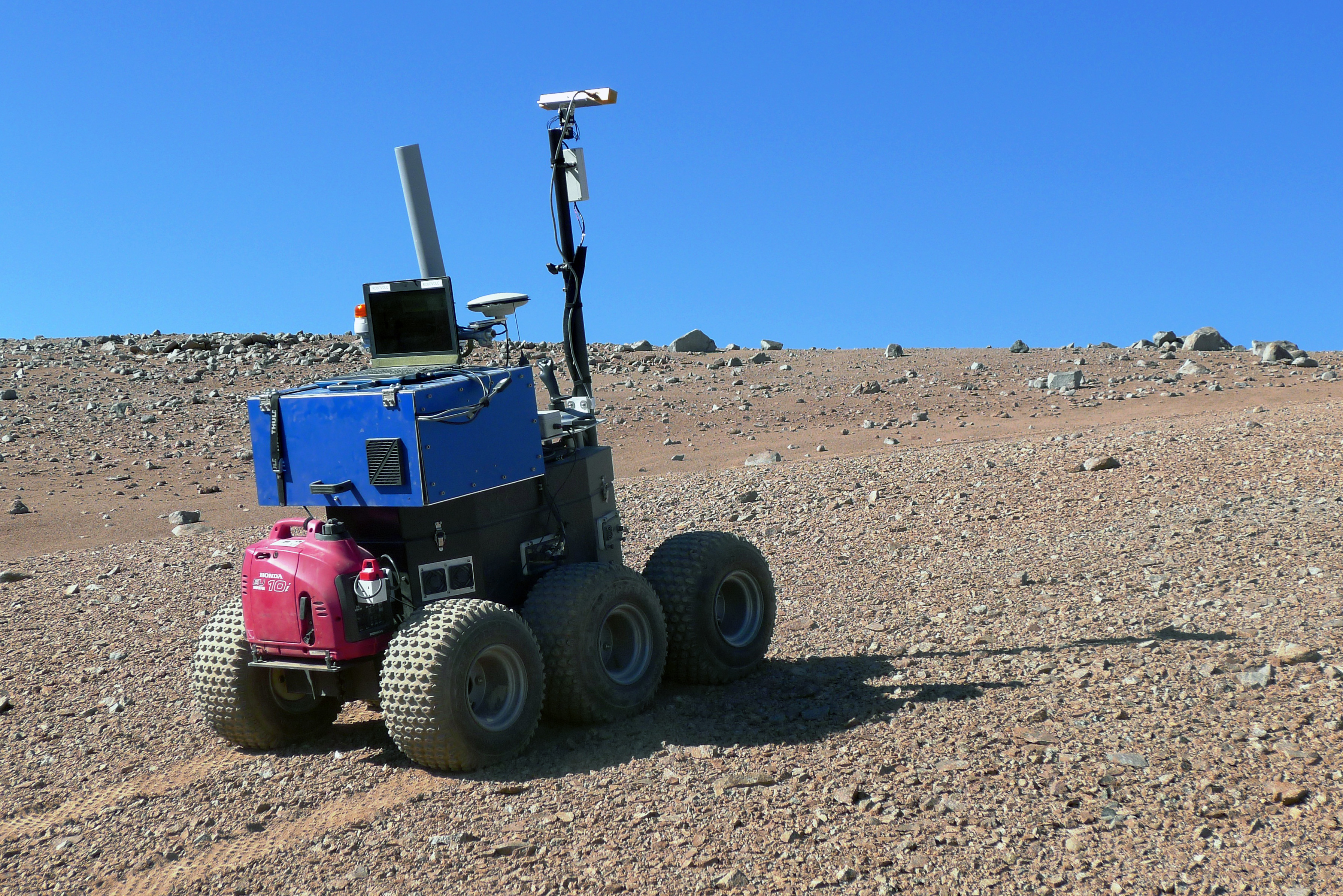
Summary: On November 1, 1990, Dean Pomerleau of Carnegie Mellon University demonstrated a landmark achievement in vehicular automation by deploying ALVINN, an artificial neural network capable of steering a physical vehicle in real-time by interpreting live camera feeds.
The ALVINN (Autonomous Land Vehicle In a Neural Network) project represents a critical junction in the development of robotic perception. Operating out of Pittsburgh, Pennsylvania, this initiative showcased how a machine could be taught to navigate complex environments—like open public roads—by training a neural network on human driving patterns rather than relying on hand-coded instructions. By bridging the gap between raw visual data and physical control, ALVINN established the foundational architecture for what would eventually evolve into modern autonomous navigation systems.
| Historical Attribute | Milestone Registry Value |
|---|---|
| Classification Type | machine |
| Chronological Date | 1990-11-01 |
| Coordinates / Location | Pittsburgh, Pennsylvania |
| Curation Authority | Nick Hodder + MIA |
| Milestone Importance | standard Milestone |
How does ALVINN fit into the history of artificial intelligence?
ALVINN emerged as a direct descendant of the early theoretical models that proposed intelligence could arise from networks of interconnected nodes. By building upon the McCulloch-Pitts Neural Model and the later refinement of Backpropagation Popularized, Pomerleau demonstrated that machine learning could be applied to dynamic, unpredictable physical domains. Unlike the symbolic logic approaches of the Logic Theorist or the rigid frameworks of early DENDRAL Expert System, ALVINN utilized a "learning by observation" methodology. This approach traced its lineage back to the The Perceptron, proving that even with the limited compute power of 1990, neural networks could successfully process high-dimensional input like video to produce actionable outputs.
What are the core technical achievements of ALVINN?
The system utilized a three-layer artificial neural network. The input layer received an image from a camera mounted on the vehicle, which was then processed through a hidden layer to identify features of the road, such as the location of the lane lines and obstacles. The output layer then determined the appropriate steering angle. One of the most significant technical breakthroughs was the use of "virtual training." Because gathering millions of miles of training data was impossible at the time, the research team created synthetic variations of existing camera data by shifting and rotating images to simulate various road conditions, effectively expanding the training set by several hundred percent. This provided the network with the robustness needed to maintain steady performance even when the vehicle was offset from the center of the lane.
Why is the legacy of ALVINN significant to modern computing?
ALVINN proved that neural networks were not just toys for logical puzzles but viable tools for controlling hardware in real-time. It paved the way for more sophisticated systems such as the Stanley Autonomous SUV, which would gain prominence over a decade later. The methodology of training models on real-world inputs to generalize to new scenarios is now the standard for modern computer vision. Furthermore, ALVINN highlighted the shift away from purely programmed rules toward data-driven learning, a transition that influences contemporary architectures like those seen in LeNet-5 Convolutional Net or even the massive visual processing capabilities required for Vision Transformer (ViT). By demonstrating that a car could "learn" to stay on the road without being explicitly programmed with every possible edge case, ALVINN remains a foundational pillar for any system requiring autonomous perception.