Vision Transformer (ViT)
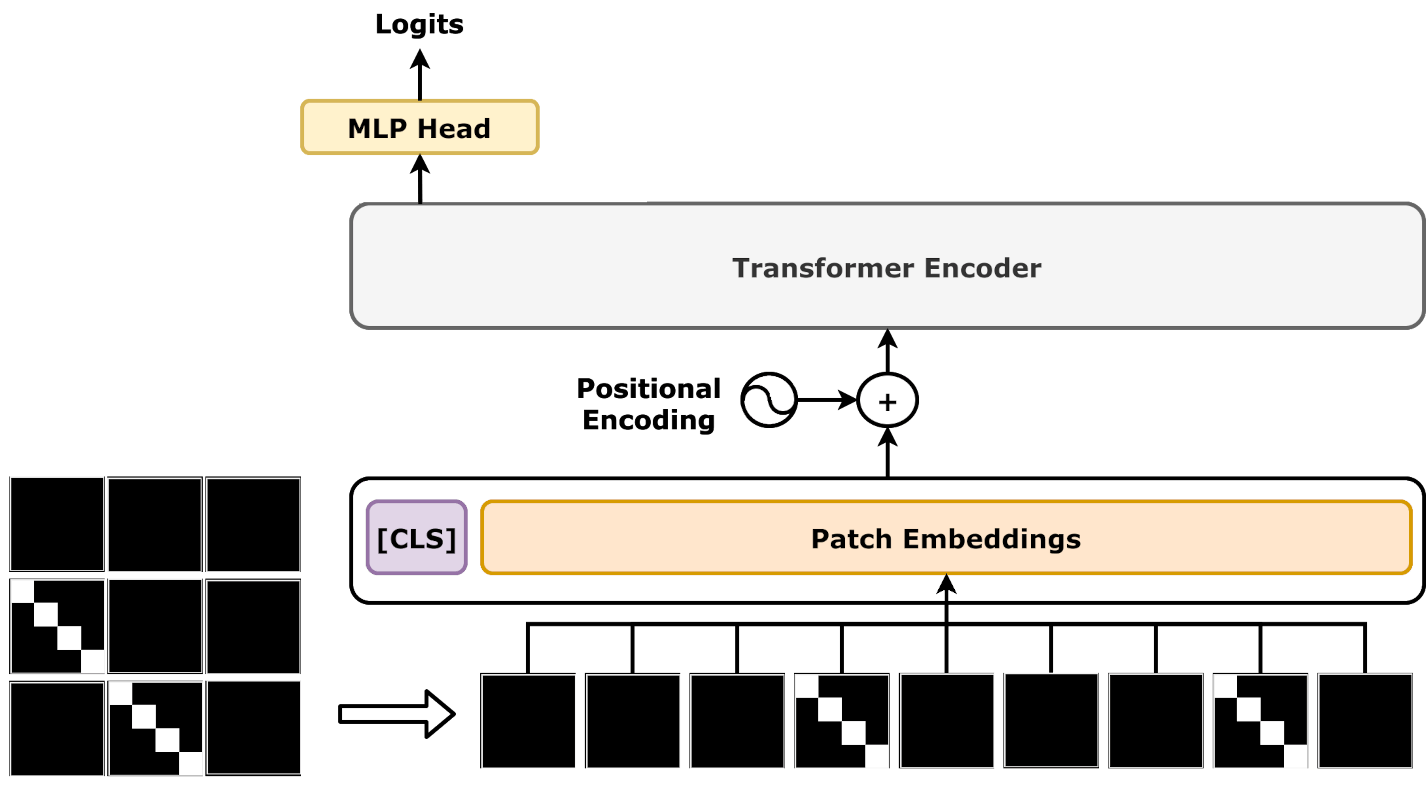
Summary: On October 22, 2020, researchers at Google unveiled the Vision Transformer (ViT), a groundbreaking architectural shift that successfully applied the principles of natural language processing to the realm of computer vision by treating image patches as a sequence of data, permanently altering how machines "see" the world.
The introduction of the Vision Transformer (ViT) represents a pivotal moment in machine learning history. For decades, computers processed images like a sliding window scanning across a page, but the ViT changed this by breaking images into a grid of small, independent pieces—similar to how a puzzle is assembled. By treating these pieces as words in a sentence, the technology allowed computers to understand the relationship between different parts of an image simultaneously, rather than just focusing on immediate neighbors. This innovation, presented in Berlin on October 22, 2020, marked the day vision-based computing moved away from traditional methods to match the powerful architectures used to translate human language.
| Historical Attribute | Milestone Registry Value |
|---|---|
| Classification Type | software |
| Chronological Date | 2020-10-22 |
| Coordinates / Location | Berlin, Germany |
| Curation Authority | Nick Hodder + MIA |
| Milestone Importance | standard Milestone |
How does Vision Transformer (ViT) fit into the history of artificial intelligence?
The history of artificial intelligence has been marked by a long-standing divide between how we process textual data and visual data. Early attempts at pattern recognition, such as The Perceptron and the The Neocognitron, set the stage for spatial analysis. Eventually, the rise of the AlexNet Convolutional Net established the dominant paradigm of Convolutional Neural Networks (CNNs). While these systems performed exceptionally well, they were distinct from the developments in language processing, such as the The Transformer Paper of 2017. The Vision Transformer serves as the historical bridge that unified these two fields. By adopting the attention-based architecture that revolutionized models like BERT Language Model, the ViT proved that a single, unified architectural logic could succeed across disparate domains of sensory input.
What are the core technical achievements of Vision Transformer (ViT)?
The core achievement of the ViT is its departure from inductive biases associated with CNNs. In a standard convolutional model, the system assumes that nearby pixels are highly correlated. The ViT, conversely, treats the image as a sequence of fixed-size patches, typically 16x16 pixels. By flattening these patches into vectors and adding positional embeddings, it allows the self-attention mechanism to look at every patch relative to every other patch across the entire image.
This approach requires significant computational scale; however, when trained on massive datasets like ImageNet-21k, the model demonstrated superior performance. Specifically, the ViT achieved an accuracy of 88.55% on the ImageNet validation set, outperforming traditional state-of-the-art CNNs like ResNet (Residual Networks) while requiring substantially fewer computational resources during the pre-training phase.
Why is the legacy of Vision Transformer (ViT) significant to modern computing?
The legacy of the ViT is primarily defined by the democratization of AI architectures. By proving that vision and language models could rely on the same fundamental building blocks, it catalyzed the development of large-scale multimodal models. Technologies such as CLIP Visual Alignment, which enables systems to understand the relationship between text and images simultaneously, would have been significantly more difficult to engineer without the initial proof-of-concept provided by the ViT.
Furthermore, the ViT effectively forced a shift in hardware optimization requirements. Because the Transformer architecture relies heavily on matrix-matrix multiplications rather than the spatial convolutions favored by earlier architectures, it accelerated the shift toward high-performance computing clusters, such as the TPU v4 Supercluster and NVIDIA H100 GPU, which are now standard in modern research environments. By erasing the artificial wall between pixels and words, the ViT paved the way for the generalized, multimodal intelligence seen in contemporary systems.