Jeff Dean
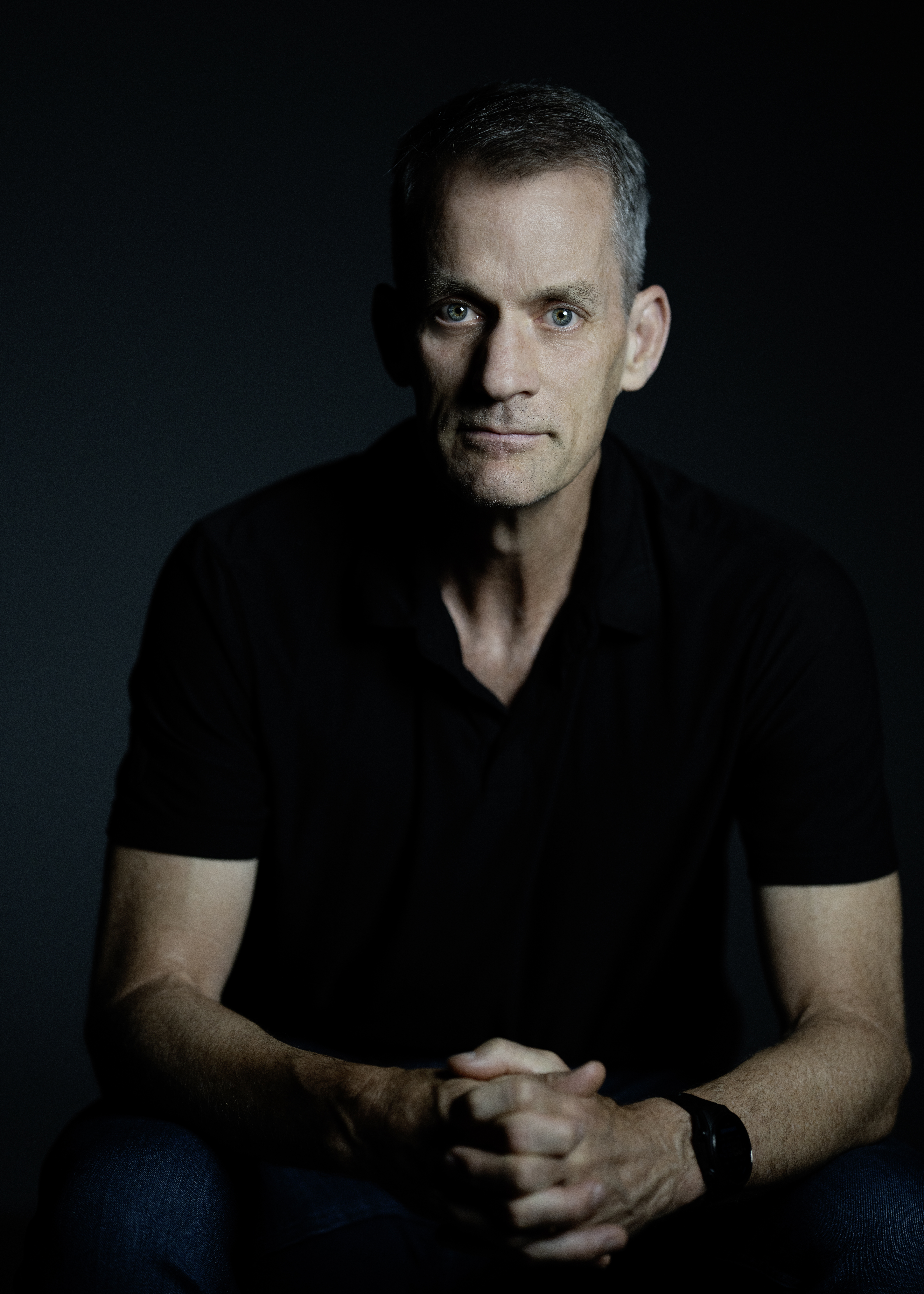
Summary: On August 16, 2011, computing pioneer Jeff Dean co-founded Google Brain, initiating a massive transformation in artificial intelligence by scaling neural networks on vast distributed systems, subsequently directing the development of landmark frameworks like DistBelief and TensorFlow and steering Google's custom silicon strategies.
Imagine trying to teach a computer to recognize a cat, but instead of using a single computer, you harness thousands of machines working together like a giant, coordinated orchestra. On August 16, 2011, in Stanford, California, systems wizard Jeff Dean co-founded Google Brain to turn this massive scale into reality. His work shifted artificial intelligence from a small-scale, theoretical puzzle into a massive engineering powerhouse, laying the foundational systems architecture that powers the modern era of deep learning.
| Historical Attribute | Milestone Registry Value |
|---|---|
| Classification Type | person |
| Chronological Date | 2011-08-16 |
| Coordinates / Location | Stanford, California |
| Curation Authority | Nick Hodder + MIA |
| Milestone Importance | godfather Milestone |
How does Jeff Dean fit into the history of artificial intelligence?
To understand Jeff Dean’s influence on artificial intelligence, one must look prior to 2011, when the field of machine learning was heavily constrained by computation. For decades, neural network theories pioneered by figures like Geoffrey Hinton remained limited in practice. Computers were simply too slow, and data sets were too small. During this period, Dean was establishing himself as Google’s legendary systems architect. Having joined the company in 1999, he co-designed the core infrastructure that allowed Google to index and search the web at an unprecedented scale. His work on systems like MapReduce, BigTable, and the PageRank Link Graph execution engines taught the computing world how to coordinate tens of thousands of cheap, commodity servers to act as a single, ultra-powerful supercomputer.
By 2011, founders Larry Page and Sergey Brin were eager to explore how Google's vast computing resources could be applied to deep neural networks. Andrew Ng, then a professor at Stanford, was experimenting with scaling Deep Belief Networks using cluster computing. Recognizing the convergence of distributed systems and machine learning, Dean joined forces with Ng and Google researcher Greg Corrado to launch a confidential research project. This collaboration, officially established on August 16, 2011, was named Google Brain.
Dean’s entry into AI marked a paradigm shift. He brought the rigorous, pragmatic discipline of systems engineering to a field that had been dominated by mathematical theory and isolated academic experimentation. Under his leadership, Google Brain proved that scaling up models using distributed computing was not merely a quantitative improvement, but a qualitative one. By applying massive computing power to deep architectures, neural networks suddenly began solving complex vision, speech, and translation problems that had stumped researchers for decades.
What are the core technical achievements of Jeff Dean?
Dean’s technical contributions to artificial intelligence span distributed software frameworks, custom hardware design, and model scaling strategies. His first major breakthrough within Google Brain was the design of DistBelief, a first-generation distributed training system. At the time, standard deep learning algorithms were designed to run on a single machine. DistBelief introduced concepts like parameter servers and asynchronous stochastic gradient descent (asynchronous SGD), which allowed neural networks to be split across thousands of CPUs. This infrastructure powered the famous Google Brain Cat Finder in 2012, where a network with 1 billion parameters was trained on 10,000 CPU cores to identify cats and other objects in unlabeled YouTube videos with 70% higher accuracy than any previous system.
As deep learning algorithms shifted from CPUs to GPUs and other parallel architectures, Dean recognized that DistBelief’s fixed, multi-CPU framework was too rigid. He directed the design and implementation of its successor, the TensorFlow Platform, which was open-sourced in November 2015. TensorFlow introduced a highly flexible dataflow graph architecture that allowed researchers to define computations mathematically and run them seamlessly across CPUs, GPUs, or custom chips. TensorFlow democratized machine learning globally, quickly becoming the dominant software framework alongside competitors like the PyTorch Framework.
Perhaps Dean's most far-reaching technical impact was his early realization that traditional silicon was hitting physical limits. To support the exponentially increasing compute demands of deep learning, Dean championed Google's custom Application-Specific Integrated Circuit (ASIC) program. This led to the development of the TPU v1 (Tensor Processing Unit) in 2015, which was specialized for neural network inference. Dean subsequently guided the evolution of TPUs into liquid-cooled training supercomputers, culminating in massive systems like the TPU v4 Supercluster. These hardware innovations drove down the cost and time of training large models by several orders of magnitude, turning weeks of computation into hours.
Why is the legacy of Jeff Dean significant to modern computing?
The legacy of Jeff Dean is woven into the very fabric of contemporary computing. His scale-first philosophy anticipated the computational requirements of modern generative AI. Without the distributed architectures he pioneered, the transition from early computer vision systems like AlexNet Convolutional Net to highly parallelized structures like Word2Vec Representation and Seq2Seq Architecture would have been computationally impossible.
By proving that system architecture is just as critical to artificial intelligence as algorithmic design, Dean helped usher in the era of "hardware-software co-design." This model of computing dictates that chips, network topology, compilers, and machine learning models must be engineered together. The massive Transformer models that define today's technology landscape—ranging from The Transformer Paper and BERT Language Model to modern multimodal giants like Gemini 1.0 Multimodal—rely entirely on the distributed infrastructure patterns that Dean spent his career developing.
Ultimately, Dean's transition from general search infrastructure to dedicated AI systems bridged the gap between academic theory and global industrial utility. By showing that deep learning could scale reliably on distributed systems, he catalyzed the industry-wide shift toward neural networks, cementing his status as one of the fundamental architects of the modern computing age.