Andrew Ng
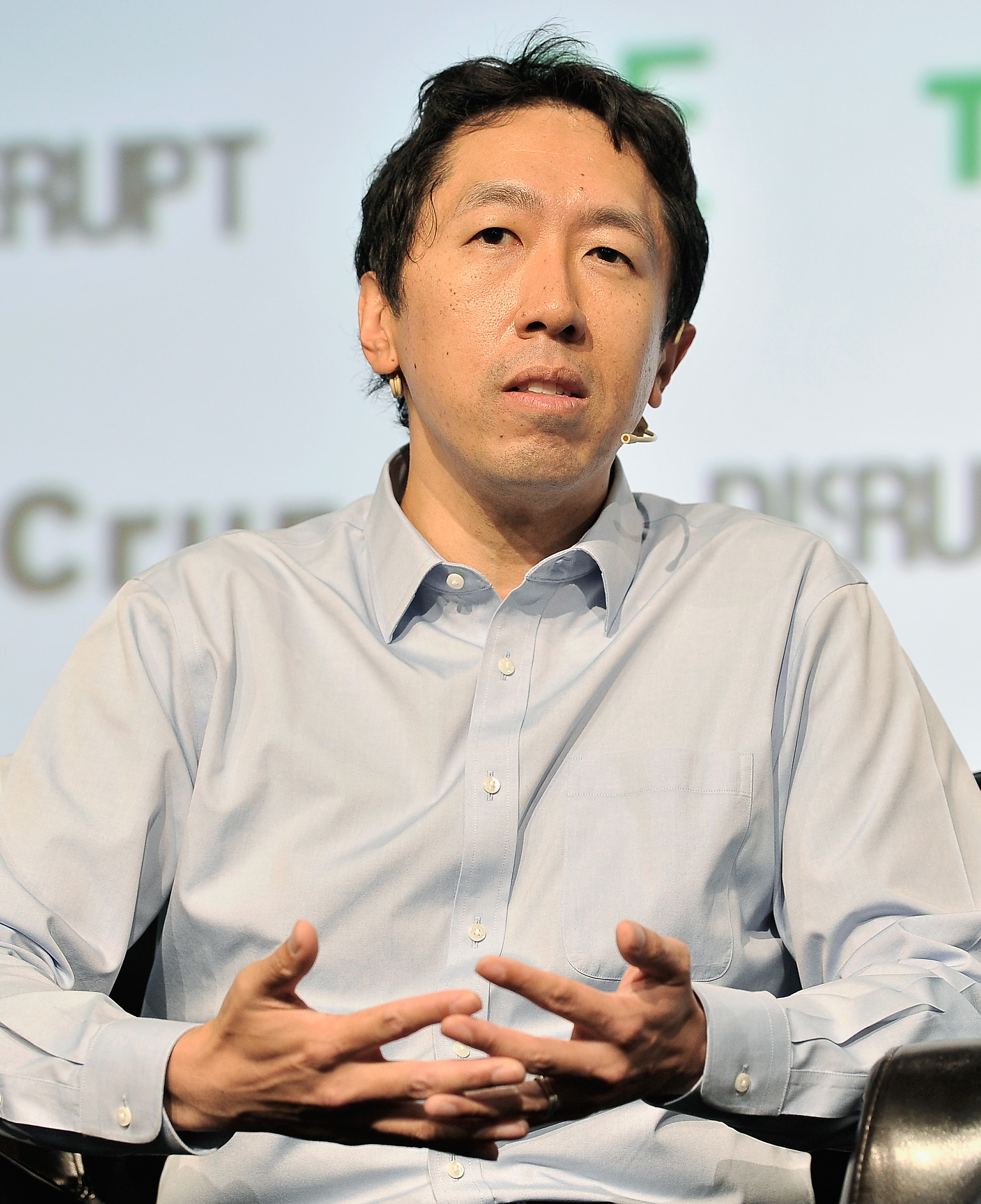
Summary: Andrew Ng is a transformative figure in machine learning whose leadership at Stanford AI Lab and pivotal role in founding Google Brain on August 16, 2011, accelerated the transition of neural networks from theoretical academic curiosities to the primary engine of modern industrial intelligence.
On August 16, 2011, at Stanford, California, a critical shift occurred in the landscape of computing. Andrew Ng, an academic researcher with a focus on machine learning, joined forces with Google to initiate a project that would eventually be known as Google Brain. This event marked a move away from traditional, manually programmed software toward systems that learn from vast quantities of data. By applying the principles established by early pioneers like McCulloch-Pitts Neural Model and the computational insights of Geoffrey Hinton, Ng proved that large-scale neural networks could be trained on commercial hardware, effectively ending a long era of skepticism surrounding artificial intelligence.
| Historical Attribute | Milestone Registry Value |
|---|---|
| Classification Type | person |
| Chronological Date | 2011-08-16 |
| Coordinates / Location | Stanford, California |
| Curation Authority | Nick Hodder + MIA |
| Milestone Importance | standard Milestone |
How does Andrew Ng fit into the history of artificial intelligence?
Andrew Ng occupies a unique space in the evolution of computational intelligence, acting as a bridge between the theoretical roots of the 20th century and the high-performance reality of the 21st. Before his work at the Stanford AI Lab, the field had endured two distinct periods of stagnation known as AI Winter 1 and AI Winter 2. Ng helped reverse this cycle by championing the scalability of algorithms. His pedagogical approach, which democratized access to complex knowledge through platforms like Coursera, mirrored the earlier efforts to standardize LISP Programming Language or refine the Chomsky Hierarchy Formulated by providing the tools necessary for a new generation of researchers to enter the field.
What are the core technical achievements of Andrew Ng?
The primary achievement of Ng’s career is the successful industrialization of deep learning. While the mathematical foundations of Backpropagation Popularized were established decades prior, the computational overhead required to train these systems was prohibitive. In 2011, Ng led an initiative at Google that utilized large clusters of computers to simulate human-like visual recognition, which later matured into the famous Google Brain Cat Finder. This demonstrated that if you feed a network enough unlabeled data, the system can autonomously identify features—a massive leap from the hand-coded rules found in earlier systems like the DENDRAL Expert System. Furthermore, his later venture, Landing.ai, focused on bringing these complex neural networks into manufacturing environments, translating academic success into tangible economic and physical utility.
Why is the legacy of Andrew Ng significant to modern computing?
The significance of Andrew Ng’s legacy lies in the standardization and accessibility of artificial intelligence. By emphasizing that artificial intelligence is the "new electricity," he shifted the perspective of computer science from a niche research field to an foundational utility. His work paved the way for modern architectures such as the The Transformer Paper and high-scale models like the GPT-3 Language Model, which rely on the same principle of massive data processing that Ng pioneered at Google. Furthermore, his efforts to educate millions globally ensured that the principles of machine learning—initially understood only by a few dozen experts—became standard curriculum. This transition has proven essential for the current rapid development of systems like Gemini 1.0 Multimodal, which continue the work of large-scale neural network integration that Ng successfully championed over a decade ago.