Fei-Fei Li
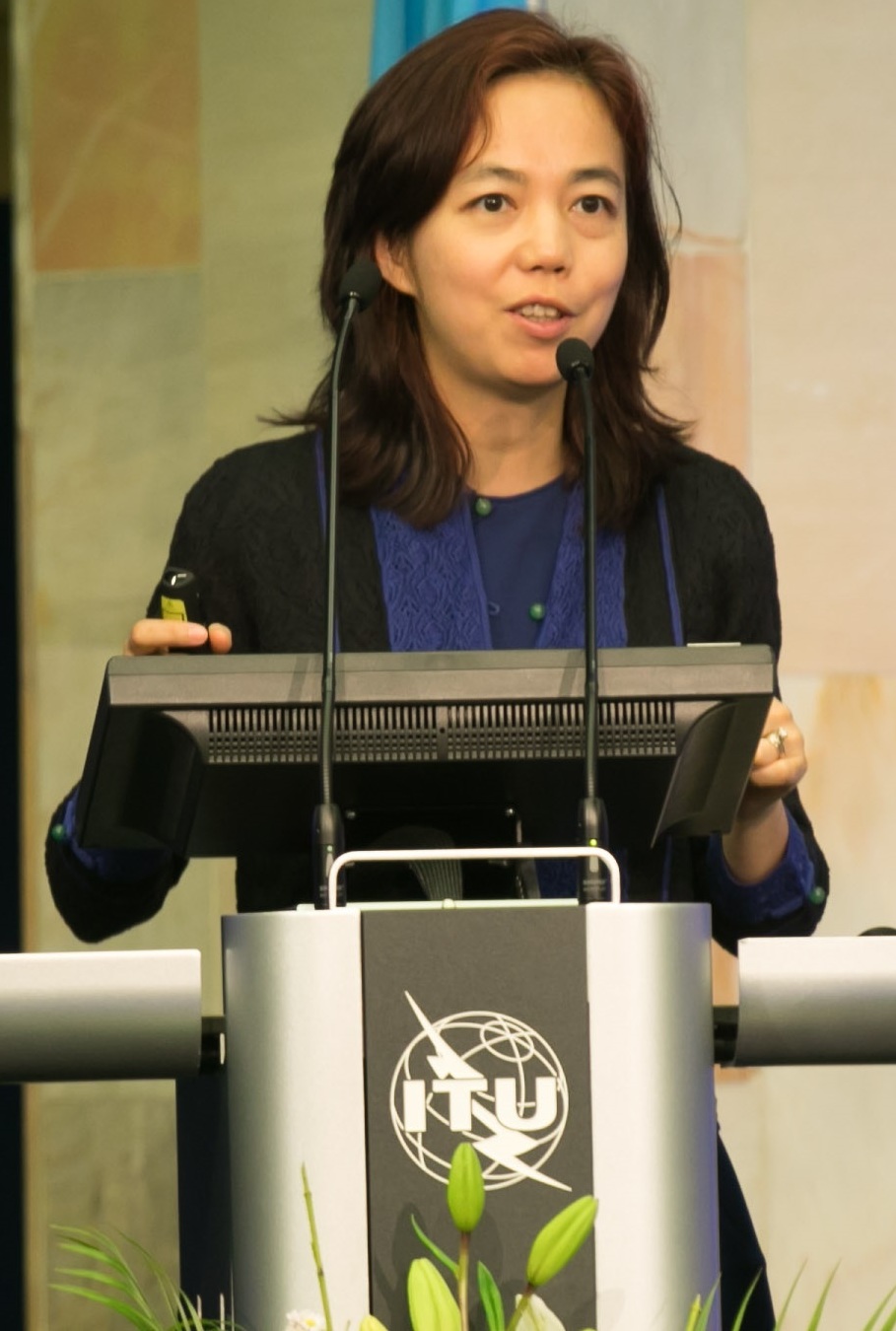
Summary: On June 18, 2007, computer scientist Fei-Fei Li catalyzed a paradigm shift in machine vision by spearheading the creation of ImageNet, a massive, hierarchically organized database that provided the essential data foundation required for deep learning to flourish.
In the annals of computing history, few figures have reshaped the trajectory of machine perception as decisively as Fei-Fei Li. On June 18, 2007, while conducting research in Princeton, New Jersey, Li began the foundational work on the ImageNet database project. This initiative was designed to address a critical bottleneck in the evolution of artificial intelligence: the lack of sufficiently large, annotated datasets to teach computers how to interpret the complex visual world. By scaling data collection to millions of images, Li moved the field away from its focus on algorithmic refinement alone and toward a "data-centric" approach, which proved essential for the subsequent success of GPU-Accelerated CNNs and AlexNet Convolutional Net.
| Historical Attribute | Milestone Registry Value |
|---|---|
| Classification Type | person |
| Chronological Date | 2007-06-18 |
| Coordinates / Location | Princeton, New Jersey |
| Curation Authority | Nick Hodder + MIA |
| Milestone Importance | standard Milestone |
How does Fei-Fei Li fit into the history of artificial intelligence?
Fei-Fei Li’s contributions bridge the gap between the theoretical aspirations of early AI, such as the Dartmouth Workshop, and the high-performance reality of modern neural networks. In the early 2000s, machine learning research often relied on small, hand-crafted datasets, limiting the ability of models to generalize to real-world complexity. Li recognized that if AI was to mimic human cognition—much like the goals envisioned by early researchers in McCulloch-Pitts Neural Model or The Perceptron—it required a vast repository of visual experience. Her advocacy for "Big Data" in visual recognition was a radical departure from the prevailing academic focus of that era, positioning her as a vital architect of the modern AI renaissance.
What are the core technical achievements of Fei-Fei Li?
The primary technical achievement associated with Li is the development of the ImageNet database, officially introduced as the ImageNet Database Project in 2007. ImageNet contained over 14 million images categorized into more than 20,000 categories, utilizing the WordNet hierarchy to organize the labels. This project allowed for the ImageNet Large Scale Visual Recognition Challenge (ILSVRC), which became the benchmark for measuring progress in computer vision. Beyond this, Li founded the Stanford Human-Centered AI Institute, which formally brought a multidisciplinary perspective to AI development, ensuring that technical progress in fields like Backpropagation Popularized or LeNet-5 Convolutional Net is balanced with societal and ethical considerations.
Why is the legacy of Fei-Fei Li significant to modern computing?
The legacy of Fei-Fei Li is rooted in the empirical demonstration that scale matters. Before ImageNet, researchers often prioritized more complex algorithms while using limited data. Li’s work proved that even relatively simple architectures could achieve superhuman performance on image classification tasks if provided with enough diverse, labeled examples. This realization accelerated the adoption of deep learning techniques across the industry. Her work effectively paved the way for subsequent breakthroughs like Vision Transformer (ViT) and CLIP Visual Alignment. By successfully merging the technical rigor of computer vision with a philosophical commitment to human-centered design, Li has ensured that the growth of AI systems remains tethered to the objective of augmenting human capabilities rather than replacing them.