Demis Hassabis
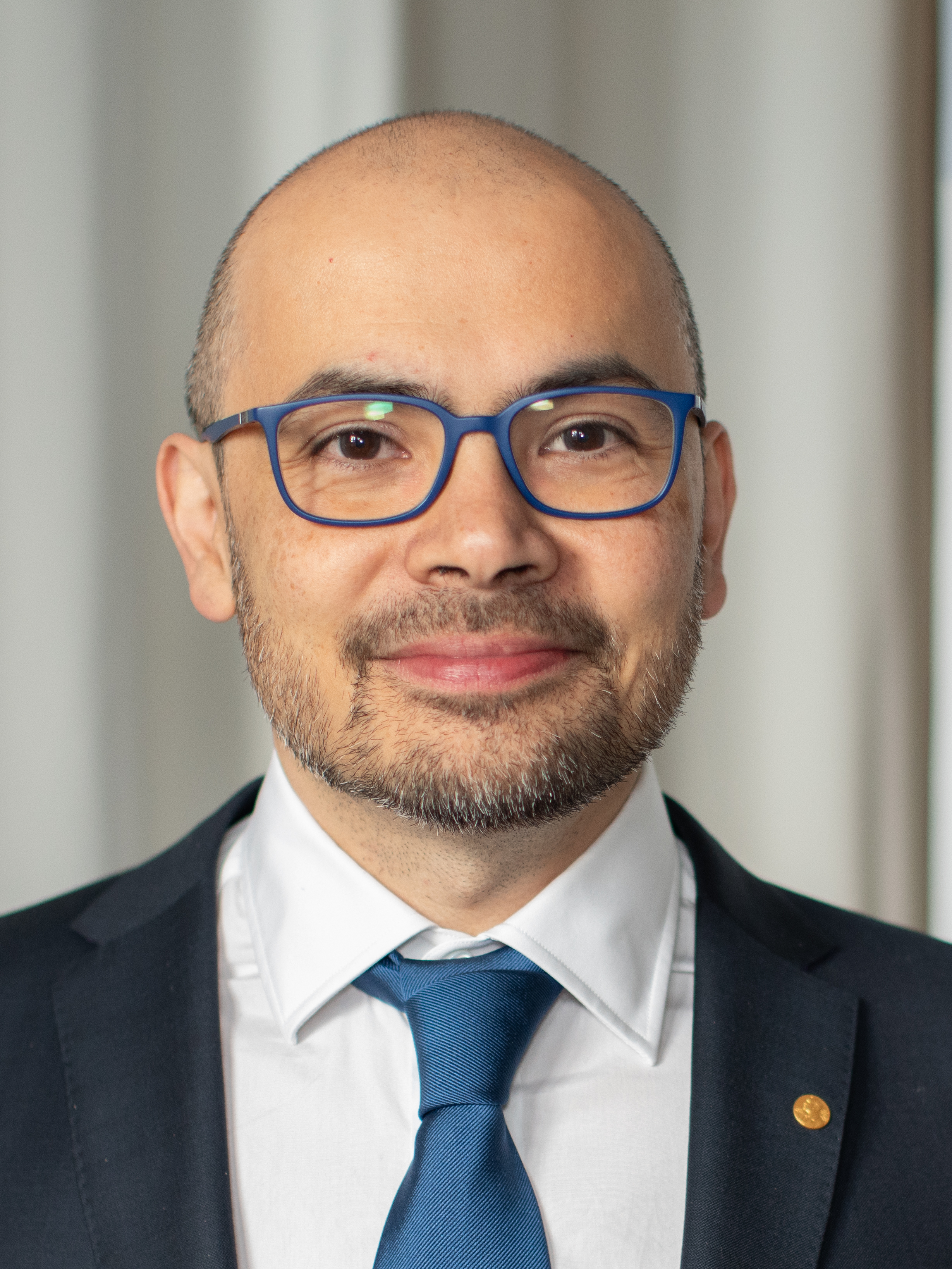
Summary: On November 15, 2010, neuroscientist and game designer Demis Hassabis co-founded DeepMind in London, an institution that would fundamentally shift the trajectory of computation by bridging the gap between human cognitive insight and machine learning prowess.
Demis Hassabis is a foundational figure in contemporary computer science whose work has pushed the boundaries of artificial intelligence from simple pattern recognition toward complex scientific discovery. Established in London in 2010, his research enterprise sought to replicate the efficiency of the human brain to solve real-world problems. His career represents a transition in history where machines evolved from following rigid instructions to learning how to teach themselves through experience and observation.
| Historical Attribute | Milestone Registry Value |
|---|---|
| Classification Type | person |
| Chronological Date | 2010-11-15 |
| Coordinates / Location | London, UK |
| Curation Authority | Nick Hodder + MIA |
| Milestone Importance | godfather Milestone |
How does Demis Hassabis fit into the history of artificial intelligence?
The history of AI is often marked by a divide between symbol-based logic, established at the Dartmouth Workshop, and connectionist approaches like the The Perceptron. Hassabis acts as a synthesizer of these traditions. By combining his background in neuroscience with a deep understanding of Q-Learning Algorithm principles, he moved the field away from the narrow, rules-based expert systems of the 1970s and 1980s. While pioneers like Alan Turing envisioned machines that could learn, it was the integration of deep neural networks—such as those explored in Deep Belief Networks—with reinforcement learning that allowed Hassabis to create systems that could master environments without pre-programmed knowledge.
What are the core technical achievements of Demis Hassabis?
Hassabis led the development of the Deep Q-Networks (DQN), which famously allowed an agent to learn to play classic games to a professional standard by looking only at raw pixels. This proved that computers could learn abstract strategies autonomously. Following this, he directed the development of AlphaGo vs Lee Sedol, a landmark moment where an AI defeated a world champion in the game of Go, a task previously thought to be decades away. The evolution continued with AlphaGo Zero System, which discarded human data entirely to learn from self-play.
Perhaps his most significant scientific contribution is the AlphaFold 1 Protein Predictor and its successor, AlphaFold 2 Biological Model. These systems solved a 50-year-old challenge in biology by predicting the 3D structure of proteins with atomic-level accuracy. This work shifted AI from a research curiosity into a vital tool for drug discovery and medicine, culminating in the release of AlphaFold 3 Predictor and the multimodal capabilities of Gemini 1.0 Multimodal.
Why is the legacy of Demis Hassabis significant to modern computing?
The legacy of Hassabis lies in the formalization of "General Purpose AI." By pushing the boundaries of reinforcement learning and large-scale model training, he proved that computation is not limited to data processing but can be an engine for scientific discovery. His work mirrors the architectural ambitions seen in early concepts like the General Problem Solver, but realized through the computational power of the modern era, such as the TPU v4 Supercluster. His influence marks a permanent shift where machine intelligence is now an expected partner in deciphering the most complex patterns in the physical and biological world, moving well beyond the simple classifications envisioned by early research like the LeNet Digit Classifier.