Rodney Brooks
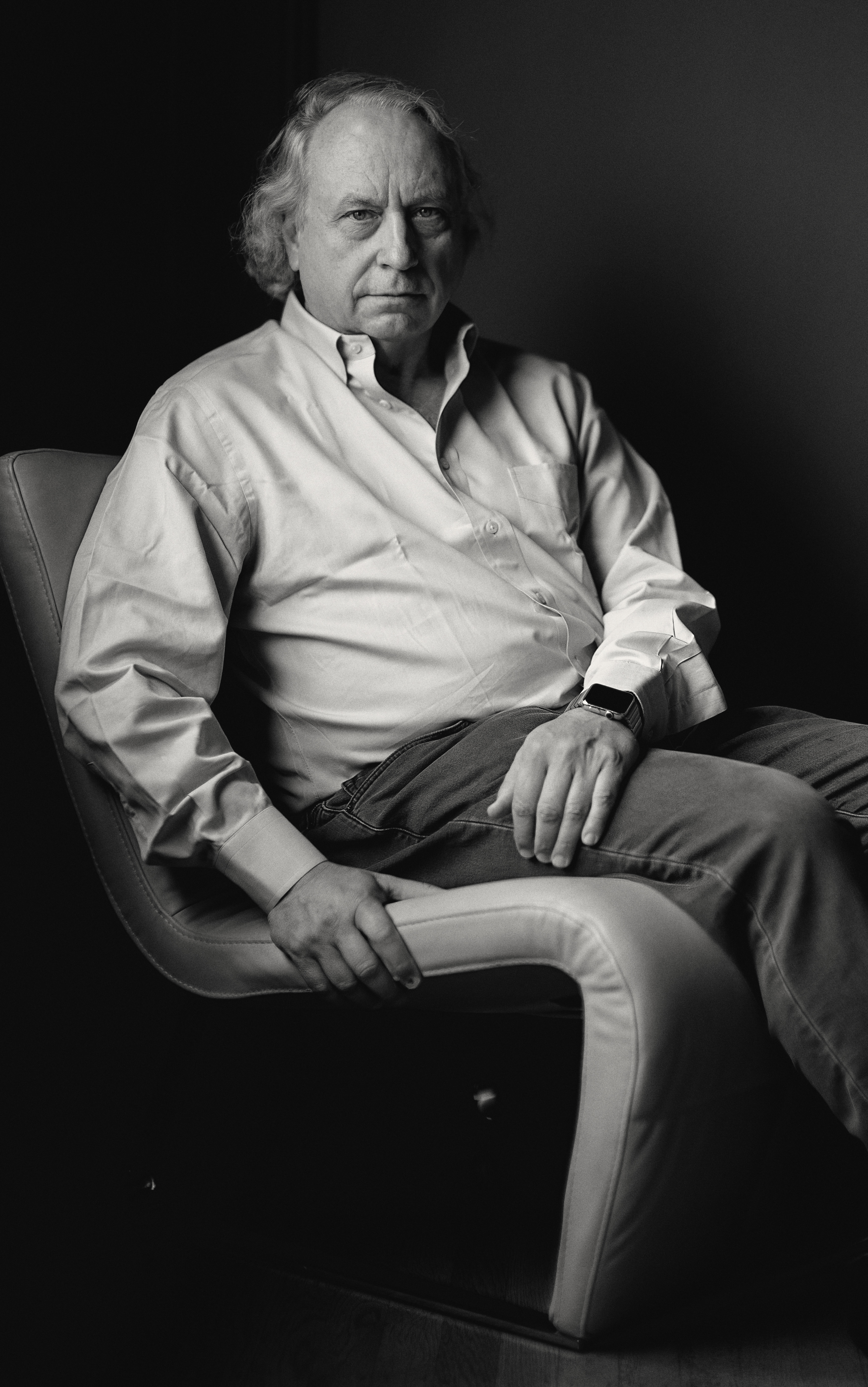
Summary: On September 1, 1987, roboticist Rodney Brooks fundamentally altered the trajectory of artificial intelligence by formally publishing the subsumption architecture, a paradigm-shifting approach that prioritized physical interaction over internal symbolic representation, eventually leading to his co-founding of iRobot.
In the late 1980s, the field of robotics was dominated by the belief that machines needed to build complex internal maps and models of the world to function, much like a person thinking through a math problem. On September 1, 1987, in Cambridge, Massachusetts, Rodney Brooks challenged this entire philosophy. He argued that robots did not need expensive, heavy computing to act intelligently; instead, they could thrive by simply reacting to their immediate environment, layer by layer. This move away from "thinking" toward "doing" transformed robotics from a theoretical exercise into a practical, physical reality.
| Historical Attribute | Milestone Registry Value |
|---|---|
| Classification Type | person |
| Chronological Date | 1987-09-01 |
| Coordinates / Location | Cambridge, Massachusetts |
| Curation Authority | Nick Hodder + MIA |
| Milestone Importance | standard Milestone |
How does Rodney Brooks fit into the history of artificial intelligence?
Rodney Brooks entered the field during a period where researchers were heavily influenced by the Dartmouth Workshop tradition, which favored logic-based, top-down artificial intelligence. Early successes like the General Problem Solver and the Shakey the Robot project assumed that machines needed a centralized "brain" to process symbols and plan actions. Brooks countered this, arguing that such systems were brittle and slow. He shifted the focus toward a bottom-up approach, drawing inspiration from the biological efficiency of insects. His work occurred as the field moved past the constraints of early systems like LISP Programming Language and toward more adaptive models, paralleling developments like Hopfield Network and the resurgence of neural approaches that would eventually inform modern Backpropagation Popularized.
What are the core technical achievements of Rodney Brooks?
The primary contribution of Brooks was the Subsumption Architecture, formally detailed in 1987. This architecture organizes robot control systems into layers of increasing complexity. Instead of one central processor, each layer connects sensors directly to actuators. For example, the lowest layer might handle simple tasks like "avoid obstacle," while a higher layer might handle "move toward a goal." If the higher layer is busy, the lower "avoid obstacle" layer can still act independently and immediately, ensuring the robot doesn't crash. This approach significantly reduced the computational overhead required for basic navigation, moving away from the cumbersome "Sense-Plan-Act" cycle used in previous machines like the Stanford Cart. Later, his transition into industrial robotics focused on collaborative arms that could safely work alongside humans, a 180-degree turn from the isolated, cage-bound Unimate Industrial Robot.
Why is the legacy of Rodney Brooks significant to modern computing?
The legacy of Brooks is visible in every piece of autonomous hardware that functions in unpredictable real-world environments. His insistence that "the world is its own best model" removed the need for robots to maintain perfect, complex digital maps of their surroundings, which was a primary failure point for early AI research. By proving that simple behaviors can emerge as intelligent movement, he paved the way for consumer-grade robotics, such as the later Roomba Consumer Robot. Furthermore, his work predated and influenced the rise of modular robotics and distributed sensor systems. While the field eventually embraced high-level machine learning and data-heavy approaches like Deep Belief Networks and AlexNet Convolutional Net, the fundamental requirement for robust, reactive systems remains rooted in the principles of decentralization and direct sensory-motor coupling that Brooks championed throughout his career.