Ray Kurzweil
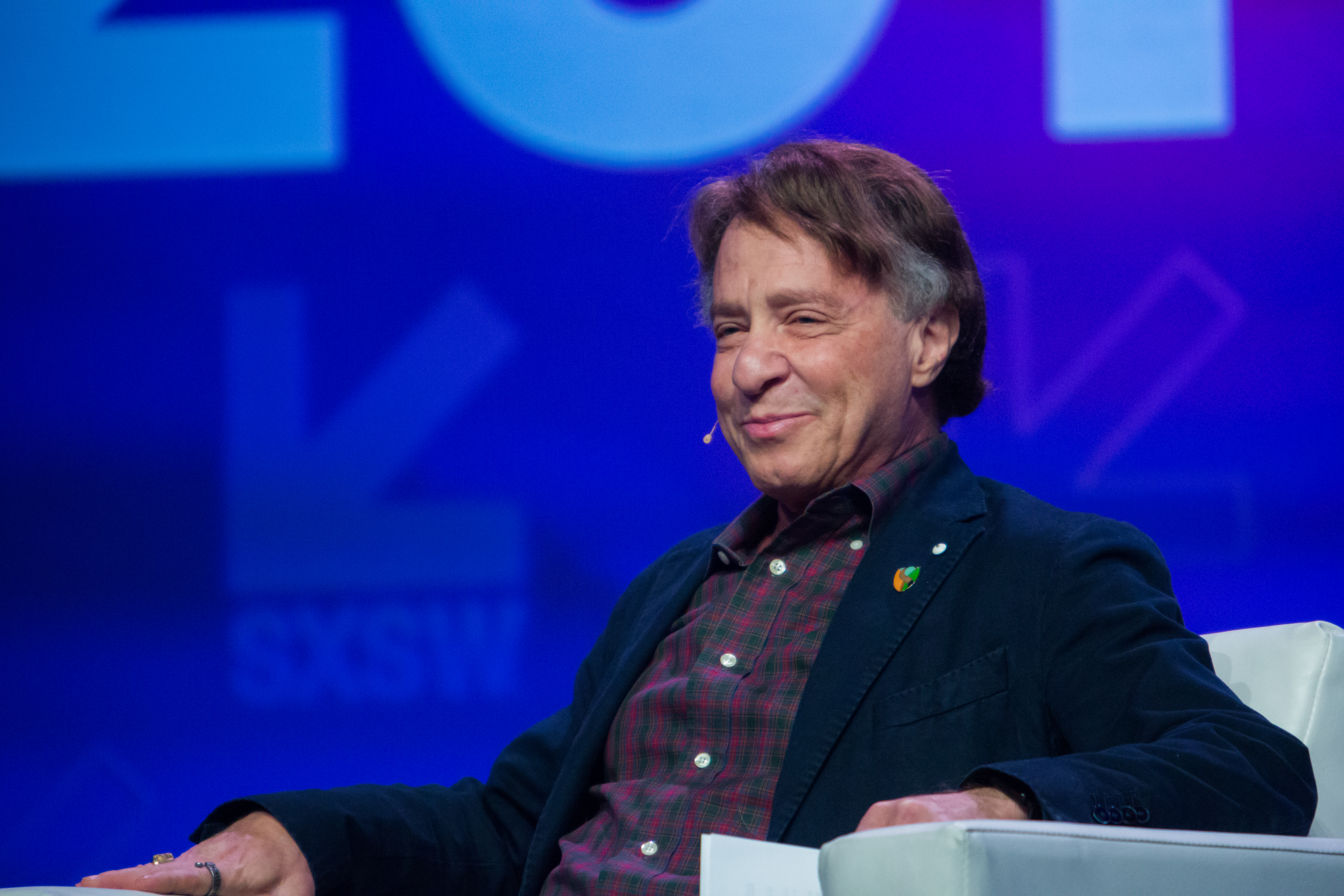
Summary: Ray Kurzweil is a prolific inventor and visionary thinker who, on January 1, 1999, published 'The Age of Spiritual Machines', a seminal work that crystallized the concept of the Technological Singularity and established a framework for understanding the exponential trajectory of computing power.
Ray Kurzweil, based in Cambridge, Massachusetts, has served as one of the most influential figures in shaping public and academic discourse regarding the future of artificial intelligence. By the dawn of 1999, his work moved beyond traditional engineering to address the long-term implications of machine intelligence. His central contribution is the analysis of exponential growth patterns—noting that technological progress does not move in a straight line, but accelerates as each generation of technology is used to build the next, more powerful generation.
| Historical Attribute | Milestone Registry Value |
|---|---|
| Classification Type | person |
| Chronological Date | 1999-01-01 |
| Coordinates / Location | Cambridge, Massachusetts |
| Curation Authority | Nick Hodder + MIA |
| Milestone Importance | standard Milestone |
How does Ray Kurzweil fit into the history of artificial intelligence?
Kurzweil emerged during a period of transition in computational history. While pioneers like Alan Turing and the participants of the Dartmouth Workshop established the theoretical and logical foundations for machine intelligence, Kurzweil shifted the perspective toward the physical constraints—or lack thereof—of hardware. He bridged the gap between the era of early neural modeling, such as the McCulloch-Pitts Neural Model, and the modern age of massive scale. By tracking the progression from the early eniac" class="text-accent hover:underline font-semibold">ENIAC to the late 20th-century advancements, he framed the evolution of intelligence not as a static goal, but as an inevitable outcome of sustained, exponential hardware scaling.
What are the core technical achievements of Ray Kurzweil?
His technical legacy is grounded in the "Law of Accelerating Returns." This hypothesis posits that the rate of change in evolutionary systems—specifically technological ones—tends to increase exponentially. He applied this observation to the history of computation, tracing the evolution from mechanical calculators to vacuum tubes, transistors, and integrated circuits. His work is intrinsically linked to the observation of performance metrics; for instance, he documented how computing power per constant dollar has historically doubled roughly every 18 to 24 months, a trend that predates and extends beyond standard interpretations of Moore's Law. This mathematical framework provided a foundation for researchers working on The Perceptron or the later Backpropagation Popularized era to anticipate the hardware required for complex systems like the Deep Blue Chess Machine.
Why is the legacy of Ray Kurzweil significant to modern computing?
The impact of Kurzweil's work is evident in how current research and development are planned. By arguing that machines would eventually possess human-level capabilities—a concept he termed the "Singularity"—he forced a shift in the field from purely symbolic logic, as seen in the Logic Theorist, toward the high-compute paradigms that characterize the modern era of GPT-3 Language Model and The Transformer Paper. His influence extends to the recognition that artificial intelligence is limited by the physical capacity of the hardware it runs on. As high-performance systems like the TPU v4 Supercluster and NVIDIA H100 GPU continue to scale, the industry implicitly relies on the exponential growth models he popularized. His legacy resides in the transition from viewing AI as a limited expert system, similar to DENDRAL Expert System, to understanding it as a progressively capable, general-purpose substrate for intelligence.