Roomba Consumer Robot
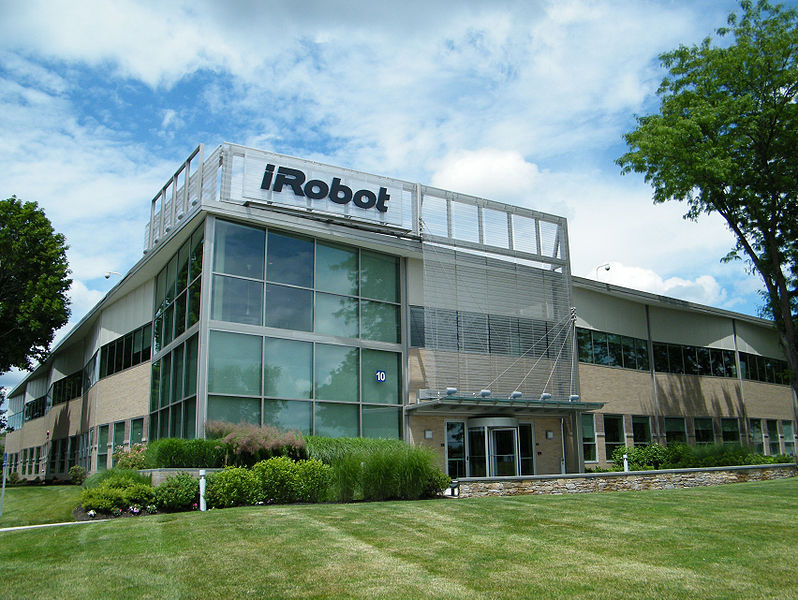
Summary: On September 17, 2002, the Roomba debuted in Bedford, Massachusetts, marking a pivotal transition for artificial intelligence as it moved from controlled laboratory environments into the unpredictable, everyday chaos of the human home.
The Roomba represents the first time the general public interacted with an autonomous machine capable of navigating a private space without human guidance. Launched by iRobot, this device demonstrated that sophisticated movement and environmental interaction—once the domain of expensive, hulking machines—could be distilled into a compact, affordable, and practical consumer product. By replacing complex, pre-programmed paths with reactive behaviors, it bridged the gap between theoretical robotics and daily utility.
| Historical Attribute | Milestone Registry Value |
|---|---|
| Classification Type | machine |
| Chronological Date | 2002-09-17 |
| Coordinates / Location | Bedford, Massachusetts |
| Curation Authority | Nick Hodder + MIA |
| Milestone Importance | standard Milestone |
How does Roomba Consumer Robot fit into the history of artificial intelligence?
The development of the Roomba was heavily influenced by the Subsumption Architecture, a design philosophy proposed by Rodney Brooks in 1987. Unlike earlier AI efforts—such as the General Problem Solver or the heavy symbolic logic of the Logic Theorist—which attempted to "think" or reason through world models, the Roomba was built to react to its immediate sensory input. This "bottom-up" approach to intelligence prioritized survival and basic task execution over high-level cognition. Its lineage traces back to early experiments like Shakey the Robot, yet it discarded the need for the massive compute clusters seen in the Stanford Cart. By the time of the Roomba, the field of AI had survived the AI Winter 1 and AI Winter 2, and the focus had shifted toward more pragmatic, specialized applications that could operate reliably in real-world environments.
What are the core technical achievements of Roomba Consumer Robot?
The primary achievement of the Roomba was its implementation of "reactive behavior heuristics." Instead of mapping an entire house, the robot utilized a collection of simple rules: "if bumped, turn," "if dirt detected, spiral," and "if cliff detected, reverse." These basic heuristics allowed it to cover floor space effectively without ever needing to understand the layout of the room. Technically, the machine relied on a suite of infrared and tactile sensors to navigate. While it lacked the complex neural processing found in later systems like AlexNet or the The Neocognitron, its efficiency in resource-constrained hardware set a benchmark for embedded AI. By the time of its release, the vacuum had sold millions of units, validating that autonomous agents could be deployed in non-industrial settings for under $200, a stark contrast to the high-cost, specialized industrial robots like the Unimate Industrial Robot.
Why is the legacy of Roomba Consumer Robot significant to modern computing?
The legacy of the Roomba lies in the normalization of autonomous machines in human-centric spaces. It demonstrated that AI did not need to reach human-level intelligence to provide significant economic and labor-saving value. This shift in perspective influenced the development of future autonomous systems, including the ALVINN Autonomous Vehicle successors and the Stanley Autonomous SUV, by proving that sensors and reactive control systems could handle the complexities of unstructured environments. Furthermore, as computational power grew—facilitated by advancements in hardware like the GeForce GPU Coined and later the NVIDIA H100 GPU—the reactive logic of the early Roomba eventually evolved into complex Simultaneous Localization and Mapping (SLAM) systems. The Roomba taught the industry that the most successful AI applications are often those that disappear into the background of daily life, transforming the "robot in the home" from a trope of R.U.R. (Rossum's Universal Robots) into a standard household utility.