NETtalk Speech Network
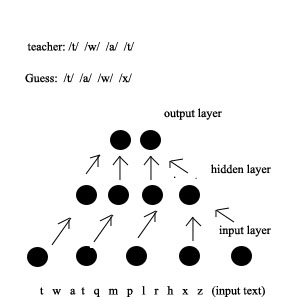
Summary: Unveiled on January 15, 1987, the NETtalk speech network was a landmark piece of software that demonstrated how a multi-layer neural network could learn to pronounce written English text, bridging the gap between static text and audible speech through iterative training.
The NETtalk project, developed by Terrence Sejnowski and Charles Rosenberg in Baltimore, Maryland, represents a pivotal moment in the transition toward connectionist approaches in machine learning. By January 1987, the software had proven that a neural network could successfully map letters to phonemes without explicit programming of linguistic rules, signaling a departure from traditional rule-based systems of the era. This breakthrough provided empirical evidence that parallel, distributed processing could solve complex tasks—like speech synthesis—that had previously frustrated researchers.
| Historical Attribute | Milestone Registry Value |
|---|---|
| Classification Type | software |
| Chronological Date | 1987-01-15 |
| Coordinates / Location | Baltimore, Maryland |
| Curation Authority | Nick Hodder + MIA |
| Milestone Importance | standard Milestone |
How does NETtalk Speech Network fit into the history of artificial intelligence?
The development of NETtalk Speech Network occurred during a period when the field was recovering from the limitations of early logic-based systems, such as the Logic Theorist and the early work on The Perceptron. While the AI Winter 1 had cast doubt on the viability of neural networks, the work of researchers like Geoffrey Hinton and David Rumelhart regarding Backpropagation Popularized in 1986 provided the mathematical fuel for NETtalk. By utilizing these new training techniques, Sejnowski and Rosenberg demonstrated that neural models could achieve performance levels previously reserved for manually curated, symbolic, or expert systems like the DENDRAL Expert System.
What are the core technical achievements of NETtalk Speech Network?
The architecture of NETtalk Speech Network was remarkably straightforward by modern standards but revolutionary for its time. It utilized a three-layer feedforward network with 203 input units, 80 hidden units, and 26 output units. The input units processed a window of seven letters, allowing the network to consider the context of a letter to determine its pronunciation. As the system underwent training, it adjusted its internal weights to minimize the discrepancy between its output and the target phonemic transcription. Within 10,000 training cycles, the network achieved a 95% accuracy rate on its training set, transitioning from "babbling" to intelligible speech. This success was an empirical refutation of the critiques found in Perceptrons Book Published, proving that multi-layer networks could overcome the limitations associated with single-layer architectures.
Why is the legacy of NETtalk Speech Network significant to modern computing?
The long-term significance of NETtalk Speech Network lies in its validation of the connectionist paradigm. It moved beyond the symbolic logic of Prolog Programming Language or the rigid architectures of the Harpy Speech System, instead favoring a model that learned statistical relationships from large datasets. This shift towards data-driven learning paved the way for subsequent innovations in deep learning, including LeNet Digit Classifier, AlexNet Convolutional Net, and modern language modeling architectures like the The Transformer Paper. By demonstrating that phonetic rules could emerge spontaneously from interaction with data, NETtalk Speech Network remains a foundational reference for the scalability and robustness of modern neural architectures.