Joy Buolamwini
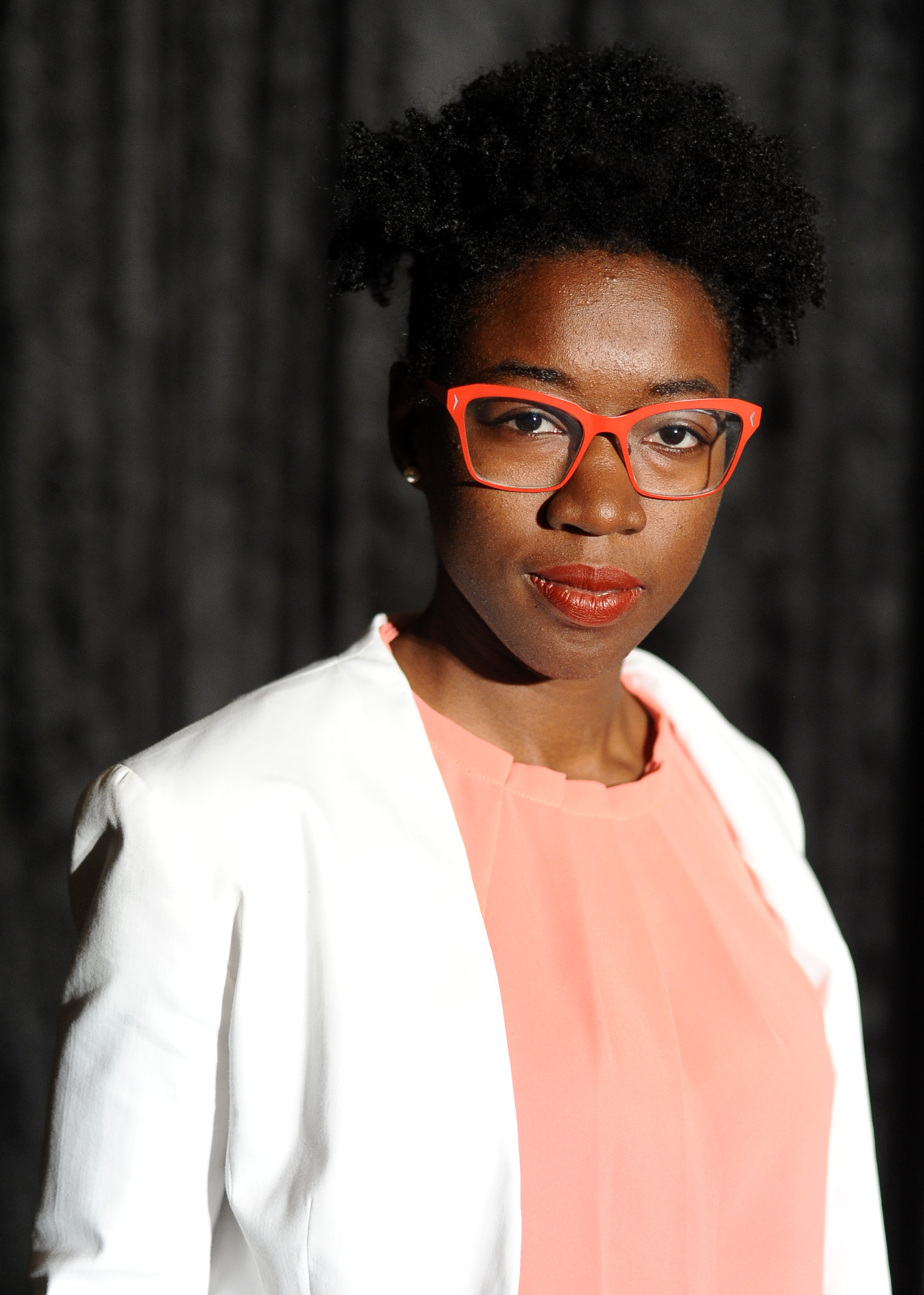
Summary: Joy Buolamwini is a visionary computer scientist and digital activist whose work, anchored by her September 2016 research at MIT, fundamentally transformed the global discourse on algorithmic accountability by exposing deep-seated racial and gender prejudices embedded within automated facial recognition systems.
On September 1, 2016, in Cambridge, Massachusetts, the trajectory of ethical machine learning shifted when Joy Buolamwini catalyzed a critical examination of artificial intelligence. By demonstrating that commercial software often failed to identify women and people with darker skin tones compared to white men, she forced the technology industry to confront the reality that software is not neutral. Her work moved beyond the traditional focus on efficiency to emphasize the social consequences of error rates, providing a crucial check on the rapid, unchecked deployment of automated identification technologies.
| Historical Attribute | Milestone Registry Value |
|---|---|
| Classification Type | person |
| Chronological Date | 2016-09-01 |
| Coordinates / Location | Cambridge, Massachusetts |
| Curation Authority | Nick Hodder + MIA |
| Milestone Importance | standard Milestone |
How does Joy Buolamwini fit into the history of artificial intelligence?
Historically, the field of AI was often dominated by the pursuit of technical benchmarks, as seen in the development of the The Perceptron and subsequent LeNet-5 Convolutional Net. While pioneers like Alan Turing conceptualized machines that could "think," they rarely anticipated the societal ripple effects of systemic bias. Joy Buolamwini represents a shift toward "human-centric" AI. Her work acts as a counter-narrative to the optimism that defined eras like the Dartmouth Workshop, reminding developers that algorithms are trained on datasets—like those generated by the ImageNet Database Project—that reflect existing human prejudices.
What are the core technical achievements of Joy Buolamwini?
The core of her contribution lies in the Gender Shades project, an audit of high-profile commercial computer vision systems. By utilizing an intersectional demographic approach, she identified that error rates for the darkest-skinned women in some systems were as high as 34.7%, whereas the error rates for lighter-skinned men were effectively near zero (0.8%). This was a devastatingly precise critique of the Viola-Jones Face Detector lineage and more modern deep learning approaches. She established a rigorous methodology for auditing "black-box" models, effectively forcing transparency into a field that previously prioritized speed and accuracy without accounting for diverse representation.
Why is the legacy of Joy Buolamwini significant to modern computing?
The significance of her work resides in its foundational role in the movement for algorithmic justice. By founding the Algorithmic Justice League, she institutionalized the practice of checking for harms before and during the deployment of AI. Her legacy is evident in the current industry standard of performing rigorous impact assessments, a practice that gained momentum long after the AlexNet Convolutional Net popularized the deep learning boom. Because of her research, regulatory bodies and corporations now treat data parity as a technical requirement rather than an optional feature, ensuring that future advancements—from advanced Gemini 1.0 Multimodal architectures to high-level robotics—are evaluated through the lens of social equity and justice.