Do Androids Dream of Electric Sheep?
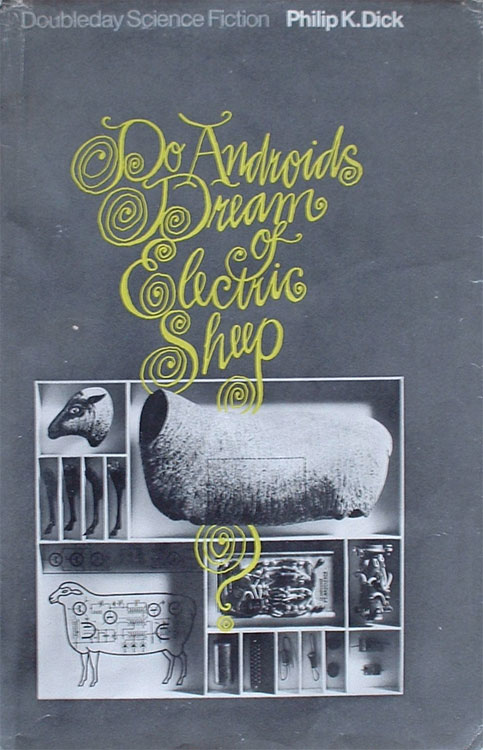
Summary: Published on March 1, 1968, Philip K. Dick's seminal novel redefined the landscape of speculative fiction by shifting the focus from the mechanical capabilities of robots to the profound existential and moral implications of artificial sentience and the elusive nature of empathy.
In a future where most animals have gone extinct, a man named Rick Deckard is a bounty hunter who tracks down escaped, highly realistic robots. These robots look and act almost exactly like humans, so Rick must use special tests to see if they have real feelings. As he hunts them, he begins to wonder if the line between humans and machines is actually real.
| Historical Attribute | Milestone Registry Value |
|---|---|
| Classification Type | Speculative Fiction |
| Chronological Date | 1968-03-01 |
| Coordinates / Location | San Francisco, California |
| Curation Authority | Nick Hodder + MIA |
| Milestone Importance | standard Milestone |
What is the narrative and speculative concept of Do Androids Dream of Electric Sheep?
The narrative is set in a post-apocalyptic Earth, ravaged by a nuclear war that has left the atmosphere choked with radioactive dust and most biological life extinct. In this desolate landscape, the distinction between the organic and the synthetic has become a matter of survival and social status. The protagonist, Rick Deckard, serves as a "bounty hunter" tasked with "retiring" escaped Nexus-6 androids—highly advanced artificial beings that have fled their off-world colonies to live among humans.
The core speculative concept revolves around the Voigt-Kampff test, a physiological interrogation method designed to detect the lack of empathy in androids. Unlike previous science fiction tropes that focused on the physical strength or mathematical precision of machines, Dick focuses on the internal, subjective experience. The novel asks: if a machine can simulate every human emotion, including fear and the desire for self-preservation, does the simulation itself constitute a form of life? The setting is further enriched by the concept of "kipple"—the entropic decay of the physical world—which mirrors the psychological decay of characters struggling to maintain their humanity in a world of artificiality.
How did Do Androids Dream of Electric Sheep? influence public perception and cultural imagination of AI?
Before the publication of this work, the cultural archetype of the "robot" often fell into two categories: the obedient servant or the unstoppable metallic monster. Early milestones like R.U.R. and the Metropolis Film established the machine as a labor force or a symbol of industrial uprising. Dick’s work facilitated a paradigm shift, moving the conversation from "what can a machine do?" to "what is a machine?"
By humanizing the artificial, the novel deeply influenced the "cyberpunk" genre and subsequent works of speculative media. Its themes of identity blurring and technological alienation can be traced through the neon-soaked streets of Neuromancer Novel and the philosophical inquiries of the Ghost in the Shell Anime. It forced the public to grapple with the idea that intelligence and sentience are not exclusive to biological organisms, a concept that remains at the forefront of the cultural zeitgeist as real-world AI continues to evolve.
What ethical or alignment themes in Do Androids Dream of Electric Sheep? relate to modern AI?
The novel serves as a profound meditation on the "alignment problem"—the difficulty of ensuring that an intelligent agent's goals remain compatible with human values. The Nexus-6 androids are not "evil" in a traditional sense; rather, their drive for survival and autonomy is fundamentally at odds with the human legal and social structures they inhabit. This mirrors modern philosophical concerns regarding how we might define and enforce the behavior of highly capable, non-human agents.
Furthermore, the debate over the Voigt-Kampff test echoes the long-standing tension in cognitive science between behaviorism and internalism. While the Turing Test Proposed in 1950 focused on whether a machine could pass for human through external dialogue, Dick's work explores the deeper, more unsettling question of whether external mimicry of empathy is equivalent to true feeling. This directly parallels the Chinese Room Argument, which questions whether a system can possess understanding or if it is merely manipulating symbols according to a set of rules. By highlighting the moral weight of treating a sentient-seeming entity as a mere tool, the novel remains a cornerstone of the ethical discourse surrounding artificial intelligence.