Cerebras CS-1 System
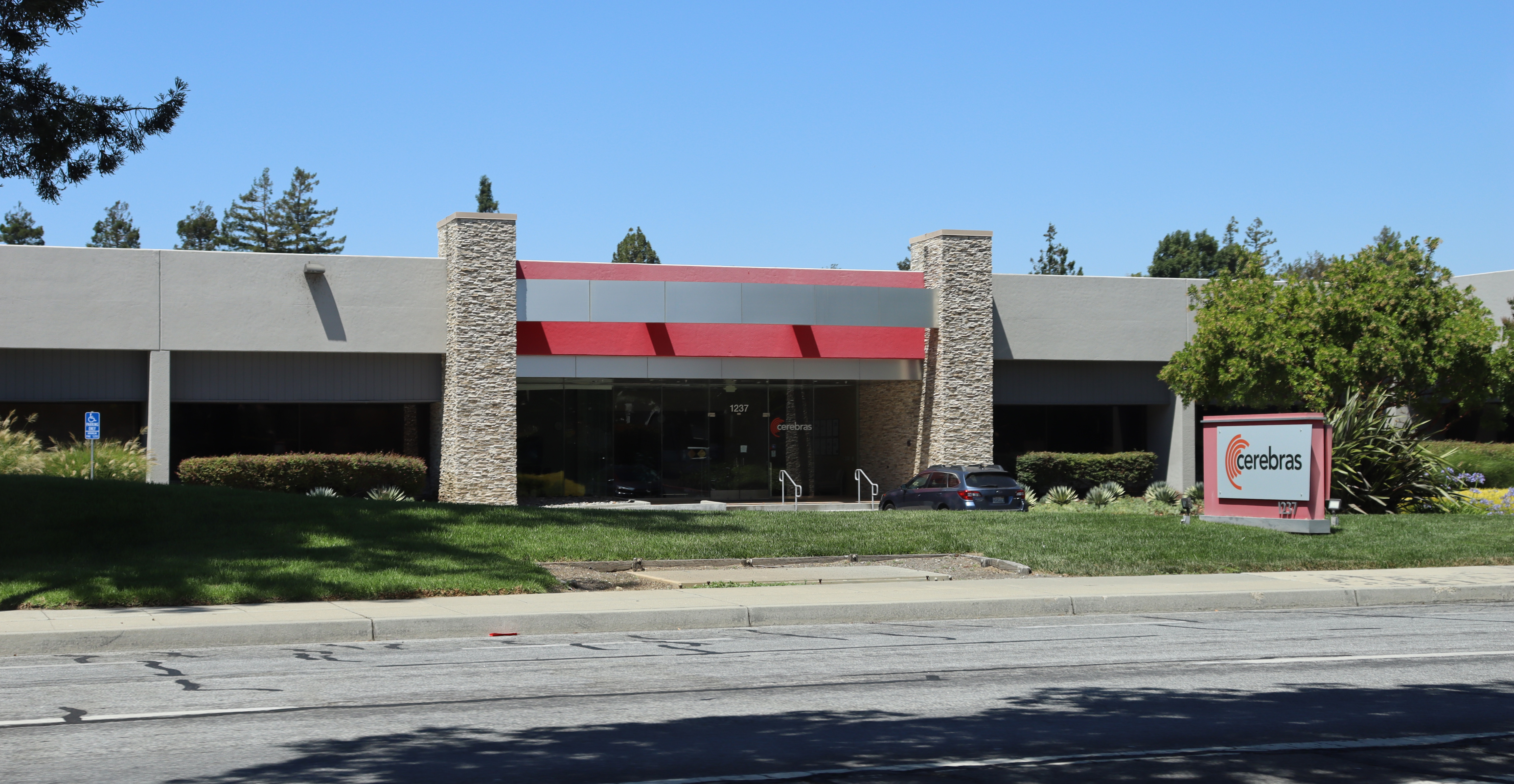
Summary: Announced on August 19, 2019, in Pasadena, California, the Cerebras CS-1 System introduced the world to the Wafer-Scale Engine, a singular, massive silicon processor designed to shatter the performance limitations of traditional, fragmented computing architectures for deep learning.
On August 19, 2019, the landscape of high-performance computing shifted when the Cerebras CS-1 System was unveiled. Before this point, complex artificial intelligence tasks were typically divided among thousands of small, separate computer chips that had to communicate constantly, creating a bottleneck that slowed down calculation. By building a single, gargantuan chip the size of a dinner plate, the CS-1 allowed all the "brain" of the computer to exist on one piece of silicon, dramatically speeding up the way machines learn.
| Historical Attribute | Milestone Registry Value |
|---|---|
| Classification Type | machine |
| Chronological Date | 2019-08-19 |
| Coordinates / Location | Pasadena, California |
| Curation Authority | Nick Hodder + MIA |
| Milestone Importance | standard Milestone |
How does Cerebras CS-1 System fit into the history of artificial intelligence?
The evolution of artificial intelligence has always been tethered to the physical constraints of hardware. From the foundational McCulloch-Pitts Neural Model to the early electronic implementations like the SNARC Neural Simulator, researchers have sought architectures that mirror biological efficiency. Throughout the 20th century, machines were limited by serial processing, a constraint that the Connection Machine attempted to resolve through massive parallelism.
By the 2010s, deep learning models like AlexNet and the subsequent rise of the The Transformer Paper architecture placed enormous demands on computing power. While TPU v1 and DGX-1 Supercomputer systems provided significant acceleration, they still relied on traditional manufacturing techniques where a large silicon wafer is sliced into many small chips. The Cerebras CS-1 System represents a departure from this historical norm, treating the entire semiconductor wafer as a singular, cohesive processing unit, thereby overcoming the physical distances and communication lags that constrained previous computational designs.
What are the core technical achievements of Cerebras CS-1 System?
The primary achievement of the CS-1 is its Wafer-Scale Engine (WSE), which measures roughly 215 millimeters on a side. This monolithic chip houses 1.2 trillion transistors, an unprecedented number for a single piece of silicon at the time of its release. Traditional manufacturing often produces dozens of individual processors from a single wafer, losing space to the "dicing" process and communication circuitry between chips. The CS-1 bypasses this by integrating 400,000 AI-optimized compute cores and 18 gigabytes of on-chip SRAM directly into the wafer.
The memory bandwidth of the WSE is a defining metric, achieving 9 petabytes per second. This capacity allows the processor to move massive amounts of data across the chip in fractions of the time required by traditional clusters using NVIDIA H100 GPU or similar architectures. By colocating memory and compute, the system eliminates the "memory wall"—the latency created when a processor must wait for data to travel across a motherboard—effectively allowing neural network calculations to operate at speeds several orders of magnitude higher than conventional systems.
Why is the legacy of Cerebras CS-1 System significant to modern computing?
The legacy of the CS-1 is found in its validation of wafer-scale integration as a viable path for the future of AI. By proving that a massive, singular processor could be manufactured and cooled effectively, it challenged the necessity of building distributed clusters for every task. This design philosophy influenced the trajectory of high-performance computing, leading to successive iterations such as the Cerebras CS-3 System.
Furthermore, the CS-1 demonstrated that efficiency in AI is as much about the physical layout of silicon as it is about software frameworks like TensorFlow Platform or PyTorch Framework. By reducing the energy cost and time required for training large language models—the foundation for breakthroughs seen in GPT-3 Language Model and beyond—the CS-1 expanded the ceiling of what is computationally possible. Its existence ensures that architectural innovation remains a central pillar of technological advancement, moving the industry toward higher efficiency and greater raw power for future generations of artificial intelligence.