Timnit Gebru
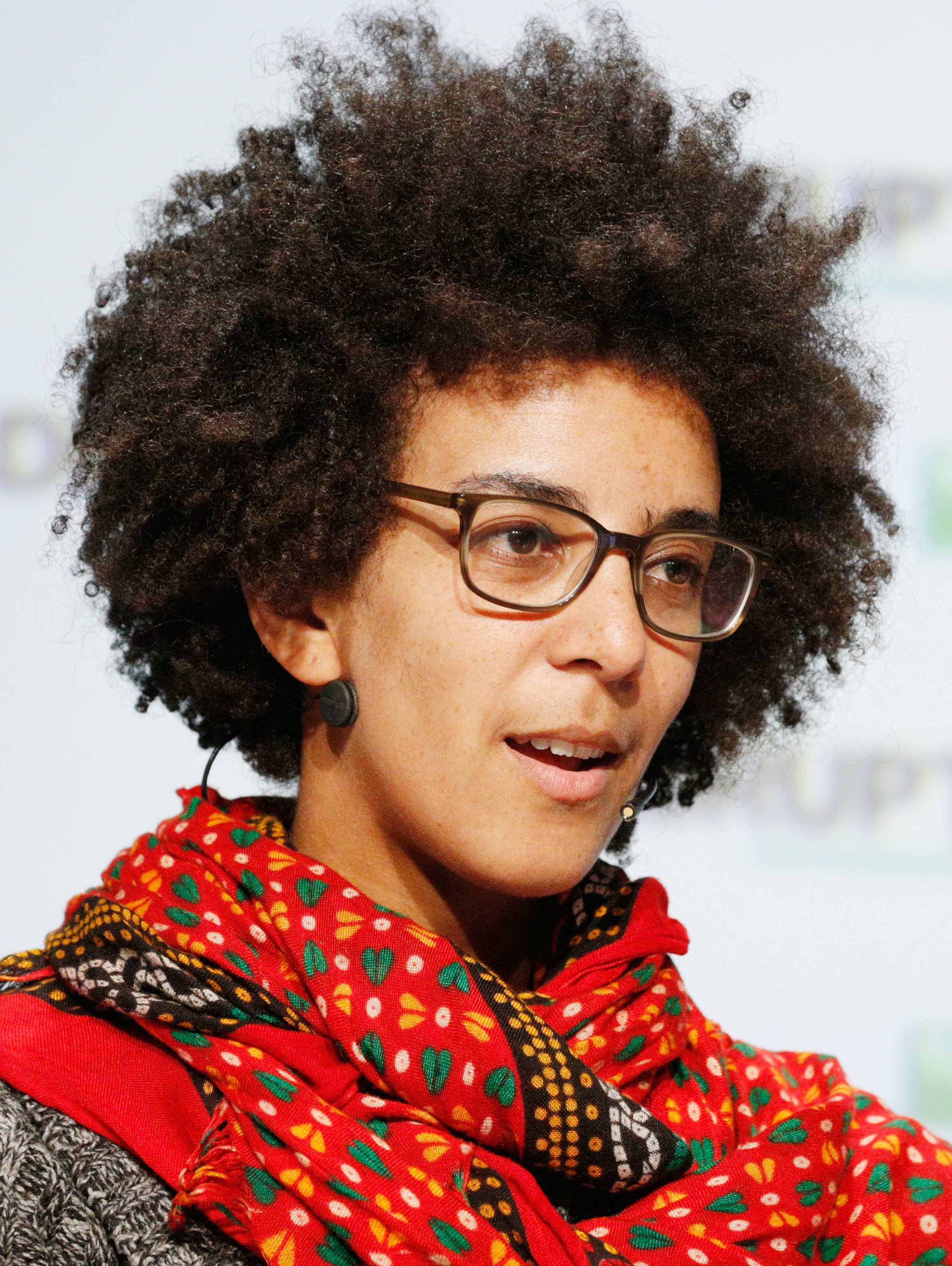
Summary: Dr. Timnit Gebru is a pioneering computer scientist whose 2018 work fundamentally shifted the discourse on algorithmic accountability, exposing the systemic racial and gender biases embedded within the vision systems powering modern technology.
On February 5, 2018, the landscape of computer science witnessed a paradigm shift toward ethical accountability with the emergence of critical research concerning automated bias. Working from the academic environment of Stanford, California, Dr. Timnit Gebru elevated the conversation around how machines "see" the world. By demonstrating that computer vision models were significantly less accurate for individuals with darker skin tones compared to their lighter-skinned counterparts, she established that software is not neutral, but rather a reflection of the data and design choices behind it.
| Historical Attribute | Milestone Registry Value |
|---|---|
| Classification Type | person |
| Chronological Date | 2018-02-05 |
| Coordinates / Location | Stanford, California |
| Curation Authority | Nick Hodder + MIA |
| Milestone Importance | standard Milestone |
How does Timnit Gebru fit into the history of artificial intelligence?
The history of computational intelligence, from the early foundations laid by Alan Turing and the McCulloch-Pitts Neural Model, was initially focused on logic and the mimicry of biological functions. As research moved toward The Perceptron and eventually modern deep learning, the emphasis remained heavily on architectural performance and raw predictive power. Dr. Gebru represents a necessary maturation of the field, moving the industry away from the purely mathematical optimism of the early Dartmouth Workshop era toward a sociotechnical perspective.
By situating herself within the lineage of researchers analyzing the societal impact of automation, she challenged the assumption that algorithmic success—often measured by metrics like those seen in ImageNet Database Project—was universally beneficial. Her work provided the critical oversight that was largely absent during the rapid acceleration of AlexNet Convolutional Net and other neural network milestones.
What are the core technical achievements of Timnit Gebru?
Her most influential contribution is the 'Gender Shades' project, co-authored with Joy Buolamwini. This study provided empirical, reproducible evidence that commercial facial analysis software failed to perform with equitable accuracy. The research demonstrated that for light-skinned males, error rates were often less than 1%, whereas for darker-skinned females, error rates skyrocketed to over 34%.
Technically, this work was a rigorous dissection of training datasets and feature representation. She highlighted how the lack of representational diversity in datasets leads to "encoded biases." Her subsequent work explored the environmental and social costs of large language models, providing a framework for auditing the massive computational architectures—such as the The Transformer Paper and subsequent large-scale models—that have dominated the current decade. Her founding of the Distributed AI Research Institute (DAIR) serves as an institutional manifestation of these research values, ensuring that independent research remains untethered from the commercial interests of entities like those producing GPT-3 Language Model.
Why is the legacy of Timnit Gebru significant to modern computing?
Dr. Gebru’s legacy is defined by the professionalization of AI ethics. Before her research, concerns about bias were often relegated to philosophical or peripheral discussions. Today, "algorithmic auditability" is a standard requirement for major machine learning deployments. She shifted the burden of proof, demanding that developers and engineers explain not just the performance of their models, but the composition and provenance of their data.
This has directly influenced global regulatory frameworks, including the AI Safety Summit Bletchley. By linking the internal logic of a neural network to its real-world outcome, her work ensures that the development of future systems—whether they be high-level generative tools or industrial robotics like the Boston Dynamics Atlas—must account for the human element. Her influence ensures that history does not treat computation as an isolated phenomenon, but as a deeply integrated component of human society that carries the weight of history, prejudice, and social power.