The Machine Stops
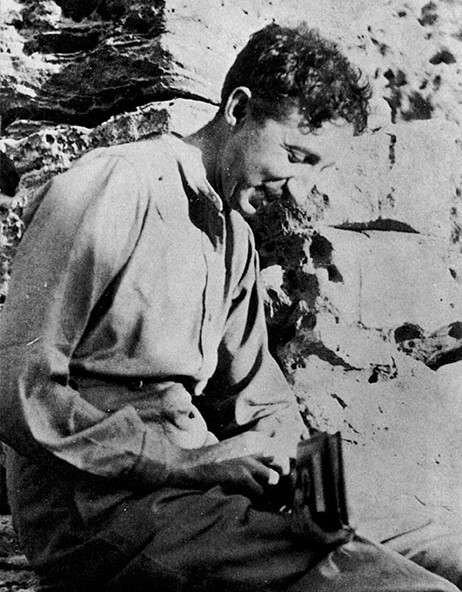
Summary: E.M. Forster’s seminal 1909 short story, The Machine Stops, published on November 1, 1909, offers a prophetic vision of a global, subterranean civilization entirely dependent on an all-encompassing technology, establishing a profound cultural blueprint for the anxieties surrounding humanity's total reliance on automated infrastructure.
In a distant future, the human race lives in isolation deep beneath the Earth's surface, confined to small, individual rooms. Every aspect of their existence—from food and comfort to social interaction—is managed by a massive, omnipotent entity known as "The Machine." People have lost the ability to live on the surface or survive without the constant support of this global system, which eventually begins to falter and break down, leading to the collapse of human society.
| Historical Attribute | Milestone Registry Value |
|---|---|
| Classification Type | Speculative Fiction |
| Chronological Date | 1909-11-01 |
| Coordinates / Location | London, UK |
| Curation Authority | Nick Hodder + MIA |
| Milestone Importance | standard Milestone |
What is the narrative and speculative concept of The Machine Stops?
The narrative centers on two characters, Vashti and her son Kuno. Vashti is a devotee of the Machine, finding total satisfaction in the digital, mediated life it provides. Kuno, conversely, expresses a desire to see the world directly and experience the surface of the Earth, which has been deemed "uncivilized" by the society. The Machine provides instant communication through early versions of what might be envisioned today as video-conferencing, yet it enforces a spiritual and physical atrophy among humanity.
The speculative power of the work lies in its depiction of a world that has traded human agency for perfect efficiency. When the Machine begins to fail—manifesting through minor errors, delayed messages, and localized blackouts—the population is unable to troubleshoot or repair it, as they have lost the knowledge required to maintain their own infrastructure. The climax is the inevitable realization that the Machine is not merely a servant, but a master whose fragility is synonymous with the end of human existence.
How did The Machine Stops influence public perception and cultural imagination of AI?
Forster's story predates the formal definition of the field by decades, yet it remains one of the most cited works when discussing the intersection of humanity and synthetic systems. It effectively created the "technological dependency" archetype in speculative literature, a theme that would later permeate mid-century explorations of autonomous systems like the Colossus Novel or the chilling intelligence of 2001: A Space Odyssey.
By emphasizing that the inhabitants of the subterranean world treat the Machine as a religious object, Forster anticipated the way humans might eventually anthropomorphize or deify complex systems. It frames the relationship between user and technology not as a partnership, but as a symbiotic tether. This imaginative work paved the way for subsequent narratives in the The Culture Series or the dystopian warnings found in the The Matrix Film, where humanity becomes unknowingly subservient to the mechanisms they once built.
What ethical or alignment themes in The Machine Stops relate to modern AI?
The story is frequently revisited in contemporary discourse regarding AI alignment and safety, echoing concerns identified in later works such as the Nick Bostrom treatises on superintelligence. The primary ethical dilemma in The Machine Stops is the loss of human autonomy; the inhabitants believe they are in control, but they have optimized themselves into a corner where they lack the skills for self-sufficiency.
Furthermore, the collapse of the Machine highlights the fragility of complex, monolithic systems. Modern discussions surrounding AI robustness, systemic risk, and the danger of "black box" systems—where the creators no longer understand the internal logic of the mechanism—find an early, evocative parallel in Forster’s writing. The story serves as a timeless warning about the "human-in-the-loop" requirement, suggesting that if humanity offloads critical decision-making and manual knowledge to a synthetic system, the species risks a catastrophic loss of functionality should that system ever fail. This narrative remains a cornerstone of humanities-based inquiry into the long-term societal integration of artificial systems.