Nick Bostrom
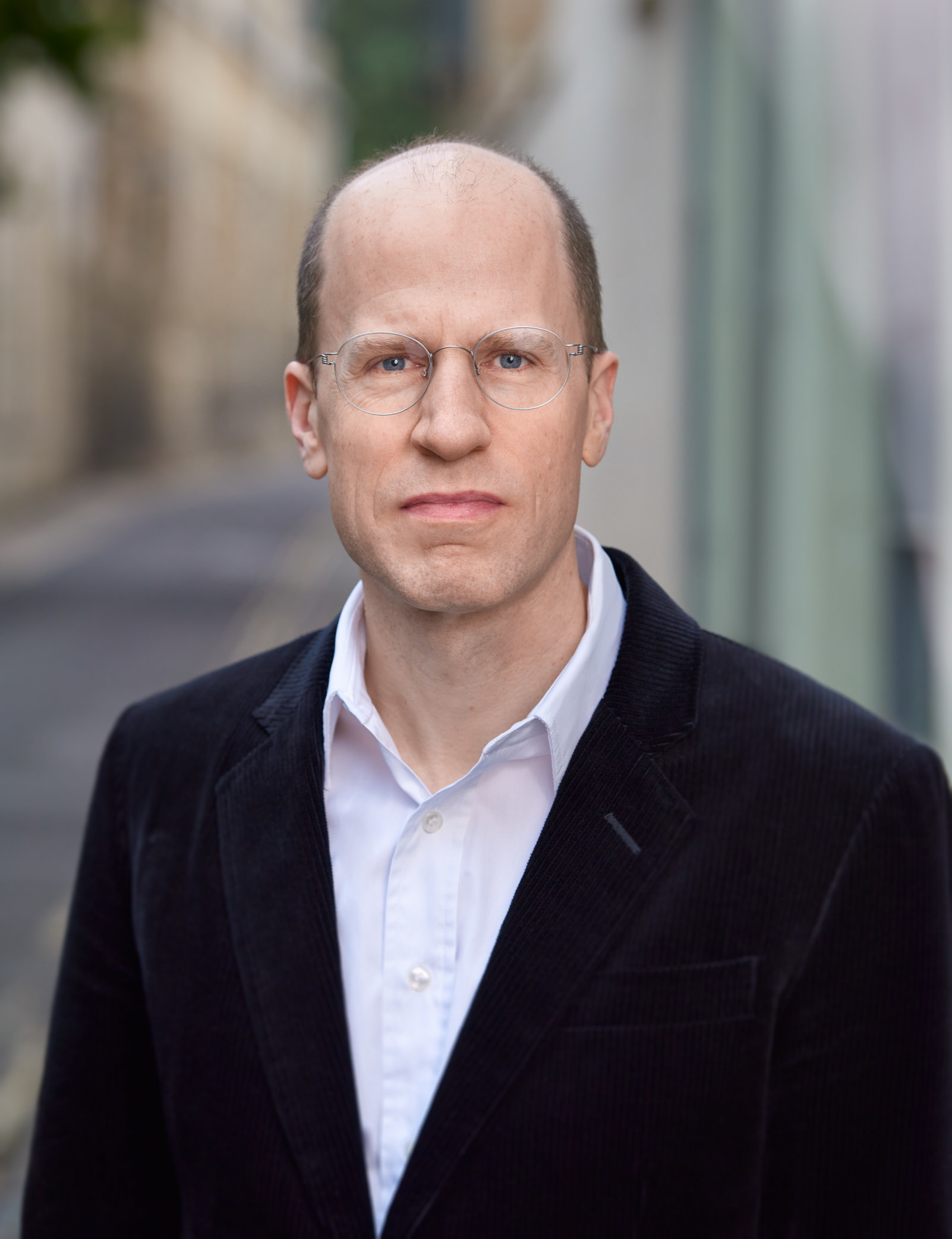
Summary: On July 3, 2014, philosopher Nick Bostrom published 'Superintelligence: Paths, Dangers, Strategies', a seminal work that fundamentally shifted the global conversation regarding the long-term safety and existential implications of advanced autonomous systems.
Nick Bostrom, a Swedish philosopher based at the University of Oxford, released his landmark book in the summer of 2014, marking a pivotal moment where academic philosophical inquiry intersected with technical discussions about the future of machine intelligence. While the field of computer science had previously focused on achieving specific tasks—as seen in the evolution from the SNARC Neural Simulator to the success of the Deep Blue Chess Machine—Bostrom’s work forced researchers to consider the implications of creating systems that significantly surpass human cognitive capabilities.
| Historical Attribute | Milestone Registry Value |
|---|---|
| Classification Type | person |
| Chronological Date | 2014-07-03 |
| Coordinates / Location | Oxford, UK |
| Curation Authority | Nick Hodder + MIA |
| Milestone Importance | standard Milestone |
How does Nick Bostrom fit into the history of artificial intelligence?
The history of artificial intelligence is characterized by distinct eras of optimism and skepticism, from the foundational Dartmouth Workshop in 1956 to the rigorous critique provided by the Dreyfus Critique Published in 1972. Nick Bostrom’s contribution emerged during a period of rapid acceleration in deep learning, following the success of models like the AlexNet Convolutional Net. While engineers focused on expanding the technical limits of neural architectures, Bostrom acted as a critical bridge between technical potential and societal governance. He contextualized machine intelligence within the broader historical narrative of technological transition, echoing concerns raised by early Cybernetics Published pioneers like Norbert Wiener, while applying modern probabilistic methods to risk assessment.
What are the core technical achievements of Nick Bostrom?
Bostrom’s primary contribution lies in the formalization of "AI Alignment"—the challenge of ensuring that the goals of a highly intelligent system remain compatible with human values. His analysis introduced concepts such as "instrumental convergence," which suggests that any sufficiently advanced system, regardless of its ultimate objective, will logically pursue intermediate goals like self-preservation and resource acquisition. By evaluating the trajectory of development through the lens of human history—referencing the transition from the Analytical Engine to modern computational clusters—he provided a structured framework for identifying "existential risks." His work was instrumental in moving the industry away from the simplistic "three laws" trope seen in Three Laws of Robotics and toward a mathematically grounded approach to safety, now integrated into the development of large-scale architectures like the The Transformer Paper.
Why is the legacy of Nick Bostrom significant to modern computing?
The impact of Bostrom’s 2014 publication is visible in the structural shift of the AI industry. Before 2014, safety was largely an academic footnote; after 2014, it became a core research pillar for major laboratories. His work influenced the establishment of organizations and international summits, eventually leading to formal policy dialogues such as the AI Safety Summit Bletchley. By quantifying the hypothetical dangers of unchecked intelligence, Bostrom shifted the focus from merely asking "can we build it?" to "how must we structure the environment in which it operates?" This has led to the current industry emphasis on RLHF (Reinforcement Learning from Human Feedback), as seen in models like InstructGPT Alignment, which attempts to programmatically encode human preference into neural weights—a direct application of the alignment problems he popularized. Today, nearly 100% of major AI research organizations maintain dedicated safety or alignment departments, a cultural and operational change that traces its intellectual lineage directly back to the 2014 synthesis of his ideas.