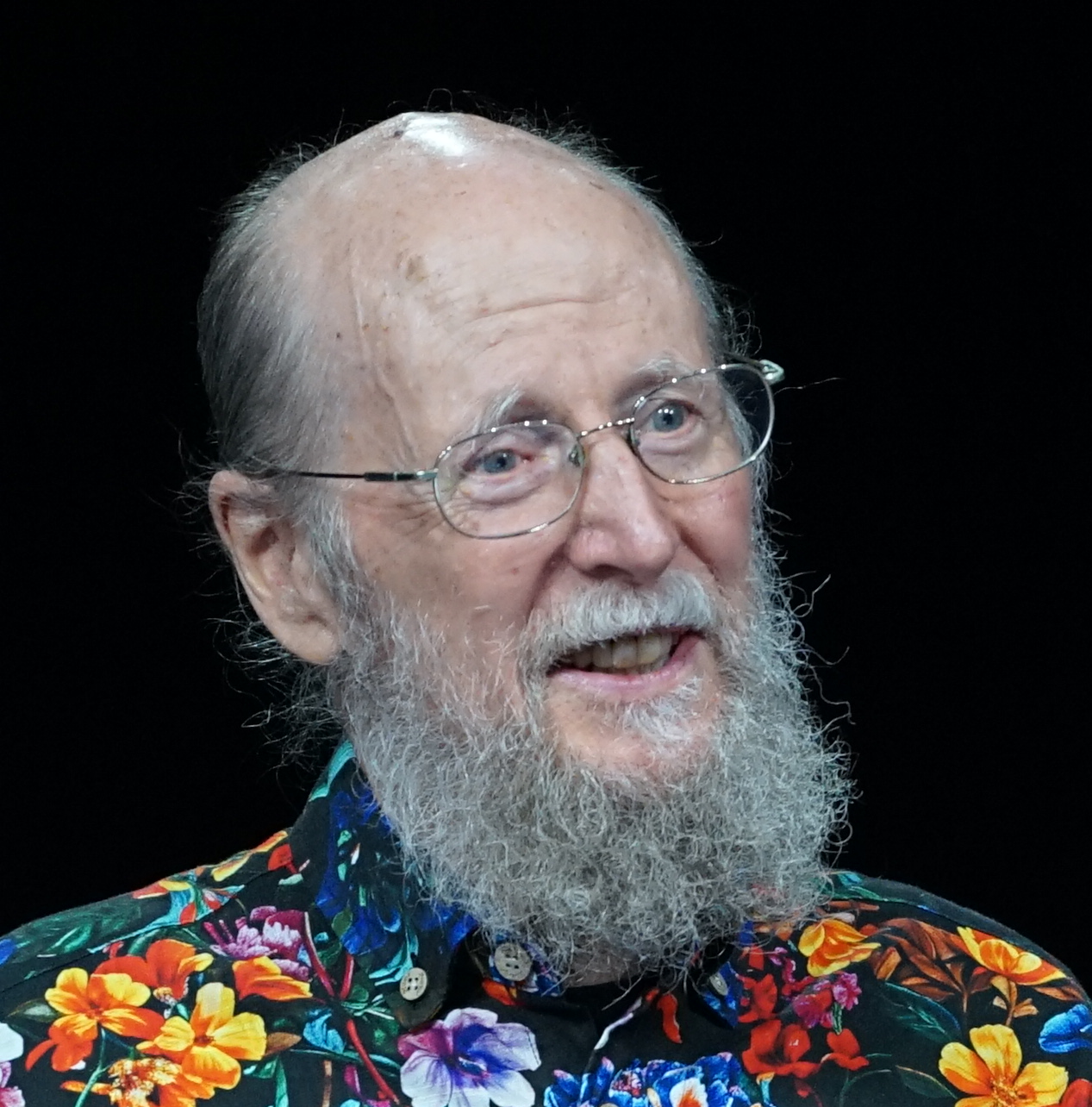
Richard Sutton
` - `
` *(Proceeding to generate HTML)*
Summary: Richard Sutton, a primary architect of modern autonomous learning, co-published the seminal textbook 'Reinforcement Learning: An Introduction' on September 1, 1998, providing the mathematical bedrock for agents that learn through interaction and reward.
Think about how you learn to play a new video game. You do not read a 500-page manual and suddenly know every secret; instead, you press buttons, see what happens, and learn from your mistakes. This is exactly what Richard Sutton's work taught computers to do. By publishing his foundational textbook in Montreal in 1998, he provided the definitive "rulebook" for how machines could learn through trial and error, rather than just following a list of pre-set commands. This shifted the goal of artificial intelligence from making machines that follow rules to making machines that can learn their own rules.
| Historical Attribute | Milestone Registry Value |
|---|---|
| Classification Type | person |
| Chronological Date | 1998-09-01 |
| Coordinates / Location | Montreal, Canada |
| Curation Authority | Nick Hodder + MIA |
| Milestone Importance | godfather Milestone |
How does Richard Sutton fit into the history of artificial intelligence?
For much of the early 20th century, the pursuit of artificial intelligence was dominated by symbolic logic—the idea that if you could write down enough rules, a machine could "think." This approach was visible in early milestones like the Logic Theorist and the complex DENDRAL Expert System. However, these systems were brittle; they could not handle the messiness and unpredictability of the real world. As the field faced periods of stagnation known as AI Winter 1 and AI Winter 2, researchers began looking for more robust ways to achieve intelligence.
Richard Sutton emerged as a central figure in this transition from "logic-based" AI to "learning-based" AI. While early attempts at machine learning, such as the Samuel Checkers Program, had hinted at the potential of machines improving through play, the field lacked a unified mathematical framework. Sutton, working alongside Andrew Barto, provided that framework. By formalizing Reinforcement Learning (RL), Sutton helped move the industry away from the rigid hierarchies of the past and toward the dynamic, adaptive systems that define the modern era.
What are the core technical achievements of Richard Sutton?
The publication of 'Reinforcement Learning: An Introduction' in 1998 served as a massive consolidation of knowledge. Before this, RL was a fragmented collection of ideas from control theory, psychology, and computer science. Sutton synthesized these into a cohesive discipline. The book's primary achievement was the rigorous explanation of two critical concepts: Temporal Difference (TD) learning and Policy Iteration.
Temporal Difference learning is perhaps the most revolutionary component. In traditional learning, a system might only learn after a task is completed (e.g., learning after a game of chess ends). TD learning allows an agent to learn incrementally, updating its "guesses" about the future based on the difference between its current prediction and the immediate reward it receives. This is akin to a hiker adjusting their expected arrival time every time they pass a mile marker, rather than waiting until they reach the destination to realize they were off-track.
Sutton's work also refined the application of the Q-Learning Algorithm and provided the theoretical backbone for successes like the TD-Gammon Play Engine, which demonstrated that RL could master complex strategic games. By defining how an agent should optimize its "policy"—the strategy it uses to decide its next move—Sutton provided the mathematical tools necessary for machines to navigate environments where the correct answer is not immediately known.
Why is the legacy of Richard Sutton significant to modern computing?
The impact of Sutton’s 1998 milestone is visible in nearly every cutting-edge application of AI today. The marriage of Reinforcement Learning with deep neural networks—known as Deep Reinforcement Learning—has led to some of the most profound breakthroughs in the 21st century. Without the foundations laid in the Montreal era, the Deep Q-Networks (DQN) that mastered Atari games would not have been possible. This lineage of learning through experience culminated in the historic AlphaGo vs Lee Sedol match, which proved that RL-driven agents could surpass human intuition in the most complex strategic games.
Furthermore, the principles of RL are now essential for the "alignment" of modern large language models. Techniques such as Reinforcement Learning from Human Feedback (RLHF) are used to ensure models behave predictably and safely, a process central to the development of InstructGPT Alignment. From the autonomous navigation seen in the Stanley Autonomous SUV to the consumer robotics of the Roomba Consumer Robot, the ability of a machine to sense, act, and learn from its environment is the direct result of the paradigms established by Richard Sutton. He did not just write a textbook; he defined the mechanics of digital evolution.