Richard Socher
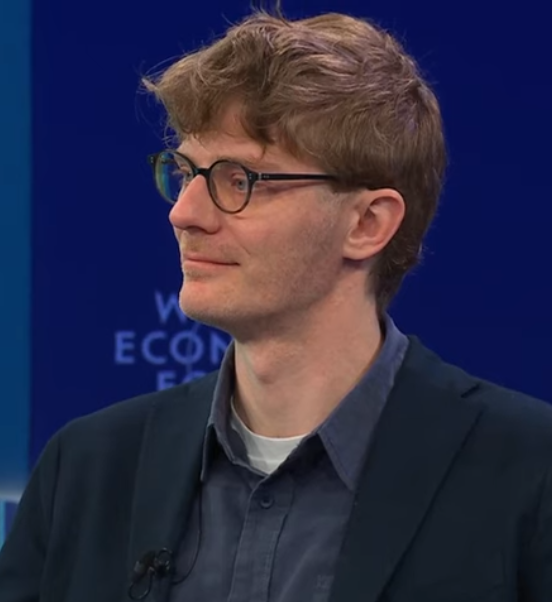
Summary: Richard Socher is a pioneering computer scientist whose 2013 development of recursive neural network representations at Stanford University provided a transformative mathematical framework for machines to parse the hierarchical structures of human language, eventually paving the way for advanced AI-driven search ecosystems.
On June 15, 2013, in Stanford, California, Richard Socher introduced a new way for computers to understand the "shape" of human speech. Instead of reading words in a simple, straight line like a list, his method allowed machines to see how words group together into small ideas, which then combine to form much larger concepts, much like how individual bricks are used to build walls, and walls are used to build a house. This allowed computers to understand the complex grammar and meaning of sentences more naturally.
| Historical Attribute | Milestone Registry Value |
|---|---|
| Classification Type | person |
| Chronological Date | 2013-06-15 |
| Coordinates / Location | Stanford, California |
| Curation Authority | Nick Hodder + MIA |
| Milestone Importance | standard Milestone |
How does Richard Socher fit into the history of artificial intelligence?
The history of artificial intelligence has long been a tug-of-war between two philosophies: symbolic logic, which relies on hard-coded rules, and connectionism, which relies on neural networks inspired by the brain. Early milestones like the Logic Theorist and the Chomsky Hierarchy Formulated emphasized the rigid, mathematical rules of language. However, as the field moved toward deep learning, researchers sought ways to marry these structural rules with the flexible learning capabilities seen in models like the Backpropagation Popularized era.
Richard Socher’s work at Stanford represented a critical bridge in this evolution. While foundational models such as the McCulloch-Pitts Neural Model provided the basic building blocks for artificial neurons, they lacked the ability to handle the complex, nested structures inherent in human syntax. Socher’s introduction of recursive neural networks brought a level of structural sophistication to connectionism, allowing neural networks to move beyond simple linear sequences and interact with the hierarchical nature of language that had previously been the domain of symbolic AI.
What are the core technical achievements of Richard Socher?
The primary technical achievement attributed to Socher is the development of Recursive Neural Network (RvNN) representations for natural language parsing. To understand this, one must contrast it with the prevailing technology of the time, such as Long Short-Term Memory (LSTM) networks. While LSTMs are excellent at processing data in a sequential "stream"—reading one word after another—they often struggle to grasp the complex "tree" structure of a sentence. For example, in a sentence with multiple nested clauses, a linear model might lose the connection between a subject and its distant verb.
Socher’s recursive approach allowed the network to apply the same set of weights over a tree-like structure. This meant the model could learn "compositional semantics"—the idea that the meaning of a complex expression is determined by the meanings of its constituent parts and the rules used to combine them. By integrating these structural hierarchies with dense vector representations, similar to the concepts later refined in the Word2Vec Representation, Socher enabled machines to perform highly accurate sentiment analysis and syntactic parsing. This technical leap transformed language from a flat string of characters into a multi-dimensional, structural map.
Why is the legacy of Richard Socher significant to modern computing?
The legacy of Socher’s research extends far beyond academic papers, influencing both the architectural trajectory of AI and its commercial application. His ability to conceptualize language as a structured, hierarchical entity provided a conceptual precursor to the Seq2Seq Architecture and the eventual breakthrough of The Transformer Paper. While Transformers utilize "attention" mechanisms rather than explicit recursion to manage context, the fundamental goal remains the same: capturing the deep, non-linear relationships within data.
Furthermore, Socher’s transition from researcher to entrepreneur with the founding of You.com demonstrates the direct pipeline between deep linguistic research and the next generation of information retrieval. As the world moved from keyword-based searching to intent-based understanding—a shift facilitated by models like BERT Language Model and the massive scale of GPT-4 Multimodal Model—the importance of structural language understanding became the cornerstone of the digital economy. Socher’s work helped ensure that the machines of the future would not just "read" our words, but actually comprehend the intricate architecture of our thoughts.