Boston Dynamics Atlas
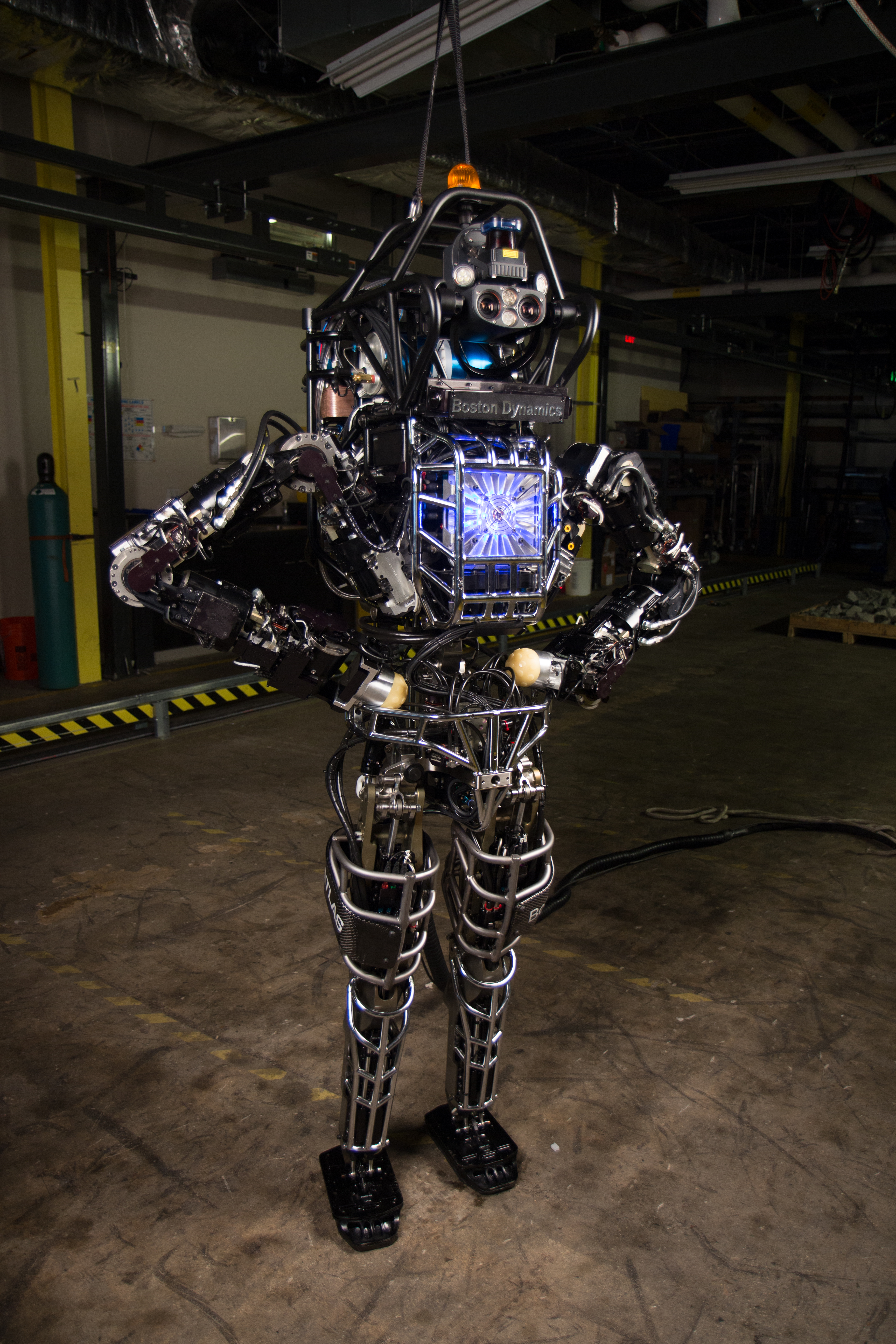
Summary: On July 11, 2013, Boston Dynamics unveiled Atlas, a hydraulic-powered humanoid platform that redefined the boundaries of physical robotics by demonstrating high-level dynamic balance, agile locomotion, and the ability to perform complex, gymnastics-inspired maneuvers.
In the summer of 2013, the field of robotics experienced a paradigm shift when researchers in Cambridge, Massachusetts, introduced Boston Dynamics Atlas. Unlike previous robotic systems, which were often tethered or required static support, Atlas was engineered to interact with the physical world through active, dynamic feedback loops. It serves as a fundamental milestone in mobile robotics, translating abstract control theory into tangible, bipedal movement that mimics the versatility of human biological motion.
| Historical Attribute | Milestone Registry Value |
|---|---|
| Classification Type | machine |
| Chronological Date | 2013-07-11 |
| Coordinates / Location | Cambridge, Massachusetts |
| Curation Authority | Nick Hodder + MIA |
| Milestone Importance | standard Milestone |
How does Boston Dynamics Atlas fit into the history of artificial intelligence?
The development of Atlas represents the realization of long-standing objectives within cybernetics and control theory. Since the mid-20th century, researchers explored the intersection of biology and machinery, a trajectory marked by the influence of Cybernetics Published in 1948, which theorized how feedback loops govern living and non-living systems. While early mobile platforms like the Stanford Cart in 1961 were limited by slow, rule-based decision-making, Atlas integrated high-speed hydraulic actuators and sensor-driven balance. This evolution traces back to the Subsumption Architecture of the late 1980s, which prioritized real-time environmental interaction over centralized, symbolic reasoning. Atlas marks the transition from purely industrial robots, such as the Unimate Industrial Robot, toward intelligent machines capable of navigating irregular, human-centric environments.
What are the core technical achievements of Boston Dynamics Atlas?
The core of Atlas’s success lies in its sophisticated control system, which manages 28 degrees of freedom. Utilizing high-pressure hydraulic power, the robot performs tasks that require continuous, micro-second adjustments to maintain equilibrium. Unlike systems that rely on pre-programmed trajectories, Atlas employs predictive control algorithms that monitor weight distribution and ground contact. By 2013, the platform demonstrated the ability to recover from external impacts and navigate uneven terrain, features that were previously restricted to laboratory simulations. The integration of high-bandwidth sensors allowed the robot to mimic the vestibular system of a human, essentially enabling "reflexes" that allow it to catch its balance when pushed—a significant leap from the reactive, slower-moving humanoid projects of the early 2000s, such as the ASIMO Robot.
Why is the legacy of Boston Dynamics Atlas significant to modern computing?
Atlas has become a canonical reference point for the fusion of embodied artificial intelligence and mechanical engineering. Its legacy is twofold: it proved that high-performance hardware, when paired with robust, adaptive control logic, could surpass the rigid limitations of traditional industrial automation. Furthermore, Atlas served as a catalyst for integrating machine learning into physical motion planning. By demonstrating that robots could perform "gymnastic" feats—such as backflips and controlled landings—the platform pushed developers to bridge the gap between computer vision, which processes the environment, and motor control, which executes the action. This synthesis is currently fundamental to the advancement of autonomous physical agents, moving the industry closer to the speculative visions popularized in historical literature, such as the robots described in R.U.R. (Rossum's Universal Robots), but grounded in verifiable, real-world physics.