Chomsky Hierarchy Formulated
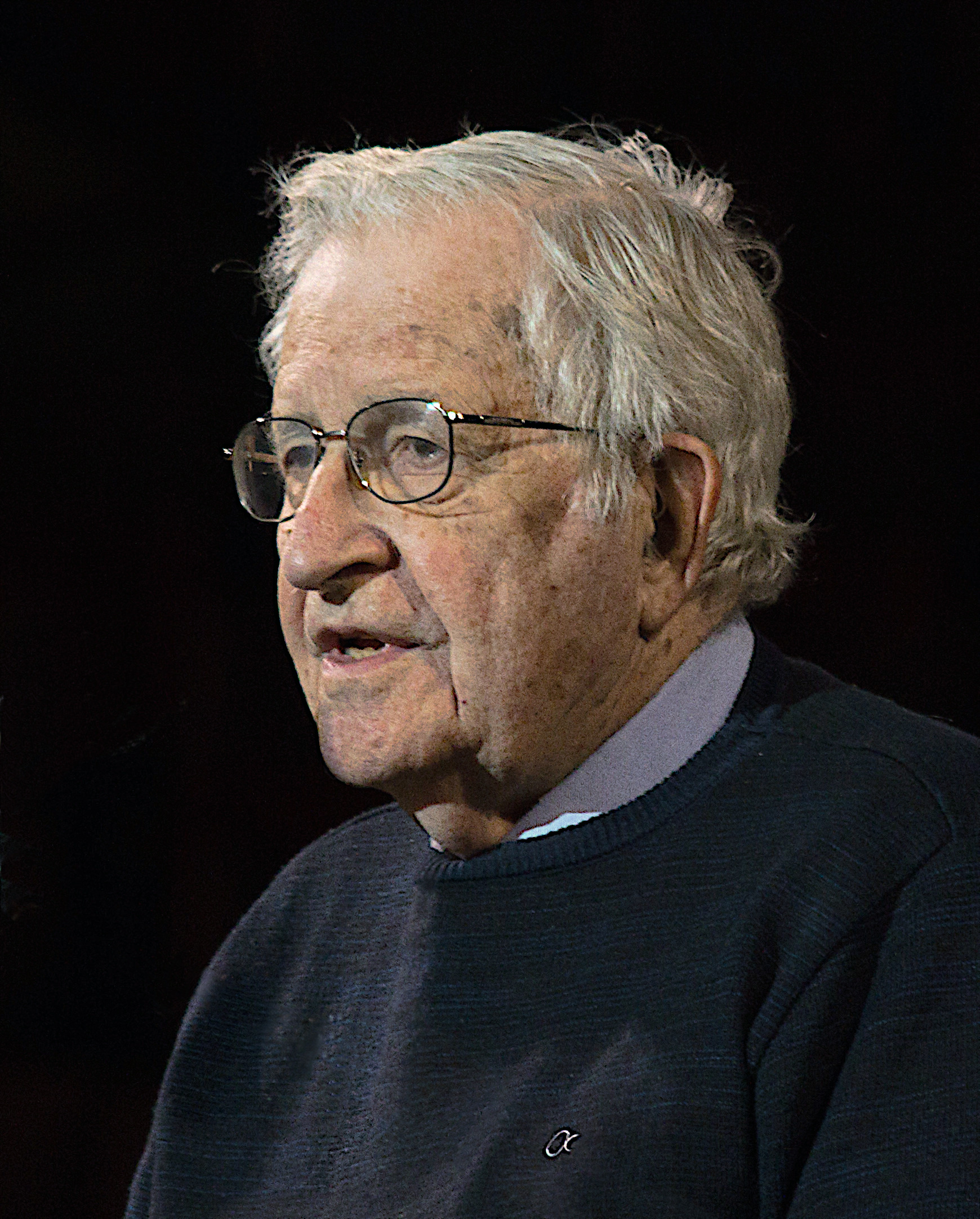
Summary: On September 1, 1956, American linguist Noam Chomsky published "Three Models for the Description of Language," establishing the Chomsky Hierarchy and context-free grammars to mathematically categorize languages by their complexity, fundamentally shaping the trajectory of both computer science and computational linguistics.
Imagine languages as games with different levels of rulebooks. Some basic games require you to only remember the very last move made, while more advanced games require you to keep track of multiple moves nested inside one another. On September 1, 1956, in Cambridge, Massachusetts, researcher Noam Chomsky published a landmark paper that sorted all possible languages—whether spoken by humans or written in mathematical code—into four distinct levels of rulebooks based on how much memory is needed to understand them. This classification system, known as the Chomsky Hierarchy, gave computer scientists a vital blueprint for designing artificial programming languages and the computational machinery required to process them.
| Historical Attribute | Milestone Registry Value |
|---|---|
| Classification Type | event |
| Chronological Date | 1956-09-01 |
| Coordinates / Location | Cambridge, Massachusetts |
| Curation Authority | Nick Hodder + MIA |
| Milestone Importance | standard Milestone |
How does Chomsky Hierarchy Formulated fit into the history of artificial intelligence?
The year 1956 is widely celebrated as the dawn of artificial intelligence, punctuated by the famous Dartmouth Workshop and the demonstration of the Logic Theorist. However, while computer scientists were attempting to simulate human reasoning, a parallel revolution was occurring in cognitive science and linguistics. At the Massachusetts Institute of Technology (MIT), a young linguist named Noam Chomsky sought to dismantle the dominant behaviorist paradigm, which argued that human language acquisition was merely a matter of habit formation and statistical association.
Chomsky realized that natural human language exhibits an infinite capacity for creativity using finite means, a concept that behaviorism could not explain. To prove this, he introduced mathematical rigor to linguistics. By framing language as a set of formal strings generated by structured rule systems, Chomsky established a direct bridge to the theories of computation pioneered by Alan Turing. The formulation of the Chomsky Hierarchy provided a rigorous mathematical framework that determined what kinds of computational "brains" (automata) were required to parse and generate different structures of language. This instantly aligned the study of human cognitive faculties with the mechanical constraints of synthetic hardware.
What are the core technical achievements of Chomsky Hierarchy Formulated?
In his September 1956 paper published in the IRE Transactions on Information Theory, Chomsky outlined three models of grammar, which eventually expanded into the four-tier hierarchy of formal languages. Each level of the hierarchy defines a class of formal grammars, the languages they generate, and the equivalent computational machine (automaton) required to recognize them:
Type-3 (Regular Grammars): The most restrictive tier. These grammars can be parsed using a Finite State Automaton (FSA), which possesses no external memory. Regular expressions, common in search patterns, belong to this group. Chomsky mathematically proved that human languages cannot be regular, as they contain long-distance dependencies and nested clauses that require memory to track.
Type-2 (Context-Free Grammars): These grammars require a Pushdown Automaton, which is a finite state machine equipped with a single memory stack. Chomsky introduced Context-Free Grammars (CFGs) to model the hierarchical, tree-like structure of sentences. CFGs allowed scientists to handle matching structures, such as nested parentheses in equations or matched noun-verb pairings across long distances.
Type-1 (Context-Sensitive Grammars): Grammars where the rules for replacing a symbol depend on the symbols surrounding it. These are parsed by Linear Bounded Automata, which have a memory limit proportional to the length of the input string.
Type-0 (Unrestricted Grammars): The most general tier, corresponding to any language that can be recognized by a universal Turing machine. This represents the absolute limit of what is computationally processable.
Why is the legacy of Chomsky Hierarchy Formulated significant to modern computing?
The long-term impact of the Chomsky Hierarchy stretches far beyond linguistics, serving as a cornerstone of theoretical computer science. When computer pioneer John Backus and others began designing compiler systems for early high-level programming languages, they realized that Chomsky’s Type-2 (Context-Free) grammars were the perfect mathematical tool for defining programming syntax. This structural foundation directly enabled the creation of compiler-compilers and languages like ALGOL, LISP Programming Language, and later declarative systems like the Prolog Programming Language.
In the early decades of AI, NLP systems were strictly built upon these syntactic rules. Early conversational agents like the ELIZA Chatbot used shallow Type-3 patterns, while advanced systems like SIR Question Answering tried to resolve deeper semantic meaning by parsing sentences into Type-2 syntax trees.
Even as modern artificial intelligence shifted toward statistical paradigms like Neural Language Modeling, Word2Vec Representation, and The Transformer Paper, the Chomsky Hierarchy has remained the ultimate benchmark for measuring machine intelligence. Computer scientists routinely use Chomsky's categories to evaluate whether deep neural networks possess the structural capacity to "understand" hierarchical rules, or if they are merely executing advanced statistical approximations of finite-state patterns. By formalizing the boundaries of language and computational complexity, Chomsky's 1956 formulation remains an active guide for determining what machines can truly compute.