Noam Chomsky
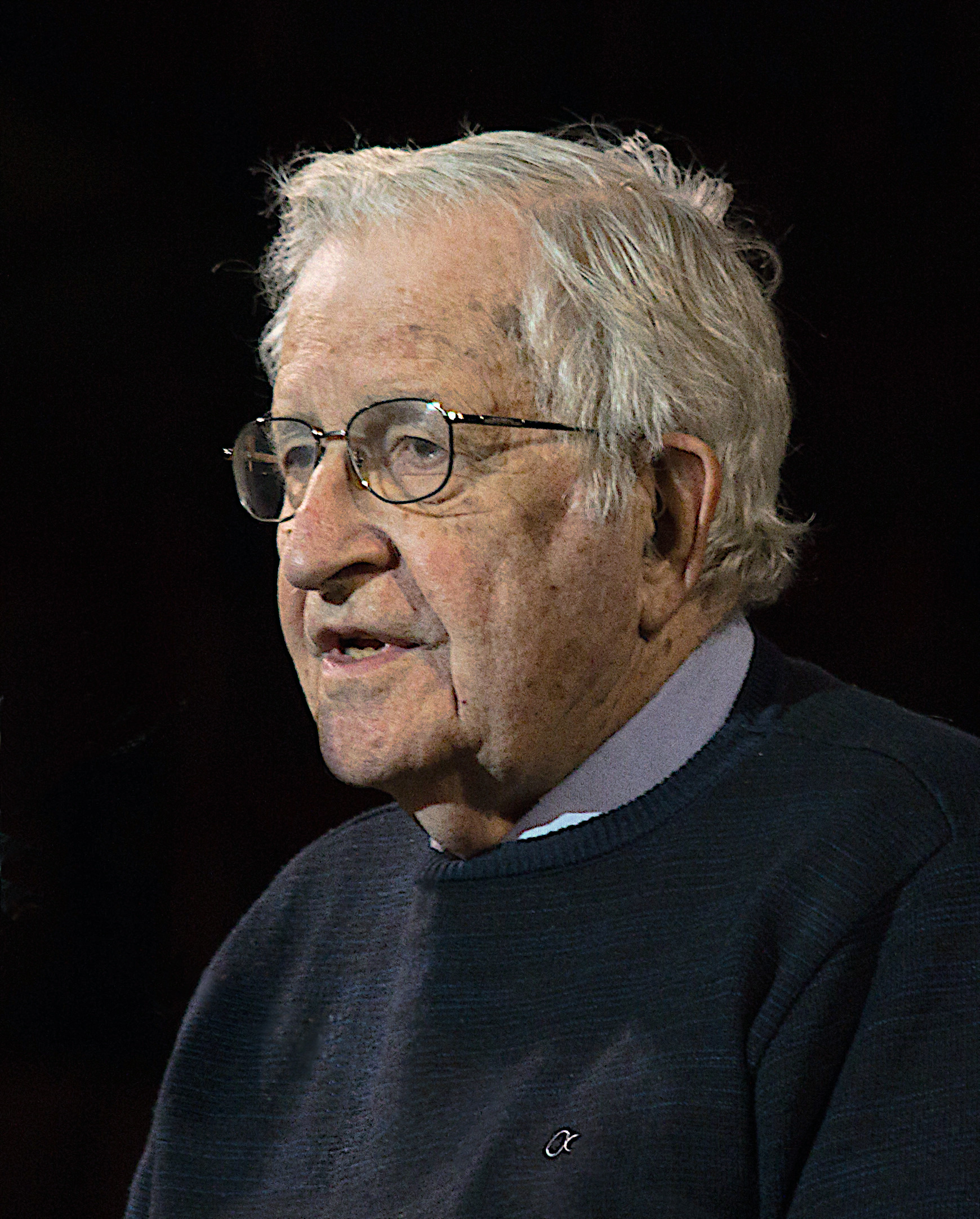
Summary: On September 1, 1956, Noam Chomsky, a brilliant young linguist at MIT, fundamentally transformed our understanding of human language and logical systems by introducing a formal hierarchy of grammars, a discovery that provided the bedrock for how computers parse information and structure code to this day.
In the late summer of 1956, amidst a burgeoning era of scientific discovery, Noam Chomsky published foundational work that bridged the gap between human language and machine logic. Based in Cambridge, Massachusetts, this milestone established a mathematical framework for how languages are organized—a discovery that would later become the standard for how computers interpret commands and translate complex instructions into executable tasks.
| Historical Attribute | Milestone Registry Value |
|---|---|
| Classification Type | person |
| Chronological Date | 1956-09-01 |
| Coordinates / Location | Cambridge, Massachusetts |
| Curation Authority | Nick Hodder + MIA |
| Milestone Importance | standard Milestone |
How does Noam Chomsky fit into the history of artificial intelligence?
Chomsky’s contributions occurred precisely as the field of artificial intelligence was finding its feet. While researchers were gathering at the Dartmouth Workshop to discuss symbolic logic, Chomsky was exploring the internal mechanics of how we generate and understand sentences. By 1956, the intellectual environment was heavily influenced by Alan Turing and the early McCulloch-Pitts Neural Model. Chomsky’s work acted as a critical bridge between these hardware-focused models and the complex world of human syntax, providing the rules necessary to turn high-level abstract thoughts into structured machine-readable formats.
What are the core technical achievements of Noam Chomsky?
The central achievement, known as the Chomsky Hierarchy Formulated in the mid-1950s, classified grammars into four distinct levels of complexity: regular, context-free, context-sensitive, and recursively enumerable. At the heart of this is the "context-free grammar," which defines a set of recursive rules that can describe the structure of a language.
In practical terms, this allowed programmers to define exactly how a computer should read a line of code. Before this, interpreting instructions was prone to ambiguity. By using a formal grammar, a computer could systematically verify that a command followed strict, pre-defined rules. This logic was essential for the creation of compilers, the software that translates human-written source code into machine code, and it helped pave the way for early programming languages like LISP Programming Language.
Why is the legacy of Noam Chomsky significant to modern computing?
The legacy of Chomsky is found in virtually every piece of software that processes text or structure today. His hierarchy defined the limits of what a machine could parse effectively. Because of the rules established in 1956, modern computer scientists can guarantee that a program will behave consistently, regardless of how complex the instructions become.
Furthermore, the principles derived from his linguistic research have had a direct impact on the development of natural language processing. While later techniques like Neural Language Modeling rely on statistical probability rather than rigid rule-based syntax, the foundational understanding of how to decompose language into smaller, manageable units traces directly back to the structure Chomsky proposed. Over 68 years after his initial publication, the hierarchy remains a foundational concept taught in every computer science curriculum worldwide, marking it as a permanent pillar in the history of computational theory.