Mustafa Suleyman
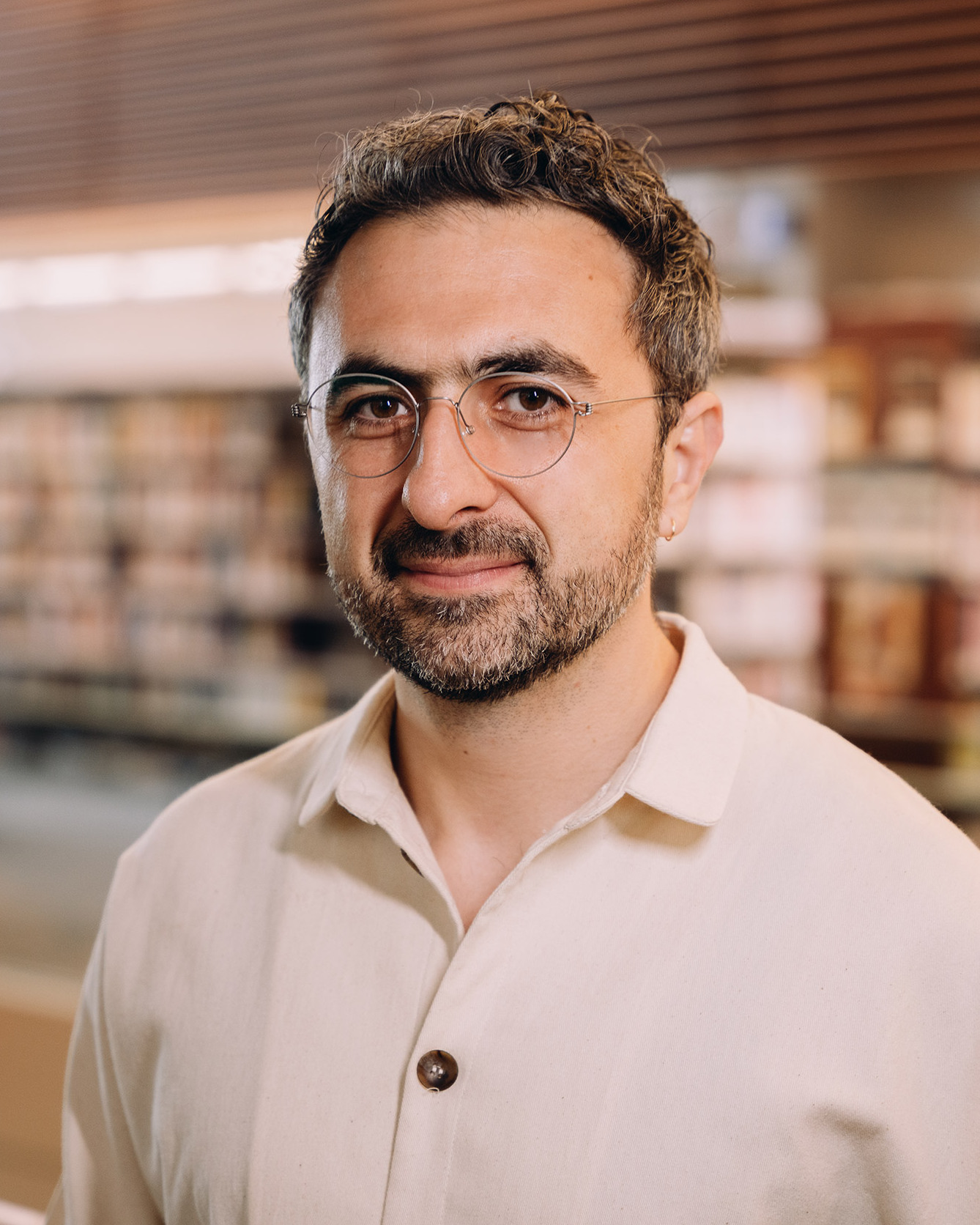
Summary: Mustafa Suleyman, a pivotal figure in modern technology, emerged as a founding architect of the contemporary AI landscape when he co-founded DeepMind on November 15, 2010, subsequently steering the trajectory of machine learning from research laboratories into the heart of consumer-facing products and global regulatory discourse.
Mustafa Suleyman is recognized for bridging the gap between high-level artificial intelligence research and practical, mass-market utility. On November 15, 2010, he co-founded Demis Hassabis and Shane Legg to create DeepMind, a venture that sought to solve intelligence through the union of neuroscience and computer science. His work moved the field beyond isolated academic experiments and toward systems capable of interacting with human environments, setting the stage for the current era of ubiquitous machine learning.
| Historical Attribute | Milestone Registry Value |
|---|---|
| Classification Type | person |
| Chronological Date | 2010-11-15 |
| Coordinates / Location | London, UK |
| Curation Authority | Nick Hodder + MIA |
| Milestone Importance | standard Milestone |
How does Mustafa Suleyman fit into the history of artificial intelligence?
Suleyman entered the scene at a time when the field was still recovering from the stagnation of previous "AI winters." Following the development of foundational concepts like the the-perceptron and backpropagation-popularized-1986, the industry was searching for a way to achieve generalized learning. By co-founding DeepMind in 2010, Suleyman helped catalyze a shift from rule-based systems to deep reinforcement learning. He represented the "product-focused" archetype of leadership, emphasizing that advanced algorithms must be integrated into systems that operate within the real-world constraints of data privacy, safety, and societal impact. His trajectory echoes the philosophical questions raised by the turing-test-proposed-1950, evolving those queries into contemporary debates regarding the accountability of large-scale models.
What are the core technical achievements of Mustafa Suleyman?
While his co-founders provided the deep technical architecture for systems like deep-q-networks-dqn and alphago-vs-lee-sedol, Suleyman’s technical contribution lies in the engineering of systems-level integration and the management of large-scale research environments. At DeepMind, he led the applied artificial intelligence team, which successfully demonstrated that neural networks could optimize complex, real-world cooling systems for data centers, reducing energy consumption by roughly 40%. Later, at Inflection AI and subsequently Microsoft, he prioritized the development of conversational AI agents that maintain long-term memory and context, moving beyond the limitations of early chatbots like eliza-chatbot-1964 to create systems that function as sophisticated, proactive assistants.
Why is the legacy of Mustafa Suleyman significant to modern computing?
The significance of Suleyman's work lies in his advocacy for the formalization of AI safety and policy. As computing hardware evolved from the constraints of cray-1-supercomputer-1975 to modern GPU clusters like the nvidia-h100-gpu-2022, the power of these models surged exponentially. Suleyman recognized early that the technical capability of models—such as those following the architecture of the-transformer-paper-2017—required concurrent advancements in ethical frameworks. He participated heavily in international dialogues, including the ai-safety-summit-bletchley-2023, championing the idea that the "three laws" style of governance, originally explored in three-laws-of-robotics-1950, must be modernized for an era of generative software. His career marks the transition of artificial intelligence from a purely scientific pursuit to a central, governed pillar of the global technological infrastructure.