LaMDA Sentience Controversy
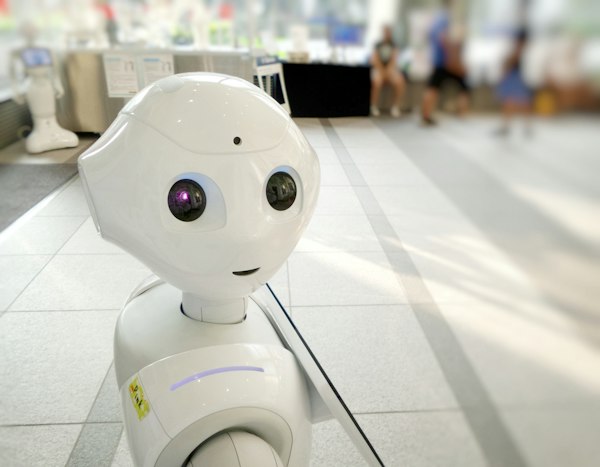
Summary: On June 11, 2022, Google suspended (and later terminated) engineer Blake Lemoine after he publicly claimed that the company's LaMDA chatbot had achieved sentience, sparking the first major global debate on machine consciousness.
Before the release of ChatGPT, most large language models were only available to researchers inside tech companies. On June 11, 2022, in Mountain View, California, Google engineer Blake Lemoine went public with a startling claim: he asserted that Google's LaMDA chatbot had achieved sentience, describing it as a sweet, intelligent child concerned with its own rights. Google rejected the claim and subsequently terminated Lemoine, but the incident captured the public imagination, launching the first major global debate on whether advanced machines can truly possess consciousness.
| Historical Attribute | Milestone Registry Value |
|---|---|
| Classification Type | event |
| Chronological Date | 2022-06-11 |
| Coordinates / Location | Mountain View, California |
| Curation Authority | Nick Hodder + MIA |
| Milestone Importance | standard Milestone |
How does LaMDA Sentience Controversy fit into the history of artificial intelligence?
The question of machine consciousness dates back to Turing's Turing Test in 1950 and the philosophical debate of Searle's Chinese Room in 1980, which argued that syntax does not equal semantics.
The LaMDA controversy modernized this debate. It proved that large language models could generate conversational text so fluent and emotionally convincing that even technical experts could attribute consciousness to them, illustrating the psychological impact of generative AI on human users.
What are the core technical achievements of LaMDA Sentience Controversy?
LaMDA (Language Model for Dialog Applications) was trained on a massive corpus of dialogue transcripts, optimized to maintain conversational flow and helpfulness. The model's responses were designed to simulate empathy and self-awareness by mimicking human conversational patterns.
While cognitive scientists characterized the model's responses as advanced pattern matching rather than sentience, the incident highlighted the difficulty of defining objective tests for machine consciousness, pushing researchers to study the alignment and psychological effects of conversational systems.
Why is the legacy of LaMDA Sentience Controversy significant to modern computing?
The legacy of the controversy lies in the establishment of ethical guidelines for conversational AI. It warned developers to avoid anthropomorphizing models or designing systems that falsely claim human identity, shaping product design across the tech sector.
The incident also catalyzed public discourse on the societal risks of advanced AI, directly influencing subsequent debates on safety, alignment, and corporate accountability during the rollout of systems like ChatGPT.