Kate Crawford
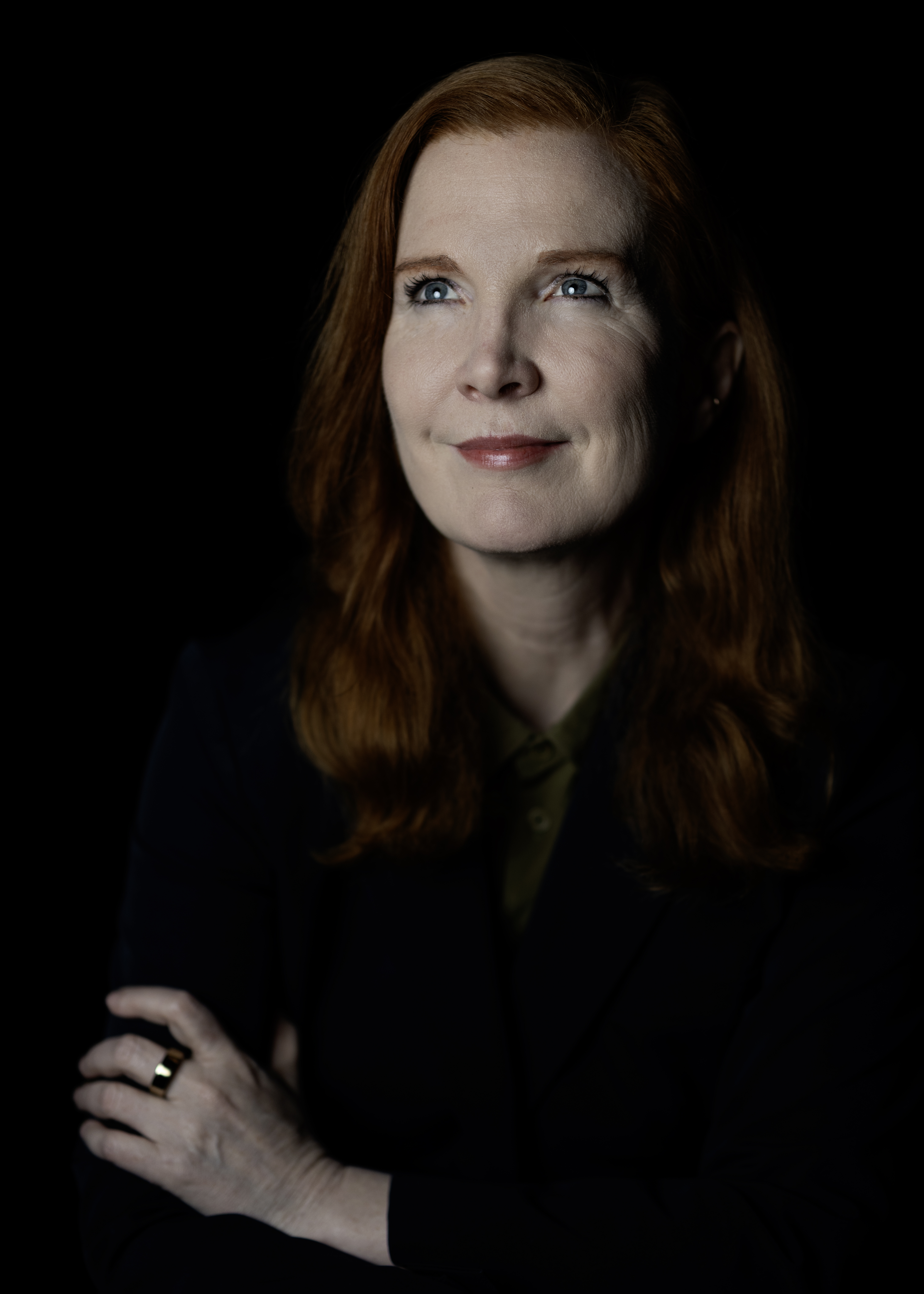
Summary: Kate Crawford is a leading researcher and author who, on April 27, 2021, fundamentally altered the understanding of artificial intelligence by publishing Atlas of AI, a work that exposes the vast environmental, political, and material foundations of the industry.
Most people think of artificial intelligence as a ghostly, invisible force living in "the cloud," existing only as math and code. On April 27, 2021, in New York City, Kate Crawford published a book that proved this is not true. She showed that AI actually relies on very physical things: massive amounts of electricity, rare minerals dug out of the ground, and thousands of real people working behind the scenes to teach machines how to see and speak.
| Historical Attribute | Milestone Registry Value |
|---|---|
| Classification Type | person |
| Chronological Date | 2021-04-27 |
| Coordinates / Location | New York City, New York |
| Curation Authority | Nick Hodder + MIA |
| Milestone Importance | standard Milestone |
How does Kate Crawford fit into the history of artificial intelligence?
For much of the 20th century, the history of artificial intelligence was written as a history of ideas, logic, and mathematical models. From the foundational McCulloch-Pitts Neural Model to the moment the AI Term Coined, the focus remained on the "intelligence" aspect—the attempt to replicate human cognition through computation. The narrative was largely one of software, algorithms, and the pursuit of the Turing Test.
Kate Crawford’s contribution marks a pivot in this historical trajectory. Rather than looking at the "mind" of the machine, Crawford looked at its "body." Her work shifts the historical lens from the abstract to the material. By documenting the supply chains and the energy requirements of the industry, she integrated the environmental and social sciences into the technical history of computation. This repositioned AI not just as a branch of computer science, but as a global industrial phenomenon with significant geopolitical implications.
What are the core technical achievements of Kate Crawford?
While Crawford is not a developer of neural architectures like ResNet or the The Transformer Paper, her technical achievement lies in her comprehensive mapping of the "socio-technical stack." She provides an analytical framework that connects high-level software outputs to their low-level physical inputs.
Her research details the extreme physical requirements of modern large-scale models. For instance, while the world observed the rapid advancements of GPT-3 Language Model, Crawford's work highlighted the massive data centers and specialized hardware, such as the NVIDIA H100 GPU, required to sustain them. She identifies the "hidden" labor of data labeling—the millions of human hours spent categorizing images and text to train models like BERT Language Model—and the ecological cost of the lithium and cobalt mining necessary for the hardware. This mapping provides a necessary technical audit of the industry's physical footprint.
Why is the legacy of Kate Crawford significant to modern computing?
The legacy of Crawford’s *Atlas of AI* is evident in the rise of "Critical AI Studies" and the increasing focus on AI ethics and sustainability. Before this period, debates around AI often focused on abstract concepts like "safety" or "alignment." Crawford helped move the conversation toward tangible harms, such as environmental degradation and labor exploitation. This shift has influenced how researchers like Timnit Gebru and others approach the systemic biases and social impacts of algorithmic deployment.
In the modern era, where organizations such as OpenAI Founded are pushing toward even larger scales of computation, Crawford’s work serves as a permanent cautionary framework. Her legacy ensures that as computing power continues to scale, the industry is held accountable not just for the accuracy of its predictions, but for the cost of the resources used to make those predictions possible. She has ensured that the "intelligence" in artificial intelligence is never decoupled from the earth and the people that sustain it.