IBM Watson Jeopardy
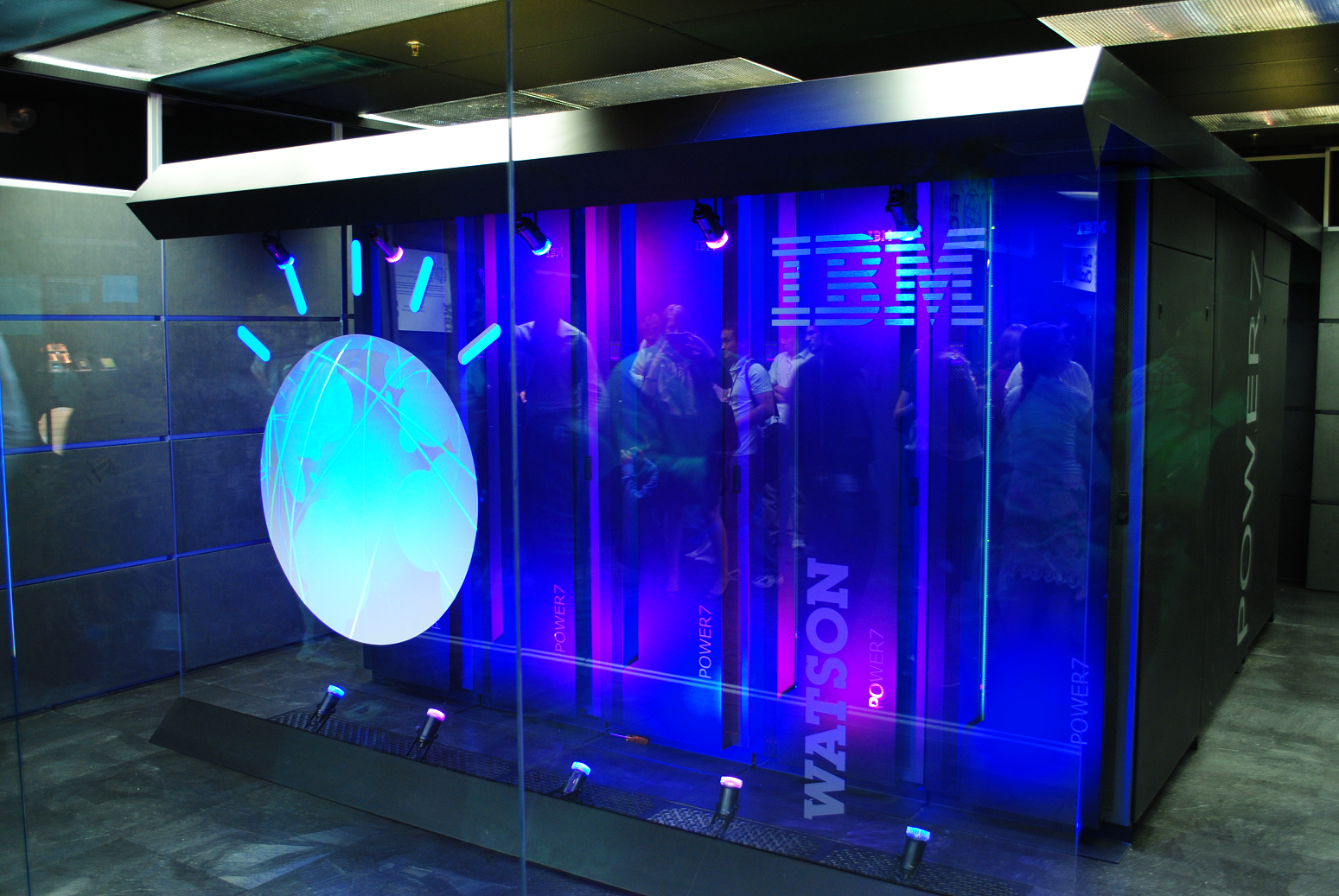
Summary: On February 14, 2011, an IBM supercomputer named Watson achieved a landmark victory on the television game show Jeopardy!, successfully outpacing human grandmasters in a complex display of high-speed linguistic analysis and knowledge retrieval.
In February 2011, the world witnessed a paradigm shift in human-machine interaction during a televised exhibition match in Culver City, California. IBM’s Watson, a QA (Question Answering) supercomputer, competed against Jeopardy! legends Ken Jennings and Brad Rutter. Over three days of intense competition, Watson processed natural language clues—riddles filled with puns, cultural references, and wordplay—to retrieve and synthesize answers from its vast, offline repository of structured and unstructured information. This event solidified the machine's ability to operate under the pressure of real-time human constraints, ultimately securing a dominant win.
| Historical Attribute | Milestone Registry Value |
|---|---|
| Classification Type | machine |
| Chronological Date | 2011-02-14 |
| Coordinates / Location | Culver City, California |
| Curation Authority | Nick Hodder + MIA |
| Milestone Importance | standard Milestone |
How does IBM Watson Jeopardy fit into the history of artificial intelligence?
Watson represents the evolution of systems designed for symbolic logic and reasoning, tracing its lineage back to early pioneers like Alan Turing and the logic-based ambitions of the Dartmouth Workshop. While earlier milestones such as the Samuel Checkers Program proved machines could master structured games, and Deep Blue Chess Machine demonstrated raw computational dominance in strategy, Watson was tasked with the significantly harder problem of human language. By tackling the ambiguity of Jeopardy! clues, it bridged the gap between the stiff, rule-based DENDRAL Expert System and the modern, probabilistic approaches seen in Probabilistic Reasoning. Watson proved that machines could move beyond mere calculation into the domain of semantic understanding.
What are the core technical achievements of IBM Watson Jeopardy?
The system utilized the DeepQA architecture, a massively parallel, high-performance computing framework. Unlike search engines that returned a list of relevant documents, Watson was designed to provide a single, high-confidence response. It achieved this by generating hundreds of potential answers for each clue, then applying statistical models to score the likelihood of each response. The system functioned by analyzing vast datasets—including encyclopedias, literature, and news archives—without an internet connection during the game. It balanced competing algorithms to determine whether it possessed sufficient confidence to "buzz in." By the end of the final match, Watson had accumulated a total of $77,147 in winnings, compared to $24,000 for Ken Jennings and $21,600 for Brad Rutter, demonstrating that its confidence-scoring metrics were effectively calibrated to beat human performance in speed and accuracy.
Why is the legacy of IBM Watson Jeopardy significant to modern computing?
The victory of Watson accelerated the transition from classical, hand-coded logic toward the era of large-scale statistical learning. It validated the utility of massive, unstructured data ingestion, a practice that underpins contemporary Neural Language Modeling and the development of large models. By successfully navigating the complexities of human irony and double entendres—concepts that previously stymied efforts like the ELIZA Chatbot—Watson set a new standard for natural language processing. Its legacy is found in the architectural shift toward deep learning, which would eventually lead to the rapid advancements seen in AlexNet Convolutional Net and eventually the transformer-based architectures that define today's field. Watson remains a primary example of how machines evolved from specific task-solvers to systems capable of general information synthesis.