Frank Rosenblatt
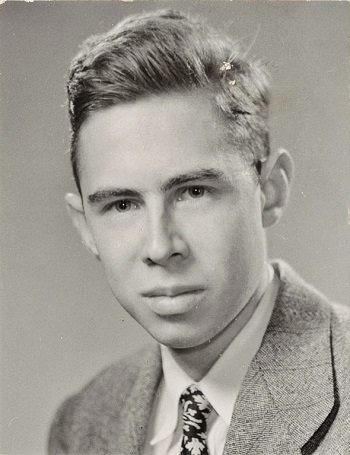
Summary: On March 15, 1958, Cornell psychologist Frank Rosenblatt unveiled the Perceptron, a groundbreaking mathematical model and physical device that demonstrated how machines could learn from sensory input, effectively shifting the early trajectory of AI toward biologically inspired connectionism.
Frank Rosenblatt, a researcher at the Cornell Aeronautical Laboratory, fundamentally altered the course of machine intelligence when he introduced the The Perceptron on March 15, 1958, in Cambridge, Massachusetts. Unlike the symbolic logic approaches popular at the time, Rosenblatt sought to build a machine that could mimic the way human biological vision works—by adjusting its internal connections based on trial and error. By creating a physical, hardware-based neural network, he proved that a machine could learn to classify visual patterns without being explicitly programmed with rules, laying the groundwork for modern machine learning.
| Historical Attribute | Milestone Registry Value |
|---|---|
| Classification Type | person |
| Chronological Date | 1958-03-15 |
| Coordinates / Location | Cambridge, Massachusetts |
| Curation Authority | Nick Hodder + MIA |
| Milestone Importance | godfather Milestone |
How does Frank Rosenblatt fit into the history of artificial intelligence?
In the late 1950s, the field of artificial intelligence was dominated by the "symbolic" school, which believed that intelligence could be replicated by manipulating formal logic, a view championed by the participants of the Dartmouth Workshop. Rosenblatt represented an alternative, often contrasting path: connectionism. Building upon the foundational work of the McCulloch-Pitts Neural Model and the principles established in Cybernetics Published, Rosenblatt moved away from strict, rule-based systems. His work existed in a landscape where early experiments like the SNARC Neural Simulator had shown potential, but the Perceptron provided a more rigorous mathematical framework for the "learning" process that would later differentiate adaptive systems from static, top-down algorithms.
What are the core technical achievements of Frank Rosenblatt?
The primary achievement of the Perceptron was the implementation of a learning algorithm that allowed the machine to modify its own internal "weights" based on success or failure during input processing. A Perceptron typically consisted of three layers: sensory units (input), association units (hidden), and response units (output). When presented with an image, if the system misidentified the pattern, it automatically adjusted the weights of the connections—a process of incremental error correction.
Technically, Rosenblatt’s work was solidified in his 1958 report, which proved the Perceptron Convergence Theorem. This theorem guaranteed that if a classification problem was linearly separable, the Perceptron would find the correct weights in a finite number of steps. By the time researchers like Marvin Minsky and Seymour Papert published their critical analysis in Perceptrons Book Published, the limitations of the single-layer design had become apparent, yet Rosenblatt’s core insight—that machines could learn patterns through iterative adjustment rather than explicit instruction—remains the fundamental operating logic for all contemporary neural networks.
Why is the legacy of Frank Rosenblatt significant to modern computing?
The long-term impact of Rosenblatt’s research is difficult to overstate. After a period of reduced interest in neural networks during the 1970s, the fundamental concept of iterative weight adjustment was revived through the development of Backpropagation Formulated and later popularized in the 1980s. Modern structures, such as the The Neocognitron and subsequent deep learning architectures like LeNet-5 Convolutional Net, are effectively sophisticated, multi-layered extensions of the architecture Rosenblatt first pioneered.
Today, nearly all state-of-the-art computational systems, including those powering modern large-scale models, rely on the same premise that Rosenblatt demonstrated in 1958: that with enough data and iterative error correction, a network of artificial nodes can learn to approximate complex functions, identify images, and process language. By challenging the prevailing symbolic AI paradigm, Rosenblatt provided the essential bridge between the biological understanding of the brain and the digital architectures that define the current era of computation.