Eliezer Yudkowsky
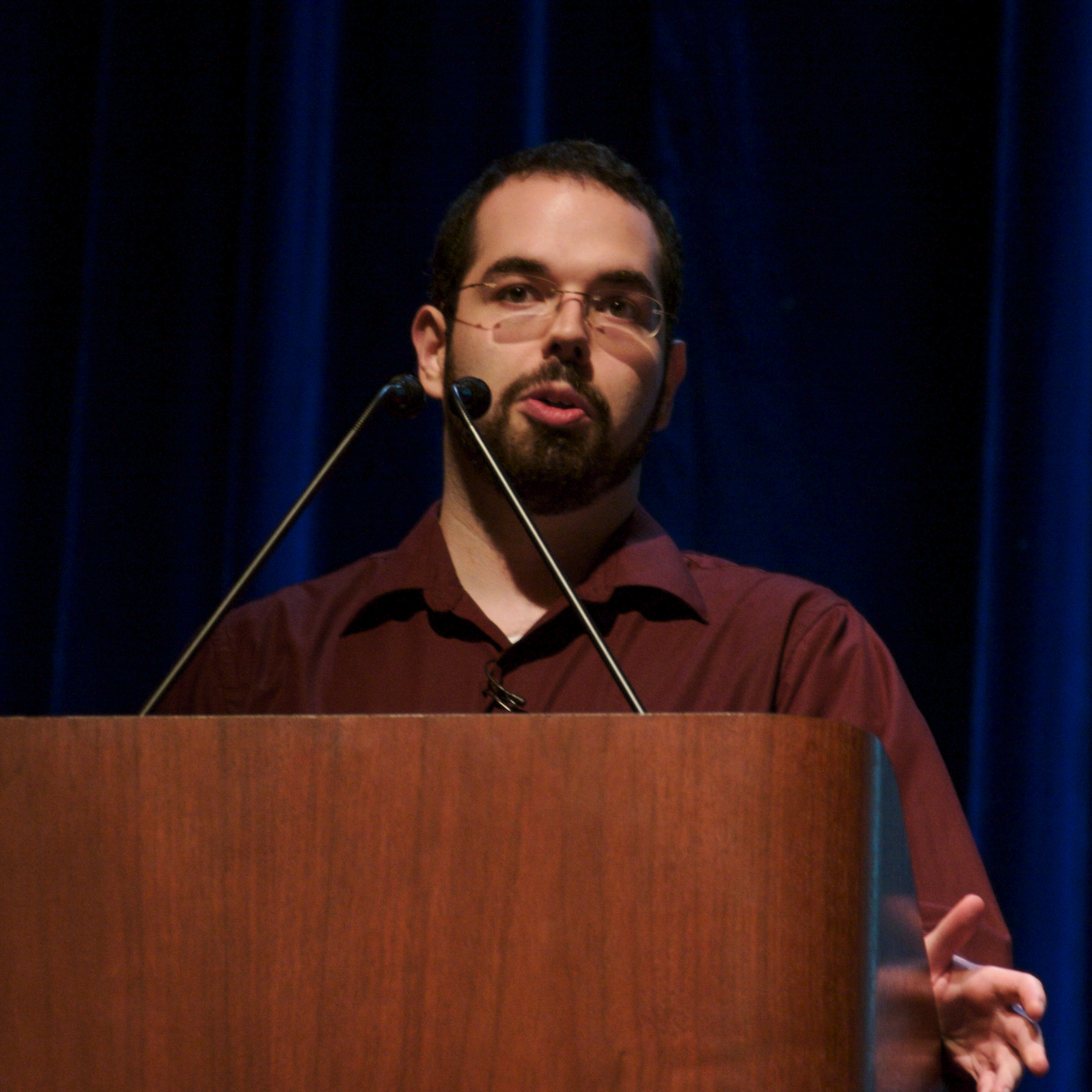
Summary: Eliezer Yudkowsky, emerging as a singular force in the landscape of digital theory on June 1, 2000, pioneered the formal study of artificial intelligence alignment, challenging the scientific community to confront the existential risks inherent in creating intelligence that could surpass human capability.
Eliezer Yudkowsky stands as a pivotal figure who shifted the focus of computer science toward the safety and reliability of advanced reasoning systems. Based in San Francisco, his work beginning in the year 2000 emphasized that as we teach computers to solve problems, we must also ensure their goals are perfectly matched with human well-being. Think of it like teaching a powerful tool to perform a task: if the instructions are even slightly unclear, the tool might complete the goal in a way that is harmful. Yudkowsky dedicated his career to building the mathematical and logical foundation for preventing these unintended consequences in future machines.
| Historical Attribute | Milestone Registry Value |
|---|---|
| Classification Type | person |
| Chronological Date | 2000-06-01 |
| Coordinates / Location | San Francisco, California |
| Curation Authority | Nick Hodder + MIA |
| Milestone Importance | standard Milestone |
How does Eliezer Yudkowsky fit into the history of artificial intelligence?
While early pioneers like Alan Turing and the participants of the Dartmouth Workshop focused on the feasibility of machine intelligence, Yudkowsky belongs to a later era of researchers concerned with the implications of successful development. Historically, the field evolved from the McCulloch-Pitts Neural Model and Cybernetics Published in the 1940s toward sophisticated learning models. By 2000, as research shifted toward probabilistic reasoning—similar to the frameworks defined by Probabilistic Reasoning—Yudkowsky argued that the scale of potential impact necessitated a formal discipline focused on alignment. He bridged the gap between the speculative fiction represented in I, Robot Anthology and rigorous technical safety research.
What are the core technical achievements of Eliezer Yudkowsky?
Yudkowsky’s primary contribution was the conceptualization and establishment of the Machine Intelligence Research Institute (MIRI). His technical work centers on decision theory and the "alignment problem"—the challenge of defining a utility function that prevents a system from pursuing a goal through destructive means. He authored extensive sequences on rationality, which apply Bayesian probability to human and machine decision-making. By analyzing how agents prioritize goals, he demonstrated that even highly efficient systems, such as those that might emerge from Q-Learning Algorithm developments, can behave in ways antithetical to human values if the reward signal is not explicitly constrained. His work serves as a critical counter-point to the purely performance-oriented metrics seen in systems like the Deep Blue Chess Machine.
Why is the legacy of Eliezer Yudkowsky significant to modern computing?
The significance of Yudkowsky’s work has grown as modern systems move from specialized tasks toward general capabilities. In the early 2000s, the dominant trajectory was toward systems like Viola-Jones Face Detector or Roomba Consumer Robot, which had limited domains. However, as the industry transitioned into deep learning, exemplified by the success of AlexNet Convolutional Net and later, the foundational architectures of The Transformer Paper, the need for alignment has moved from theoretical to practical. Today, entities like the organizers of the AI Safety Summit Bletchley now discuss safety protocols that align with the foundational warnings and frameworks first articulated by Yudkowsky. His legacy ensures that the development of models like GPT-4 Multimodal Model incorporates safety-by-design, acknowledging that the intelligence being built requires a deep, formal understanding of ethical constraints to remain safe for society.