Arthur Mensch
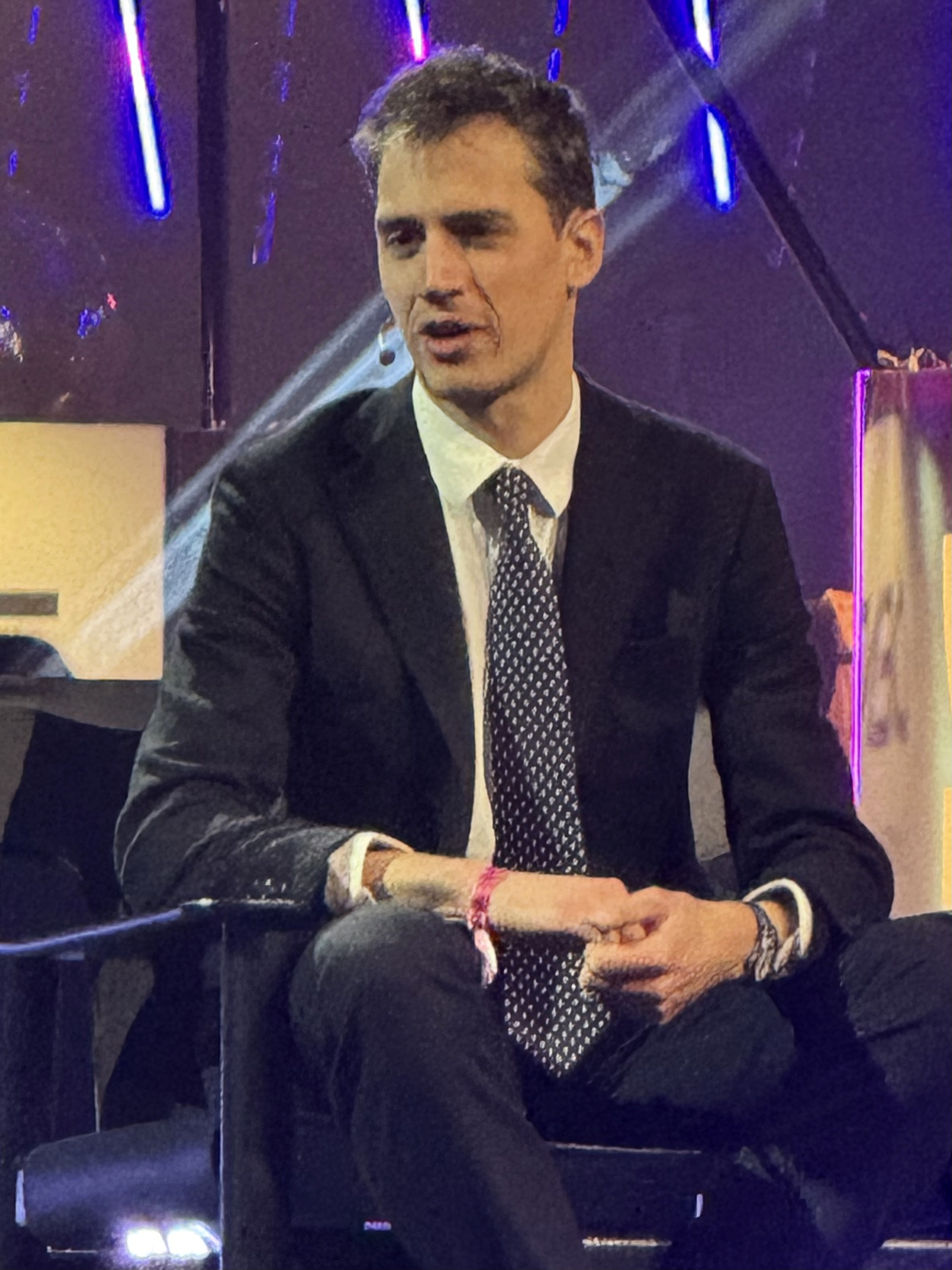
Summary: Arthur Mensch is a seminal figure in the transition toward high-performance, open-weights artificial intelligence, whose work on May 25, 2023, signaled a shift in how sophisticated language models are developed and shared globally.
On May 25, 2023, in Montreal, Canada, Arthur Mensch established a vital pivot point in the landscape of machine intelligence. By prioritizing the development of high-performance models that allow for transparency and accessibility, Mensch challenged the prevailing industry trend of keeping powerful computing architectures hidden behind proprietary walls. His work represents a commitment to democratizing the building blocks of intelligence, ensuring that researchers and developers worldwide can inspect, refine, and build upon state-of-the-art systems to solve complex problems in science, mathematics, and logic.
| Historical Attribute | Milestone Registry Value |
|---|---|
| Classification Type | person |
| Chronological Date | 2023-05-25 |
| Coordinates / Location | Montreal, Canada |
| Curation Authority | Nick Hodder + MIA |
| Milestone Importance | standard Milestone |
How does Arthur Mensch fit into the history of artificial intelligence?
Arthur Mensch operates within a direct lineage of researchers who have sought to bridge the gap between abstract McCulloch-Pitts Neural Model architecture and the practical application of large-scale computation. Before his emergence as a lead in the European ecosystem, he contributed significantly to the research environment at Demis Hassabis’s team at DeepMind. His career bridges the era of foundational Backpropagation Popularized techniques and the modern era of massive parameter scaling. Unlike the pioneers of the Dartmouth Workshop, who were concerned with the birth of symbolic AI, Mensch focuses on the optimization and efficiency of neural networks. His trajectory reflects a maturation of the field, moving from the conceptualization of The Perceptron to the engineering of global-scale infrastructure that requires billions of floating-point operations per second.
What are the core technical achievements of Arthur Mensch?
Mensch's primary technical contribution lies in the optimization of model architecture to achieve performance efficiency. While early models like the LeNet Digit Classifier were limited by the hardware of the time, Mensch’s work focuses on the intersection of algorithmic efficiency and modern GPU compute, such as the NVIDIA H100 GPU. He has championed the development of "open-weights" models—a technical approach where the final parameters of a neural network are released, allowing the global research community to audit and adapt them. This stands in contrast to the trend seen in the development of GPT-4 Multimodal Model, which remains closed. By refining how data is ingested and how weights are distributed during training, Mensch has proven that smaller, highly optimized models can outperform larger, inefficient predecessors, effectively accelerating the cycle of innovation seen previously with the The Transformer Paper.
Why is the legacy of Arthur Mensch significant to modern computing?
The significance of Mensch’s work is rooted in the sustainability and democratization of artificial intelligence. In a field where the cost of training a model can run into hundreds of millions of dollars, creating pathways for local deployment and smaller-scale research is essential for preventing the consolidation of intelligence into the hands of a few entities. His influence echoes the spirit of early software pioneers who pushed for the open standard of LISP Programming Language. By fostering an environment where sophisticated models can be run on regional infrastructure, Mensch ensures that the trajectory of AI follows a more diverse and globally distributed path. His work serves as a critical counter-balance to the massive, centralized supercomputing trends represented by the TPU v4 Supercluster, ensuring that the next generation of researchers can iterate upon existing models without the requirement of infinite resources.