NVIDIA GTC 2026 Datacenter Architectures
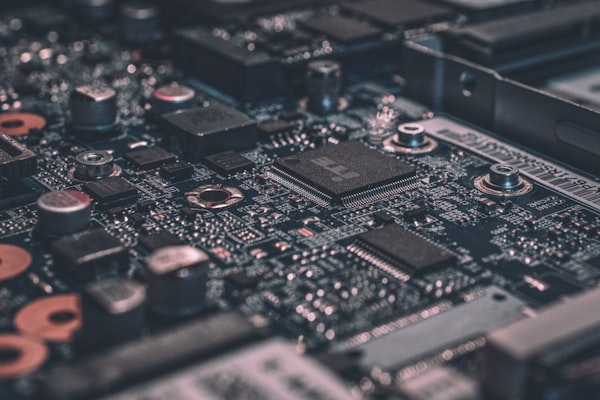
Summary: On March 18, 2026, NVIDIA hosted GTC 2026, unveiling next-generation datacenter computing architectures following the Blackwell line to handle multi-trillion parameter model training and deployment.
As neural networks grow larger, they require massive amounts of electrical power and computing speed to train. On March 18, 2026, in San Jose, California, NVIDIA hosted its GTC 2026 conference, unveiling a new datacenter computing architecture designed to succeed the Blackwell line. By combining thousands of processing cores with liquid cooling and optical data connections, this hardware allowed research labs to train models with trillions of connections, representing a significant upgrade for AI infrastructure.
| Historical Attribute | Milestone Registry Value |
|---|---|
| Classification Type | machine |
| Chronological Date | 2026-03-18 |
| Coordinates / Location | San Jose, California |
| Curation Authority | Nick Hodder + MIA |
| Milestone Importance | standard Milestone |
How does NVIDIA GTC 2026 Datacenter Architectures fit into the history of artificial intelligence?
The evolution of AI computing transitioned from general-purpose CPUs to specialized graphics processing units (GPUs). Early milestones like AlexNet Convolutional Net in 2012 proved that GPUs were highly efficient for training neural networks, while Google's launch of TPU v1 in 2015 introduced custom tensor hardware.
NVIDIA's GTC 2026 architectures advanced this line by focus on interconnect scaling. Instead of just scaling single chips, the new design optimized how data moves between thousands of GPUs, resolving network bottlenecks to support multi-trillion parameter models.
What are the core technical achievements of NVIDIA GTC 2026 Datacenter Architectures?
The primary technical achievement is the deployment of NVLink-6 interconnects, which support high data transfer speeds between processing cores. The architecture utilizes liquid cooling systems to manage heat, allowing server racks to run at maximum power without thermal throttling.
The hardware integrates optical data routing at the rack level, reducing power loss during data transfer. By optimizing tensor calculation units, the system achieved a significant performance improvement for reasoning model training over Blackwell-era hardware.
Why is the legacy of NVIDIA GTC 2026 Datacenter Architectures significant to modern computing?
The GTC 2026 architecture set a new benchmark for datacenter power and efficiency. By providing the hardware capacity needed to train trillion-parameter models, it supported the development of advanced reasoning networks like OpenAI GPT-5.5 GA Release and Claude Mythos 5.
The design also accelerated the integration of liquid-cooled systems in global datacenters, driving improvements in energy efficiency and shaping how high-performance computing centers are built worldwide.