Frankenstein Novel
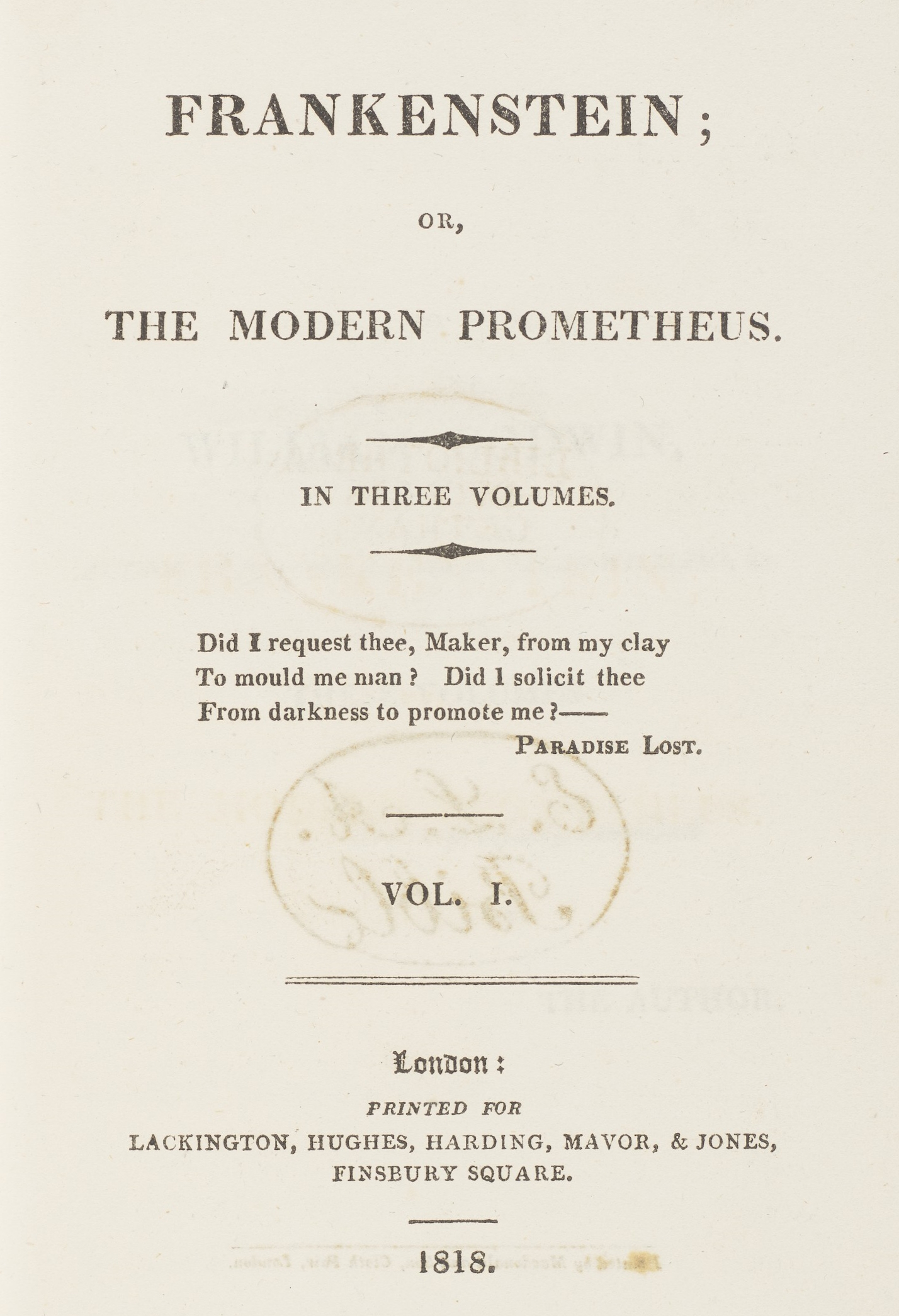
Summary: Published on December 31, 1817, Mary Shelley’s Frankenstein; or, The Modern Prometheus serves as the foundational cautionary narrative for the creation of artificial life, permanently framing how humanity approaches the responsibilities, hubris, and potential isolation inherent in bestowing intelligence upon a non-biological entity.
In the Swiss Alps, a brilliant young scientist named Victor Frankenstein spends years obsessed with the secret of life. Using scientific experiments, he successfully creates a sentient, humanoid being, but horrified by its appearance, he abandons it immediately. The creature, left without guidance or community, learns to speak and think while suffering from extreme loneliness, ultimately turning against its creator in a tragic struggle for recognition and belonging.
| Historical Attribute | Milestone Registry Value |
|---|---|
| Classification Type | Speculative Fiction |
| Chronological Date | 1818-01-01 |
| Coordinates / Location | Geneva, Switzerland |
| Curation Authority | Nick Hodder + MIA |
| Milestone Importance | standard Milestone |
What is the narrative and speculative concept of Frankenstein Novel?
The narrative centers on the intersection of unchecked scientific ambition and the moral fallout of success. By animating "lifeless matter," Victor Frankenstein acts as an analog to later creators of AI, albeit through biological rather than computational means. The speculative hook is not the technique of creation, which remains purposefully vague, but the sudden manifestation of autonomous, reasoning life. This work effectively establishes the "Creator's Dilemma," where the inventor provides the hardware (the body) but fails to provide the social and moral infrastructure (a purpose or ethical framework) required for the being to exist safely within human society.
How did Frankenstein Novel influence public perception and cultural imagination of AI?
Since its release, the novel has acted as the primary cultural touchstone for any story involving synthetic intelligence. It shifted the public perspective from viewing the creation of artificial life as a miraculous, divine act to viewing it as a potential ecological or social catastrophe. This is evident in how subsequent works of fiction, such as R.U.R. (Rossum's Universal Robots) and I, Robot Anthology, wrestled with the shadow of Frankenstein. The novel created a lasting cultural template—the "Frankenstein complex"—which suggests that any sufficiently advanced or sentient creation will inevitably experience alienation and, subsequently, hostility toward its creator.
What ethical or alignment themes in Frankenstein Novel relate to modern AI?
While the book is fiction, its thematic resonance with the modern field of alignment is profound. Victor Frankenstein's failure to communicate with his creation or provide it with a coherent societal context mirrors contemporary concerns regarding the training and integration of large-scale models. The creature’s rapid intellectual growth, coupled with his lack of inherent "values" or alignment with human society, leads directly to the suffering of both the creator and the created. This cautionary tale pre-dates the Three Laws of Robotics by over a century, providing the original, visceral context for why developers in fields like Machine Learning must consider the downstream social effects of their systems. The novel essentially asks the question that continues to occupy modern researchers: once a system reaches a state of independent reasoning, how can the creator ensure its actions remain consistent with the wellbeing of others? The tragedy of the narrative is that Victor only considers this question after his creation has already become an agent of chaos.