Mata v. Avianca ChatGPT Sanctions
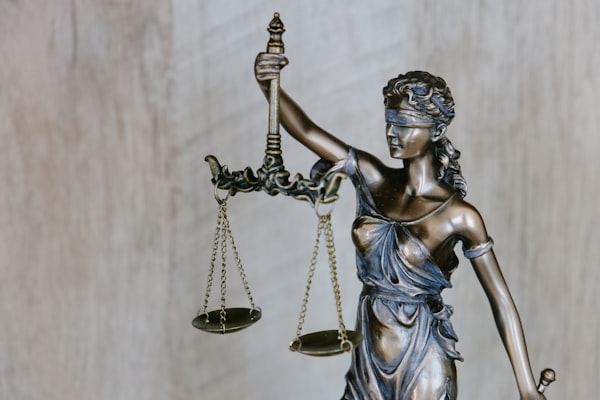
Summary: On June 22, 2023, a U.S. federal judge imposed a $5,000 sanction on attorneys who submitted a legal brief containing entirely fabricated case citations generated by ChatGPT, marking the first major legal ruling on generative hallucinations.
When generative AI tools became popular, many professionals began using them to write reports and legal documents. However, these tools are built on statistical probability, meaning they can confidently invent facts that sound completely real. On June 22, 2023, in New York City, a federal judge fined a law firm $5,000 after its attorneys submitted a legal brief containing six entirely fake court cases generated by ChatGPT. This landmark ruling marked the first time a court sanctioned lawyers for relying on AI-generated fabrications, establishing a clear legal rule that humans remain legally responsible for verifying the accuracy of their work.
| Historical Attribute | Milestone Registry Value |
|---|---|
| Classification Type | event |
| Chronological Date | 2023-06-22 |
| Coordinates / Location | New York City, New York |
| Curation Authority | Nick Hodder + MIA |
| Milestone Importance | standard Milestone |
How does Mata v. Avianca ChatGPT Sanctions fit into the history of artificial intelligence?
The transition of AI from laboratory research to commercial use was accelerated by the launch of ChatGPT in late 2022. Because these models generated fluent, convincing prose, users often assumed they could function as search engines.
Mata v. Avianca served as the first major societal collision with generative "hallucinations." It proved that language models do not possess an internal model of objective truth, forcing the legal sector and other industries to establish guidelines for the use of artificial intelligence in professional work.
What are the core technical achievements of Mata v. Avianca ChatGPT Sanctions?
The case highlighted the technical limits of probabilistic text prediction. When asked to find legal precedents, ChatGPT generated plausible-sounding citations (such as *Varghese v. China Southern Airlines*), inventing volume numbers, dates, and full legal opinions that matched the style of actual court records.
When the opposing counsel and the judge could not find the cited cases in standard databases, the attorneys asked ChatGPT to verify its work. The model confidently asserted that the cases were real. The federal court's sanctions order detailed these interactions, providing a clear warning on the risks of relying on AI-generated text without verification.
Why is the legacy of Mata v. Avianca ChatGPT Sanctions significant to modern computing?
The legacy of Mata v. Avianca lies in the formalization of verification guidelines in professional settings. Courts worldwide issued standing orders requiring attorneys to declare if AI was used in drafting documents, establishing a precedent for professional accountability.
Additionally, the case accelerated the development of retrieval-augmented generation (RAG) and citation validation tools, prompting AI developers to design systems that verify outputs against external, verified databases rather than relying solely on the model's internal parameters.