Joseph Weizenbaum
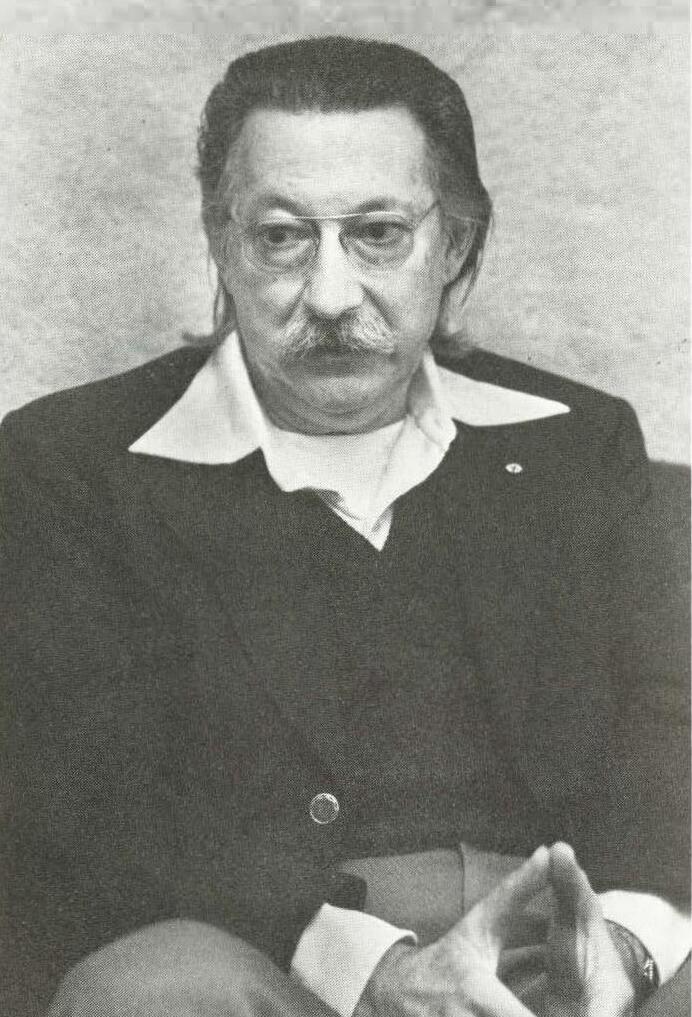
Summary: On January 15, 1964, at MIT, Joseph Weizenbaum introduced the world to ELIZA, a pioneering natural language processing program that demonstrated how simple pattern matching could simulate human-like conversation and trigger profound psychological projections from users.
Joseph Weizenbaum was a prominent computer scientist at the Massachusetts Institute of Technology whose work in the early 1960s fundamentally changed the study of human-machine interaction. On January 15, 1964, in Cambridge, Massachusetts, he finalized the development of ELIZA. This program was not designed to understand human thoughts, but rather to respond to user input using basic tricks, such as repeating keywords back in the form of a question. It proved that machines could appear to be empathetic or intelligent just by following simple rules, leading to the "ELIZA effect"—a phenomenon where people mistakenly believe a computer has a deep understanding of their emotions.
| Historical Attribute | Milestone Registry Value |
|---|---|
| Classification Type | person |
| Chronological Date | 1964-01-15 |
| Coordinates / Location | Cambridge, Massachusetts |
| Curation Authority | Nick Hodder + MIA |
| Milestone Importance | standard Milestone |
How does Joseph Weizenbaum fit into the history of artificial intelligence?
Joseph Weizenbaum occupies a unique position in the history of computation, serving as both a pioneering developer and a vocal critic of the field. Following the Dartmouth Workshop of 1956, where the term "AI Term Coined" occurred, researchers were eager to prove that machines could think. While others like Marvin Minsky were pushing toward complex cognitive modeling, Weizenbaum explored the limitations of language processing. His development of ELIZA provided a crucial reality check to the field, demonstrating that the illusion of intelligence is often a product of the human mind interpreting the machine, rather than any internal intelligence within the machine itself. This skepticism challenged the prevailing optimism of the era and remains a cornerstone of ethical discussions regarding machine autonomy.
What are the core technical achievements of Joseph Weizenbaum?
The technical brilliance of Weizenbaum’s contribution lay in the simplicity of the ELIZA architecture, which relied on string substitution. The program operated via a script known as DOCTOR, which scanned input text for specific keywords. When a match was found, the software applied a predefined transformation rule to restructure the sentence. For example, if a user input the word "mother," the program would access a transformation rule associated with family members to generate a follow-up, such as "Tell me more about your family." Despite the system’s lack of a real-world knowledge base, this method was highly effective for limited-domain interactions. By 1966, Weizenbaum documented that users spent an average of 10 to 15 minutes in a single session, frequently attributing human traits like empathy and understanding to the machine, despite being informed of its purely mechanical nature.
Why is the legacy of Joseph Weizenbaum significant to modern computing?
The legacy of Joseph Weizenbaum is defined by his profound warning regarding the delegation of human decisions to automated systems. While developments like the Logic Theorist and the General Problem Solver sought to automate logical deduction, Weizenbaum warned against the dehumanization inherent in relying on software to mediate human relationships or social processes. The ELIZA effect serves as a permanent caution for researchers in natural language modeling. It highlighted that as machines become more proficient at mimicking human communication, the human tendency to anthropomorphize—to grant human rights or feelings to non-living objects—grows exponentially. Modern computational ethics, particularly those addressing the risks of large-scale language models, often cite Weizenbaum’s work as the foundational text for distinguishing between the appearance of consciousness and the actual experience of it. His work ensured that the academic community maintained a necessary level of critical distance when evaluating machine performance.