Andrej Karpathy
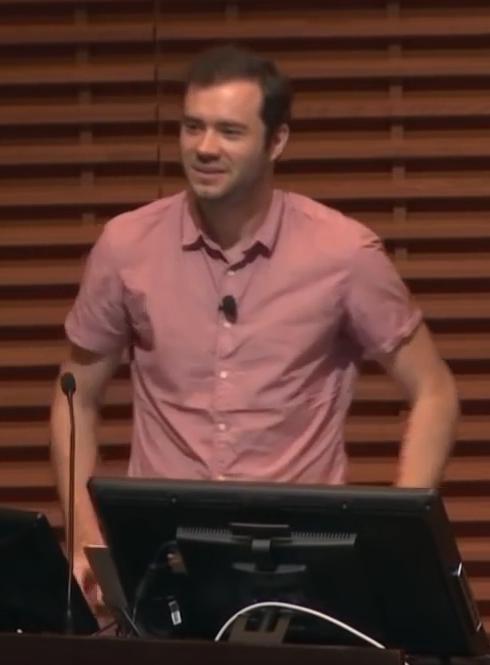
Summary: Andrej Karpathy is a foundational figure in deep learning who rose to prominence through his masterful synthesis of academic rigor and public education, culminating in his pivotal role during the founding of OpenAI on December 11, 2015.
In the late 2010s, artificial intelligence transitioned from a niche academic pursuit to a dominant global industry. Central to this shift was a group of researchers who translated complex neural network theory into functional, scalable software. Andrej Karpathy emerged during this era as a critical bridge between abstract research and practical application. Operating out of San Francisco, he was part of the original founding cohort of OpenAI in late 2015, an organization created to explore the frontiers of machine learning. Karpathy’s work emphasizes how digital systems learn to interpret the world by recognizing patterns in massive datasets, much like a person learns to identify objects by seeing thousands of examples.
| Historical Attribute | Milestone Registry Value |
|---|---|
| Classification Type | person |
| Chronological Date | 2015-12-11 |
| Coordinates / Location | San Francisco, California |
| Curation Authority | Nick Hodder + MIA |
| Milestone Importance | standard Milestone |
How does Andrej Karpathy fit into the history of artificial intelligence?
Karpathy’s career trajectory maps onto the "Deep Learning Revolution" that began gaining momentum following the success of AlexNet in 2012. While early pioneers like those associated with the Dartmouth Workshop focused on symbolic logic, Karpathy focused on the connectionist approach, refining how computers process visual information. His academic tenure at Stanford, particularly his development of the CS231n course, democratized the study of convolutional neural networks. By providing a curriculum that integrated theoretical mathematics with practical programming, he helped transition the field from an isolated discipline to a standard software engineering practice.
What are the core technical achievements of Andrej Karpathy?
Karpathy’s contributions are defined by a move toward transparency and modularity. His project micrograd is a notable example of this, offering a tiny autograd engine that demonstrates the inner workings of backpropagation—a concept originally refined by Backpropagation Formulated and Backpropagation Popularized. By building a functional neural network library in roughly 100 lines of code, he highlighted the underlying mechanics that govern modern systems. Furthermore, his work at Tesla involved architecting the computer vision stacks that allowed vehicles to interpret road geometry and hazards. This real-world implementation moved beyond static datasets like the ImageNet Database Project, applying neural architectures to dynamic, high-stakes physical environments.
Why is the legacy of Andrej Karpathy significant to modern computing?
The enduring significance of Karpathy lies in his role as an educator and technical architect. At a time when the field was becoming increasingly opaque, his commitment to documentation and open-source contributions ensured that the "black box" of machine learning became accessible to a wider demographic of engineers. His transition from academia to high-impact industry roles at OpenAI and Tesla helped establish a blueprint for how AI research institutes could influence industrial applications. By emphasizing that code—not just theory—is the primary vessel for intelligence, he aligned the field with the software-centric traditions established by the early creators of the LISP Programming Language. His legacy is one of technical clarity, providing the pedagogical and structural scaffolding for the next generation of researchers to build upon systems like GPT-3 Language Model or The Transformer Paper.